Mechanical Differences: ford bronco outer banks vs. Badlands Sway-Bar Disconnect
Ford’s Legacy of Power and Innovation: Outer Banks vs. Badlands – The Sway-Bar Disconnect Difference
You’re standing on a rocky trail, looking at a line that seems impossible—the kind of obstacle where one tire needs to climb a boulder while the other drops into a rut. In a Badlands, you press a button and watch the suspension droop like it’s begging for traction. In an Outer Banks, you hold your breath and hope.
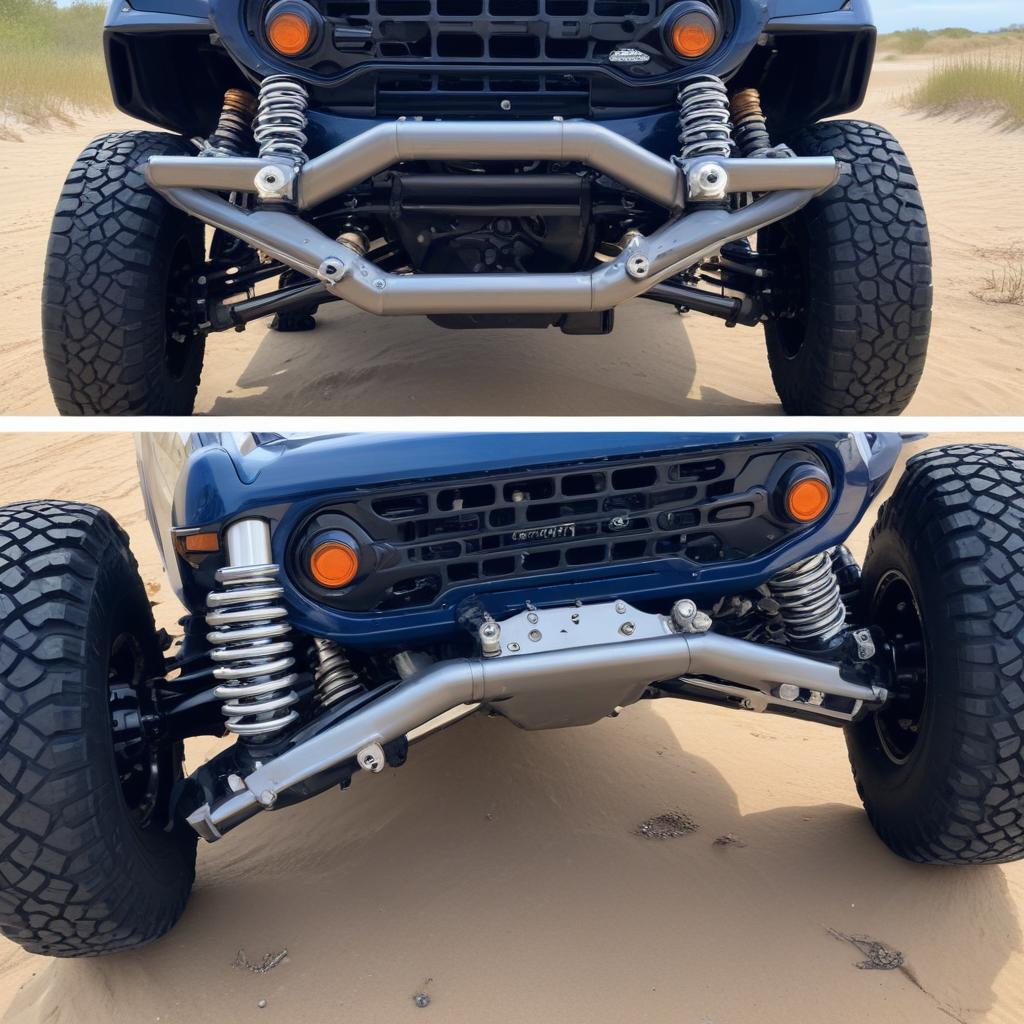
Here’s the reality that separates casual trail explorers from serious off-road enthusiasts: the front stabilizer bar disconnect system. It’s the single most significant mechanical difference between the Bronco Badlands and every other trim—including the stylish Outer Banks. While both trucks share engines and basic architecture, the Badlands comes factory-equipped with hardware that the Outer Banks simply can’t match, no matter how many option boxes you check.
TL;DR;
The Ford Bronco Badlands comes standard with an electrohydraulic front stabilizer bar disconnect that allows the front suspension to fully articulate at low speeds—a feature completely unavailable on the Outer Banks trim . The Badlands pairs this with front and rear locking differentials, 33-inch tires, and 7 G.O.A.T. modes including Rock Crawl and Baja . The Outer Banks focuses on on-road refinement with 32-inch tires, part-time 4WD, and 6 G.O.A.T. modes (lacking Rock Crawl) . Both can be equipped with the same 2.3L or 2.7L EcoBoost engines and 10-speed automatic transmission, but the Badlands adds the HOSS 2.0 suspension with Bilstein position-sensitive dampers versus the Outer Banks’ HOSS 1.0 setup . Price difference is roughly $3,000–$4,000, making the Badlands the choice for serious off-roading and the Outer Banks the choice for style-conscious daily drivers .
Key Takeaways
- Sway-Bar Disconnect is Badlands-Exclusive: The electrohydraulic system, produced by BWI, allows the front stabilizer bar to disconnect at the push of a button below 20 mph, then automatically reconnects above that speed . Outer Banks has no such system.
- Locking Differentials Matter: Badlands includes both front and rear electronic lockers standard; Outer Banks has an open rear diff (locker optional) and no front locker .
- Suspension Hierarchy: Badlands rides on HOSS 2.0 with Bilstein position-sensitive dampers; Outer Banks uses HOSS 1.0 with standard twin-tube shocks .
- G.O.A.T. Modes Tell the Story: Badlands adds Rock Crawl and Baja modes to the standard suite—modes that utilize the sway-bar disconnect and locker hardware .
- Real-World Articulation: With the sway bar disconnected, the Badlands’ independent front suspension can droop significantly more, keeping tires on the ground in uneven terrain where the Outer Banks would lift a wheel .
The Sway-Bar Disconnect: What It Actually Does
Ever watch a rock crawler navigate boulders and wonder how their tires seem to reach down into holes that shouldn’t be physically possible?
The secret is suspension articulation—specifically, allowing each front wheel to move independently of the other. Your car’s stabilizer bar (also called a sway bar) is a torsion spring that connects the left and right front wheels. Its job is to resist body roll during cornering, which keeps you safe on pavement. But off-road, that same bar becomes a liability: when one tire needs to climb a rock, the bar tries to lift the other tire, reducing traction .
How the Badlands System Works
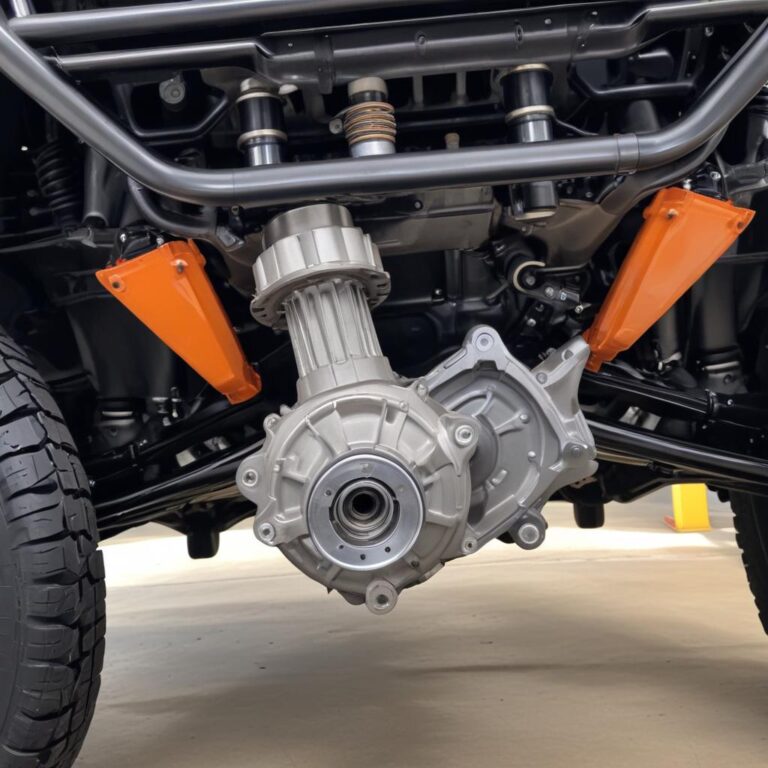
Ford’s electrohydraulic stabilizer bar disconnect, standard on Badlands and previously on First Edition trims, is engineering wizardry . Here’s what happens when you press that button:
- Hydraulic release: The system uses hydraulic pressure to unlock a mechanism inside the bar, allowing the two halves to rotate independently .
- Instant articulation: With the bar disconnected, each front wheel can move up and down without affecting the other. This is critical for keeping tires planted on uneven terrain .
- Automatic reconnect: The system automatically reconnects above 20 mph for safe on-road handling .
- Rock Crawl integration: In Rock Crawl mode, the bar disconnects automatically below 25 mph and reconnects above 20 mph—you don’t even need to think about it .
“The Bronco’s electrohydraulic system (produced by BWI, the Magneride folks) can be disconnected any time, and when you request a reconnect, it automatically connects the next time the bar straightens out for an instant” .
Why the Outer Banks Doesn’t Have It
The Outer Banks is designed for a different mission. It’s the “lifestyle” trim—meant for beach driving, forest roads, and looking good while doing it . The fixed stabilizer bar on the Outer Banks is perfectly adequate for the type of off-roading most owners actually do: graded dirt roads, sandy washes, and light trails.
Adding the disconnect system would require:
- A different front suspension crossmember
- Hydraulic lines and control modules
- Additional wiring and software calibration
- Significant cost increases
Ford made a deliberate choice to reserve this hardware for the Badlands, positioning it as the dedicated rock-crawling trim .
Beyond the Sway Bar: The Full Mechanical Picture
The sway-bar disconnect doesn’t exist in isolation. It’s part of a comprehensive off-road package that separates the Badlands from the Outer Banks.
Suspension: HOSS 1.0 vs. HOSS 2.0
Both trims get Ford’s High-Performance Off-Road Stability Suspension (HOSS) , but they’re different versions:
| Component | Outer Banks (HOSS 1.0) | Badlands (HOSS 2.0) |
|---|---|---|
| Shocks | Standard twin-tube | Bilstein position-sensitive dampers |
| Front Axle | Dana 35 M190 (open diff) | Dana 44 M210 (with locker) |
| Rear Axle | Dana 44 M220 (open diff, locker optional) | Dana 44 M220 (locker standard) |
| Stabilizer Bar | Fixed | Electrohydraulic disconnect |
| Skid Plates | Standard engine skid plate | Heavy-duty steel front, transfer case, and fuel tank skids |
| Rock Rails | Standard step bars | Heavy-duty rock rails |
The Bilstein position-sensitive dampers on the Badlands deserve special attention. They feature three zones of damping : soft in the middle for small bumps, progressively firmer as suspension compresses, and an “end-stop control valve” that multiplies damping force by 3–5 times at the limits of travel . This is genuine desert-runner hardware.
G.O.A.T. Modes: Software That Matters
The Terrain Management System (G.O.A.T. modes) on each trim reflects their hardware capabilities:
Outer Banks G.O.A.T. Modes :
- Normal, Eco, Sport, Slippery, Sand, Mud/Ruts
Badlands G.O.A.T. Modes :
- Normal, Eco, Sport, Slippery, Sand, Mud/Ruts, Rock Crawl, Baja
Rock Crawl mode engages the sway-bar disconnect, locks the differentials (if equipped), and provides precise throttle control for technical terrain . Baja mode optimizes for high-speed off-road running with unique shift schedules and suspension tuning.
The Polish Ford media site explains: “The Badlands version allows you to select one of seven driving modes. In addition to the modes known from the Outer Banks, you can also activate the dedicated Badlands modes Rock Crawl and Baja” .
Tires and Wheels
The contact patch matters as much as the suspension:
| Specification | Outer Banks | Badlands |
|---|---|---|
| Wheel Size | 18-inch aluminum | 17-inch aluminum |
| Tire Size | 32-inch (P255/70R18) | 33-inch (LT285/70R17) |
| Tire Type | All-terrain | All-terrain (more aggressive) |
| Spare | Full-size | Full-size |
The 17-inch wheels on the Badlands allow for taller sidewalls, which provide better cushioning off-road and protect the rims from rocks . The 33-inch tires (upgradable to 35s with Sasquatch) provide more ground clearance and better approach angles.
The Driving Experience: What You’ll Actually Feel
Numbers are one thing. Here’s how these differences translate when you’re behind the wheel.
On Pavement
Outer Banks: This is the more refined daily driver. The 18-inch wheels and standard suspension provide a compliant ride. Road noise is modest, and the handling is predictable . The fixed sway bar keeps body roll in check during cornering.
Badlands: You’ll notice the Bilstein shocks immediately—they’re firmer, especially over sharp impacts. The 33-inch tires hum more on asphalt. The suspension is tuned for off-road compliance, which means slightly more body roll than the Outer Banks. It’s still perfectly livable for daily driving, but the compromises are there .
On the Trail
Outer Banks: Perfectly capable for fire roads, beach driving, and moderate trails. The 4WD system (part-time engagement standard, advanced on-demand optional) will get you through most situations a normal owner encounters . But when the trail gets truly uneven, you’ll feel the sway bar working against you—lifting inside tires when you’d rather have them planted.
Badlands: This is where the hardware shines. Approach a rocky section, press the sway-bar disconnect button (or select Rock Crawl mode), and watch the front suspension droop into holes that would leave the Outer Banks teetering . The lockers mean you can crawl over obstacles with minimal wheel spin. The Bilstein shocks soak up washboard roads at speed.
“The stabilizer bar disconnect system also turns off when you switch out of four-wheel drive low or four-wheel drive high, or select a drive mode that does not allow the stabilizer bar to disconnect” .
The Articulation Difference
Real-world testing shows the Badlands with disconnected sway bar achieves significantly more front suspension travel than the Outer Banks. In extreme situations, this can mean the difference between keeping all four tires on the ground or lifting a front tire entirely—which means the difference between moving forward and being stuck .
The Ownership Reality: Cost and Compromises
Price Comparison (2024/2025 Models)
| Configuration | Outer Banks (4-door) | Badlands (4-door) |
|---|---|---|
| Base MSRP | ~$47,940 | ~$50,885 |
| With 2.7L Engine | +$1,895 | +$1,895 |
| With Sasquatch Package | +$6,000 (approx) | +$2,495 |
| Fully Loaded | ~$55,000–$58,000 | ~$55,000–$59,000 |
Note: Prices vary by model year and options. The Badlands includes more standard off-road hardware, so the Sasquatch package costs less on Badlands than on Outer Banks because it’s adding fewer items .
Maintenance Considerations
The sway-bar disconnect system adds complexity. Forum discussions reveal occasional issues:
- Moisture intrusion: Some owners report faults caused by moisture in the main connector. Dielectric grease application is a common preventative fix .
- Actuator failures: Early models occasionally needed actuator replacement, though TSBs have addressed this .
- Wiring harness concerns: Dealers are instructed to include the harness when returning failed units for warranty analysis .
That said, most owners report trouble-free operation. The system is proven technology—BWI (the manufacturer) is the same company behind Magneride .
Resale Value
Both trims hold value well, but the Badlands typically commands a premium in the used market. Serious off-road buyers specifically seek out the Badlands for its factory-installed hardware, knowing that adding lockers and a sway-bar disconnect aftermarket would cost thousands and never integrate as seamlessly .
Visualizing the Difference
This chart compares the key mechanical features of the Outer Banks and Badlands:
2025 Ford Bronco: Outer Banks vs. Badlands Off-Road Hardware
Comparison of off-road capability features (1 = not equipped, 5 = fully equipped).
Which One Should You Buy?
Choose the Outer Banks If:
- You want a stylish daily driver that looks the part
- Your off-roading consists of beaches, fire roads, and campgrounds
- You value on-road refinement and lower road noise
- You prefer 18-inch wheels and a slightly more premium interior feel
- You’re budget-conscious (save the $3,000–$4,000 for accessories)
Choose the Badlands If:
- You plan to tackle technical trails with rocks, ruts, and uneven terrain
- You want maximum off-road capability straight from the factory
- You understand what lockers and sway-bar disconnects actually do
- You’re willing to accept slightly firmer ride and more tire noise for capability
- You see yourself adding larger tires and pushing the truck harder
“The Badlands differs from the Outer Banks in that it comes from the factory ready to ford rivers, climb rocks, and rip through loose gravel. With a locking front and rear differential, getting your tires to grip on slippery rocks or loose gravel is much easier than the Outer Banks” .
FAQ Section
1. Does the Ford Bronco Outer Banks have a sway-bar disconnect?
No. The front stabilizer bar disconnect system is exclusive to the Badlands trim (and was available on the discontinued First Edition). The Outer Banks has a fixed stabilizer bar .
2. How does the Badlands sway-bar disconnect work?
It’s an electrohydraulic system that allows the two halves of the front stabilizer bar to rotate independently when you press a button (or select Rock Crawl mode). This allows each front wheel to articulate fully without affecting the other. The system automatically reconnects above 20 mph for safe on-road handling .
3. What are the G.O.A.T. mode differences between Outer Banks and Badlands?
The Outer Banks has 6 modes: Normal, Eco, Sport, Slippery, Sand, and Mud/Ruts. The Badlands adds Rock Crawl and Baja modes—7 total . Rock Crawl utilizes the sway-bar disconnect and lockers; Baja is tuned for high-speed off-road running.
4. Can I add a sway-bar disconnect to my Outer Banks aftermarket?
While aftermarket manual disconnects exist for some vehicles, the Bronco’s electrohydraulic system is integrated with the vehicle’s electronics, suspension geometry, and G.O.A.T. modes. Retrofitting would be extremely complex and expensive—it’s not a practical upgrade .
5. What axles do these trims have?
The Outer Banks uses a Dana 35 M190 front axle (open differential) and Dana 44 M220 rear axle (open standard, locker optional). The Badlands upgrades to a Dana 44 M210 front axle with standard locker and the same M220 rear with standard locker .
6. Is the Badlands worth the extra money over the Outer Banks?
If you plan to do serious off-roading—rock crawling, technical trails, or desert running—absolutely. The sway-bar disconnect, lockers, and upgraded suspension are worth far more than the $3,000–$4,000 price difference. If your off-roading is limited to graded roads, the Outer Banks is plenty capable and more refined .
7. What’s the HOSS suspension difference?
The Outer Banks uses HOSS 1.0 with standard twin-tube shocks. The Badlands gets HOSS 2.0 with Bilstein position-sensitive dampers featuring remote reservoirs and three-stage damping. This is significant for off-road control and comfort at speed .
8. Do both trims offer the same engines?
Yes. Both can be equipped with either the 2.3L EcoBoost I-4 (300 hp) or the 2.7L EcoBoost V6 (330 hp). The Badlands offers a 7-speed manual with the 2.3L; the Outer Banks comes standard with the 10-speed automatic .
9. What’s the real-world fuel economy difference?
The Outer Banks typically achieves slightly better fuel economy due to smaller tires, less aggressive tread, and lighter suspension components. Expect 1–2 MPG difference in mixed driving .
10. Does the sway-bar disconnect require maintenance?
Generally, no. Some early models had issues with moisture in connectors, addressed by TSBs recommending dielectric grease. Otherwise, the system is sealed and maintenance-free .
11. Can I use the sway-bar disconnect in any 4WD mode?
The system operates in 4H and 4L, but not in 2H. It’s designed for off-road use only—Ford programs it to automatically reconnect above 20 mph for safety .
12. What’s the approach angle difference?
The Badlands, with its 33-inch tires and optimized front bumper, offers better approach, breakover, and departure angles than the Outer Banks. Exact figures vary by configuration, but the Badlands is measurably more capable in stock form .
References
- CJ Pony Parts: Bronco Badlands vs Outer Banks Comparison
- MotorTrend: 2021 Ford Bronco “H.O.S.S.” Suspension Explained
- Ford Polska: Bronco Outer Banks i Badlands – Czym się różnią?
- Ford Official Site: How to Disconnect the Front Stabilizer Bar
- Bronco6G Forum: Sway Bar Disconnect Failure Discussion
- Auto Zonic: Difference Between Bronco Badlands and Outer Banks
Call to Action
Which Bronco speaks to you—the trail-conquering Badlands with its sway-bar disconnect and lockers, or the stylish Outer Banks built for beach cruises and daily comfort? Drop your thoughts in the comments below, and share what kind of terrain you plan to tackle!