2024 Ford Bronco sport RDU Overheating: Cooling Solutions for the 2.0L EcoBoost
Ford’s Legacy of Power and Innovation: Solving RDU Overheating in the 2024 Bronco Sport 2.0L
You’re halfway up a rocky trail, the scenery is breathtaking, and then it happens—a warning light flashes, the dash tells you the rear drive unit is overheating, and suddenly you’re parked on the side of the mountain wondering if your Bronco Sport is about to leave you stranded.
Here’s the reality that 2.0L EcoBoost owners are discovering: the 2024 Ford Bronco Sport is incredibly capable for a unibody off-roader, but pushing it hard—especially in sand, deep snow, or on steep climbs—can overwhelm the rear drive unit’s thermal capacity. The good news? Ford recognizes the issue, and there are solutions ranging from driving technique adjustments to genuine Ford Performance cooling upgrades.
TL;DR;
The 2024 Ford Bronco Sport Badlands with the 2.0L EcoBoost and twin-clutch rear drive unit (RDU) can experience RDU overheating during sustained low-speed off-road use, particularly in sand or while rock crawling . This triggers a warning light and temporarily disables rear drive functions to protect the hardware. Ford offers a Rear Drive Unit Cooler Kit (Part # M-9405-BS) that adds a dedicated cooler and pump to the RDU, significantly extending thermal capacity . The kit includes a pump, cooler, wiring harness, and mounting hardware, though installation requires removing the rear differential for drilling and tapping . For owners who frequently off-road, this factory-backed solution is the gold standard for preventing RDU overheating.
Key Takeaways
- The Problem: The 2.0L’s RDU generates heat during sustained low-speed off-road use, and the stock configuration relies on fluid thermal mass alone—no active cooling .
- The Warning: When the RDU temperature exceeds limits, the system disables rear drive functions and displays a warning; this protects hardware but ends your off-road session .
- The Ford Solution: The M-9405-BS cooler kit adds active cooling, circulating RDU fluid through a dedicated cooler mounted near the exhaust .
- Installation Reality: This is not a simple bolt-on—it requires dropping the rear diff, drilling/tapping for fittings, and mechanical skill .
- Alternative Approaches: Driving technique (avoiding continuous high-load operation), upgraded synthetic fluids, and monitoring RDU temperature can help manage the issue without the cooler .
Understanding the RDU: Why It Overheats
Why does a vehicle designed for off-road use have a rear drive unit that can’t handle sustained off-road use?
The answer lies in physics and packaging. The Bronco Sport’s twin-clutch rear drive unit is a sophisticated piece of engineering—it can vector torque between rear wheels and even lock up for maximum traction. But that complexity generates heat, and the stock configuration has no active cooling system.
How the RDU Works
The RDU contains:
- A clutch pack that transfers torque side-to-side
- A locking mechanism for maximum traction
- Gears that multiply torque from the driveshaft
- Fluid that lubricates and cools all these components
Under normal driving, the heat generated dissipates through the RDU housing and into the air. But in off-road conditions—especially sand driving where wheel slip is constant, or rock crawling where the clutches work continuously—heat builds faster than the housing can shed it .
The Warning Threshold
When RDU fluid temperature exceeds a preset limit (typically around 250–270°F), the system:
- Displays a warning message on the dash
- Disables rear drive functions to protect hardware
- May limit vehicle speed or performance
- Resumes normal operation after cooling down
One forum member described it: “The RDU overheated on me while doing some steep rocky climbs. It was a hot day, and I was working the system hard. The warning came on, and I lost rear drive for about 20 minutes until it cooled” .
Why the 2.0L Is More Affected
The 2.0L EcoBoost produces 250 hp and 277 lb-ft of torque—significantly more than the 1.5L’s 180 hp . That extra power means more torque going through the RDU, which means more heat generation under load. Badlands trims with the 2.0L and twin-clutch RDU are the most likely to experience overheating .
The Ford Performance Solution: M-9405-BS Cooler Kit
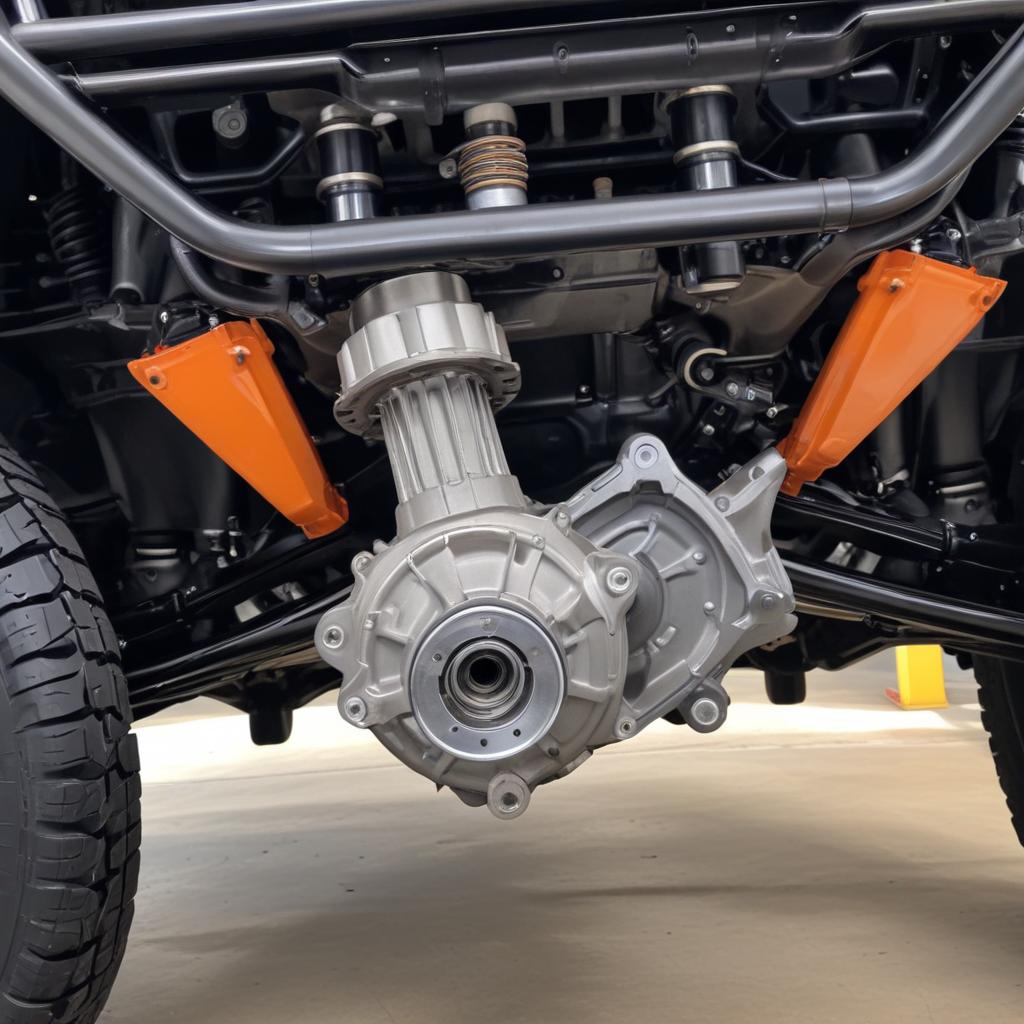
Ford Performance Parts offers a dedicated solution: the Rear Drive Unit Cooler Kit (Part # M-9405-BS) . This is the same part used in the Bronco Sport Badlands “extreme” demonstrations and is fully backed by Ford’s engineering.
Kit Contents
| Component | Description |
|---|---|
| Cooler Pump | Electric pump that circulates RDU fluid |
| Cooler Core | Small radiator-style cooler mounted near exhaust |
| Mounting Brackets | Hardware for securing cooler to chassis |
| Wiring Harness | Plug-and-play connector to vehicle electrical system |
| Hoses and Fittings | Lines connecting RDU to pump and cooler |
| Hardware Kit | Bolts, clamps, and fasteners |
Note: The kit does not include fluid—you’ll need to purchase Ford-specified RDU fluid separately.
Installation Complexity
Here’s where many owners get surprised: this is not a simple bolt-on accessory. The installation process requires:
- Removing the rear differential from the vehicle
- Drilling and tapping the differential housing to accept the cooler fittings
- Installing the pump and cooler in designated locations
- Running wiring to connect to the electrical system
- Refilling and bleeding the system
One owner who installed the kit noted: “The instructions are detailed, but you need mechanical experience. Dropping the diff and drilling into it is intimidating if you’ve never done it before” .
Cost Considerations
| Item | Approximate Cost |
|---|---|
| M-9405-BS Kit | $800–$1,000 |
| Professional Installation | $600–$1,200 (depending on shop rates) |
| Fluid and Supplies | $50–$100 |
| Total Installed | $1,450–$2,300 |
The wide range in installation cost reflects varying shop rates and whether any additional work (like fluid changes) is performed simultaneously.
Warranty Implications
Because this is a Ford Performance part designed specifically for the Bronco Sport, installation by a qualified shop does not void your vehicle warranty . However:
- The cooler system itself is covered by Ford Performance’s parts warranty
- Any damage caused by improper installation would not be covered
- It’s wise to have installation performed by a dealer or Ford Performance specialist
Alternative Cooling Solutions and Workarounds
Not everyone needs the full cooler kit. For moderate off-road use, several alternatives can help manage RDU temperatures.
Driving Technique Adjustments
The simplest and cheapest solution is modifying how you drive:
- Avoid continuous high-load operation—give the RDU breaks during long climbs
- Alternate between 4WD modes—using different drive modes distributes heat differently
- Monitor warning signs—if you feel reduced power or see the warning, stop and let it cool
- Choose lines wisely—minimizing wheel spin reduces clutch pack heat
“I learned to watch for the warning and just take a break when it comes on. 15–20 minutes with the engine running (so the fan keeps airflow) usually cools it enough to continue” .
High-Performance Fluids
Upgrading to synthetic fluids with higher thermal capacity can help:
- Amsoil Severe Gear synthetic gear oil handles higher temperatures
- Royal Purple Max-Gear offers similar benefits
- Red Line Heavy ShockProof provides excellent protection
Note: Always use fluids meeting Ford specification for the RDU. The wrong fluid can cause damage.
Thermal Monitoring
Installing a temperature monitor lets you track RDU heat in real-time:
- OBD2 monitors can read RDU temperature if the vehicle provides that data
- Infrared thermometers allow spot-checking after hard use
- Some aftermarket tuners offer temperature displays
Knowing your actual temperatures helps you avoid warnings before they happen.
Heat Wrapping and Shielding
Some owners experiment with:
- Exhaust heat shielding near the RDU to reduce ambient temperatures
- Reflective wraps on the RDU housing (though this can trap heat if not done correctly)
- Improved underbody airflow by removing unnecessary skid plates (trade-off: protection vs. cooling)
Real-World Owner Experiences
Forum discussions reveal a range of experiences with RDU overheating.
The Sand Driver
One owner reported: “Spent a day driving in deep sand—the RDU overheated three times. Each time, I had to stop for 15–20 minutes. It was frustrating but manageable. I’m considering the cooler kit before my next sand trip” .
The Rock Crawler
Another owner described: “Steep rocky climbs on a hot day triggered the warning after about 30 minutes of continuous crawling. The cooler kit is now on my wish list” .
The Overland Enthusiast
A long-term owner noted: “I installed the M-9405-BS kit myself. It was a weekend project, but now I never worry about RDU temps, even fully loaded with camping gear on mountain roads” .
The Daily Driver
For those who don’t off-road hard: “I’ve never seen the warning in 15,000 miles of mixed driving. Only time it might happen is if I’m stuck in deep snow and spinning wheels” .
The Technical Deep Dive: How the Cooler Works
For the mechanically inclined, here’s what the Ford Performance cooler actually does.
System Operation
The M-9405-BS kit creates a closed-loop cooling circuit:
- Pump draws fluid from the RDU sump
- Fluid circulates through lines to the cooler core
- Cooler transfers heat to passing air
- Cooled fluid returns to the RDU
- Thermal switch or continuous operation—the system runs when the RDU is active
Temperature Reduction
Ford hasn’t published specific temperature reduction figures, but owners report:
- Warning frequency drops from “every hard off-road session” to “rarely or never”
- Recovery time after hard use is significantly faster
- Continuous operation in conditions that previously triggered warnings becomes possible
Integration with Vehicle Systems
The cooler kit wiring harness connects to the vehicle’s electrical system, typically:
- Power from a fused source
- Activation triggered by RDU operation or ignition
- Potential for integration with vehicle monitoring (though the factory dash doesn’t display RDU temp)
Comparing Solutions: What’s Right for You?
| Solution | Cost | Difficulty | Effectiveness | Best For |
|---|---|---|---|---|
| Driving Technique | $0 | Easy | Moderate | Occasional light off-roaders |
| Synthetic Fluids | $50–$100 | Moderate | Mild | All owners as preventive |
| Thermal Monitoring | $20–$200 | Easy | Preventive | Data-driven owners |
| M-9405-BS Cooler Kit | $800–$2,300 | Difficult | High | Frequent hard off-roaders |
| Combined Approach | Varies | Varies | Maximum | Serious enthusiasts |
Visualizing the RDU Cooling System
This diagram illustrates the components of the Ford Performance RDU cooler system:
Ford Performance RDU Cooler System Components
Relative complexity and cost of each component in the M-9405-BS kit.
Common Overheating Causes (Not Just RDU)
Before assuming your RDU is the problem, understand that the 2024 Bronco Sport can overheat for other reasons . According to RepairPal data:
- 41% chance it’s a coolant leak (water pump, radiator, hose, etc.)
- 32% chance it’s the radiator fan
- 24% chance it’s the thermostat
- 3% chance it’s something else
Differentiating Engine vs. RDU Overheating
| Symptom | Engine Overheat | RDU Overheat |
|---|---|---|
| Warning Message | “Engine Coolant Over Temperature” | “Rear Drive Unit Over Temperature” |
| Temperature Gauge | Coolant temp rises | No change |
| Performance Effect | Reduced engine power, possible limp mode | Rear drive disabled, front-wheel drive only |
| Recovery | Requires engine cooling system repair | Recovers after cooling period |
If you see an RDU-specific warning, you’re dealing with the rear drive unit. If you see general engine overheating, investigate the cooling system components .
FAQ Section
1. What causes the RDU to overheat in a 2024 Bronco Sport with the 2.0L?
Sustained high-load operation—like sand driving, rock crawling, or deep snow—generates heat in the twin-clutch RDU faster than the housing can dissipate it. The stock configuration has no active cooling, relying solely on fluid thermal mass .
2. Can I continue driving when the RDU overheat warning appears?
The vehicle will disable rear drive functions to protect the hardware, so you’ll be in front-wheel drive only. You can continue driving cautiously, but off-road capability is reduced until the RDU cools .
3. Does the Ford Performance cooler kit (M-9405-BS) really work?
Yes, owners report that the kit significantly reduces or eliminates RDU overheating during hard off-road use. It adds active cooling that circulates fluid through a dedicated cooler .
4. Can I install the cooler kit myself?
If you have mechanical experience, yes—but it requires dropping the rear differential, drilling and tapping the housing, and running electrical connections. Many owners opt for professional installation .
5. Will the cooler kit void my warranty?
No—it’s a Ford Performance part designed specifically for the Bronco Sport. Installation by a qualified shop shouldn’t affect your vehicle warranty, though any damage from improper installation wouldn’t be covered .
6. How much does the cooler kit cost installed?
Total cost typically ranges from $1,450 to $2,300, including parts ($800–$1,000) and professional installation ($600–$1,200) .
7. Are there any alternatives to the cooler kit?
Yes. Driving technique adjustments (taking breaks, avoiding continuous high load), upgraded synthetic fluids, and temperature monitoring can help manage the issue for moderate off-road use .
8. Does the 1.5L Bronco Sport have RDU overheating issues?
Less commonly—the 1.5L produces less torque, so the RDU generates less heat. Badlands trims with the 2.0L and twin-clutch RDU are most affected .
9. How do I know if my RDU is overheating vs. engine overheating?
The warning message specifies “Rear Drive Unit” for RDU issues. Engine overheating shows “Engine Coolant” warnings and affects the temperature gauge .
10. Is RDU overheating covered under warranty?
The condition itself isn’t a defect—it’s a thermal protection feature. However, if your RDU has a mechanical issue causing abnormal overheating, that would be covered under the powertrain warranty .
11. What should I do if my RDU overheats on the trail?
Stop in a safe location, put the vehicle in Park, and let it idle (this keeps airflow through the engine bay and underbody). Recovery typically takes 15–30 minutes .
12. Can I add a temperature gauge for the RDU?
Some OBD2 monitors can read RDU temperature if the vehicle provides that data. Aftermarket solutions are limited; infrared thermometers can spot-check temperatures after use .
References
- Ford Performance Parts: Rear Drive Unit Cooler Kit M-9405-BS
- RepairPal: 2024 Ford Bronco Sport Overheating Diagnosis
- Bronco Sport Forum: RDU Overheating Discussion
- Bronco6G: Bronco Sport Badlands RDU Cooler Install
Call to Action
Have you experienced RDU overheating in your 2024 Bronco Sport? What kind of terrain triggered it, and how did you handle it? Drop your experience in the comments below—and if you’ve installed the Ford Performance cooler kit, share your installation story!