
Engineering Intellectual Property: The vintage broncos ford lawsuit Explained
Ford’s Legacy of Power and Innovation: The Vintage Broncos Lawsuit – A Battle Over Intellectual Property
You’ve seen them online—stunning resto-mod Broncos that look like they rolled out of 1966 but hide modern 2.7L EcoBoost power under the hood. They sell for $200,000 to celebrities, and they’re absolutely gorgeous. So why is Ford suing the company that builds them?
Here’s the thing about building a business around an icon: sometimes the owner of that icon comes knocking. When Georgia-based Vintage Broncos started converting brand-new sixth-generation Broncos into retro masterpieces that channeled the 1966–1977 originals, they thought they’d found a niche. Ford thought they’d found a trademark infringer. The resulting lawsuit, filed in October 2024, has become a landmark case that could reshape the entire automotive restoration and customization industry .
TL;DR;
Ford sued Vintage Modern (formerly Vintage Broncos) in October 2024 for trademark infringement, false advertising, and unfair competition over the company’s practice of modifying new Broncos to look like classic first-generation models . Vintage Modern builds “reverse resto-mods”—taking modern Broncos and fitting them with custom body panels that mimic the 1966–1977 design, then selling them for $169,000 and up . Ford claims this confuses consumers and unfairly profits from decades of Bronco brand goodwill . Vintage Modern’s defense? Ford abandoned the Bronco trademark during the production hiatus from 1996 to 2020, and hasn’t used the classic trade dress since 1977 . The case raises fascinating questions about “zombie trademarks,” the first sale doctrine, and how far brands can go to protect iconic designs .
Key Takeaways
- The Lawsuit: Filed October 31, 2024, in Georgia federal court, alleging trademark infringement, trade dress infringement, dilution, false advertising, and counterfeiting .
- The Business: Vintage Modern builds custom Broncos combining modern powertrains with retro-styled body panels, selling to high-profile clients including LeBron James, Kevin Hart, and Mark Wahlberg .
- The Defense: Vintage Modern argues Ford abandoned its rights by not producing Broncos from 1996–2020 and by not using the classic trade dress since 1977 .
- The Stakes: The outcome could set precedent for how courts handle “zombie trademarks”—marks with cultural cachet but periods of non-use .
- The Update: The company has rebranded to “Vintage Modern,” added prominent disclaimers, and continues to fight the case .
The Core Conflict: What’s Actually Happening Here?
How does a company that clearly loves Ford Broncos end up in a courtroom fighting the very brand that built them?
Let’s break down the situation from both sides.
What Vintage Modern Does
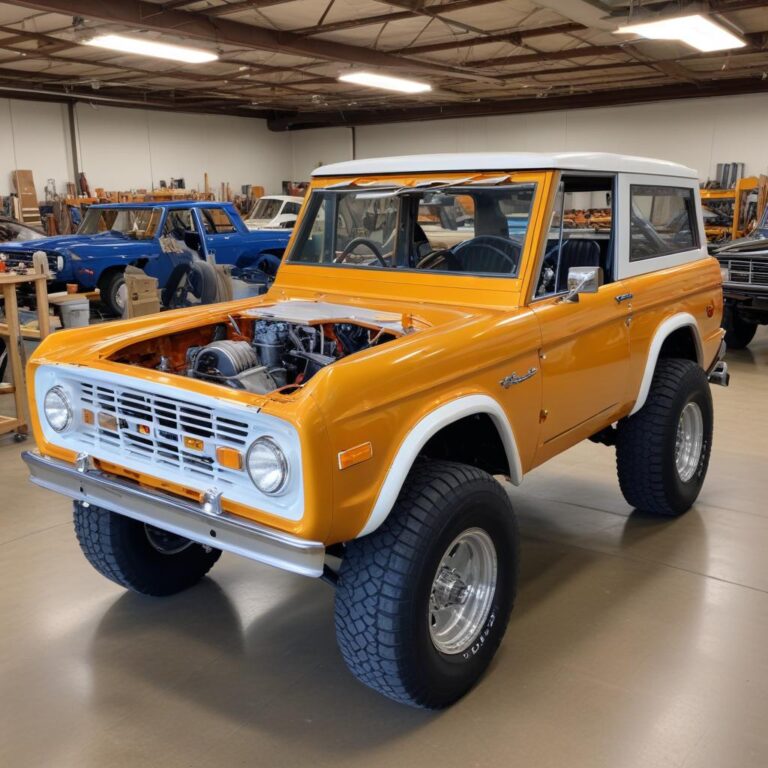
Vintage Modern (originally Vintage Broncos LLC) specializes in what they call “reverse” resto-mods . Traditional resto-modding takes a classic car and updates it with modern mechanicals. Vintage Modern flips the script: they take brand-new sixth-generation Broncos (2021 and newer) and replace the body panels with custom-designed pieces that mimic the look of the original first-generation Broncos from 1966 to 1977 .
The result is a vehicle that looks like a perfectly preserved classic but drives like a brand-new Bronco—because underneath, it is. These builds retain modern features like:
- Anti-lock brakes
- Traction and stability control
- Rearview cameras
- Android Auto and Apple CarPlay
- Air conditioning
- Modern powertrain options (2.3L EcoBoost, 5.0L V8, or even electric)
Prices start around $169,000 and can exceed $400,000 for fully loaded builds . The company has attracted serious celebrity clientele, including LeBron James, Kevin Hart, and Mark Wahlberg .
What Ford Claims
Ford’s lawsuit, filed October 31, 2024—fittingly on Halloween—alleges that Vintage Modern’s actions are part of a “calculated plan to knock off Ford’s intellectual property and to mislead consumers about the safety and authenticity of the modified vehicles” .
The specific allegations include:
- Trademark infringement: Using the Bronco name and logos without authorization
- Trade dress infringement: Copying the distinctive exterior design of classic Broncos
- False advertising: Creating consumer confusion about the origin and authenticity of the vehicles
- Dilution: Weakening the distinctiveness of the famous Bronco brand
- Counterfeiting: Creating unauthorized copies of Ford’s protected designs
Ford’s statement to the media was blunt: “Bronco is one of the most famous and loved brands in the world. Vintage Broncos’ unauthorized modifications and resale of modern Ford Broncos, reselling them as ‘vintage’ is misleading and unfairly profits from Ford and Bronco brand assets that we have spent decades building. We have an obligation to take all appropriate steps to stop those who put customers at risk and ride on the coattails of Ford’s significant investment and reputation” .
“Vintage has embarked on a calculated plan to knock off Ford’s intellectual property and to mislead consumers” — Ford Motor Company, court filing .
The Legal Framework: Understanding the Arguments
Ford’s Position: Protecting Hard-Earned Goodwill
Ford’s argument rests on decades of brand investment. The Bronco nameplate, introduced in 1966, has enormous cultural cachet. Even during the production hiatus (1996–2020), the brand remained alive through:
- Replacement parts sales
- Branded merchandise
- Enthusiast events and communities
- Concept vehicles and development work
Ford also points to safety concerns. The company declined to supply vehicles to Vintage Modern at wholesale, citing quality and safety issues with the modifications . By altering modern Broncos with non-Ford body panels, Vintage Modern is creating vehicles that haven’t undergone Ford’s safety testing—yet consumers might assume they’re authentic Ford products.
The amended complaint includes exhibits showing the cease-and-desist letter Ford sent in June 2024, trademark registration certificates, and examples of what Ford alleges is consumer confusion .
Vintage Modern’s Defense: Abandonment and First Sale
Here’s where it gets legally fascinating. Vintage Modern’s defense hinges on two arguments:
1. Trademark Abandonment
Under the Lanham Act, a trademark is considered abandoned if its use is discontinued with intent not to resume . Three consecutive years of nonuse creates a presumption of abandonment .
Vintage Modern argues:
- Ford didn’t produce Broncos from 1996 until 2020—that’s 24 years, well beyond the three-year presumption window
- The specific trade dress (exterior design) of first-generation Broncos hasn’t been used since 1977
- Therefore, Ford has abandoned any rights to those marks, allowing others to use them
This is the “zombie trademark” argument—marks that still have cultural life but have been legally abandoned through nonuse .
2. First Sale Doctrine
Vintage Modern also argues they’re simply modifying and reselling genuine Ford vehicles—something protected under the first sale doctrine, which allows resale of trademarked goods after they’ve been sold by the trademark owner .
But legal experts note this defense weakens when products are materially altered . If modifications are extensive enough that consumers might be confused about the product’s origin or quality, the first sale doctrine may no longer apply .
The Ferrari Precedent
Both sides are watching a 1991 case closely. In Ferrari S.P.A. v. Roberts, Ferrari sued a company making fiberglass kits that replicated the Daytona Spyder and Testarossa—cars Ferrari no longer sold . The Sixth Circuit ruled in Ferrari’s favor, finding that customer confusion at the point of sale wasn’t necessary; the overall appearance copying was enough to establish secondary meaning in the market .
If the court follows this precedent, Ford’s chances improve significantly—even with the production gap.
The “Zombie Trademark” Debate
This case has brought renewed attention to the concept of zombie trademarks—marks that are legally dormant but culturally alive .
A zombie trademark occurs when the original owner abandons a mark (through nonuse or failure to maintain registration), but the mark retains commercial value due to lingering consumer recognition . The question courts face: who gets to use that residual goodwill?
The American University Business Law Review explains: “A zombie trademark is a trademark that a new owner uses after the original owner has unquestionably abandoned it both legally and factually” .
In this case:
- Ford abandoned use of the Bronco trade dress in 1977
- They abandoned production of Broncos entirely from 1996–2020
- Yet the Bronco name and classic design remain incredibly valuable
Vintage Modern argues that value should be available for others to use. Ford argues they never truly abandoned the mark, maintaining brand presence through other channels and always intending to return.
“The lingering goodwill is key” — Jonathan Moskin, Foley & Lardner LLP .
The Players and Timeline
Key Parties
| Party | Role | Details |
|---|---|---|
| Ford Motor Company | Plaintiff | Filed suit October 31, 2024 |
| Vintage Modern, Inc. | Defendant | Formerly Vintage Broncos LLC; rebranded during lawsuit |
| Chau Nguyen | Defendant | Founder/owner, pictured with celebrity clients |
| Judge William M. Ray, II | Presiding Judge | U.S. District Court, Northern District of Georgia |
Case Timeline
| Date | Event |
|---|---|
| June 3, 2024 | Ford sends cease-and-desist letter to Vintage Broncos |
| October 31, 2024 | Ford files complaint in Georgia federal court |
| November 1, 2024 | Sealed exhibits filed; summons issued |
| November 12, 2024 | Amended complaint filed with additional exhibits |
| January 17, 2025 | Joint preliminary report and discovery plan filed |
| January 31, 2025 | Defendants file second amended answer |
| February 21, 2025 | Scheduling order issued; fact discovery closes September 2025 |
| January 30, 2026 | Deadline for dispositive motions |
Key Documents from the Docket
The court filings reveal:
- Exhibit 1 (sealed) : The June 2024 cease-and-desist letter
- Exhibits 2 & 5: Ford and Bronco trademark registration certificates
- Exhibits 8–12: Screenshots of Vintage Broncos’ website and social media, allegedly showing trademark use
- Certificate of service filings showing ongoing discovery activity
The Rebrand: From Vintage Broncos to Vintage Modern
One of the most visible outcomes of the lawsuit so far: the company now calls itself Vintage Modern .
The website footer now carries this disclaimer:
“Vintage Modern has no sponsorship, association, approval, or endorsement from any motor company including Ford Motor Company. The names Ford and Bronco are trademarks of Ford Motor Company, and any other trademarks mentioned belong to their respective owners. References to these trademarked names or marks are solely for identification purposes.
Vintage Modern vehicles should never be referred to or described as a ‘Vintage Ford Bronco,’ ‘Ford Bronco,’ ‘Vintage Modern Ford Bronco,’ or ‘Ford Vintage Modern Bronco.'”
Their Instagram bio now reads: “Not associated w Ford Motor Co.”
But legal experts note that disclaimers aren’t always a defense. In the 1999 Rolex case, the Ninth Circuit ruled that extensive modifications to Rolex watches couldn’t be cured by disclaimers—the altered goods still infringed .
Visualizing the Legal Arguments
This chart illustrates the key arguments from both sides:
Ford vs. Vintage Modern: Legal Arguments
Strength of legal arguments based on expert commentary (0-10 scale).
Broader Implications for the Automotive World
This isn’t just about one company building cool Broncos. The outcome could reshape the entire restoration and customization industry.
For Restoration Shops
If Ford wins, every shop building resto-mods of iconic vehicles may need to:
- Secure licensing agreements from manufacturers
- Use prominent, legally-vetted disclaimers
- Avoid using trademarked names in marketing
- Be cautious about copying “trade dress” (distinctive designs)
For Enthusiasts
The ruling could affect:
- What aftermarket parts are available
- Whether shops can advertise using model names
- The legality of certain modifications
- Prices for custom builds (if shops must pay licensing fees)
For Manufacturers
Other automakers are watching closely:
- Porsche has taken action against Singer Vehicle Design
- Ferrari has a long history of protecting its designs
- General Motors could potentially act against custom shops working on Corvettes, Camaros, etc.
The JD Supra analysis notes: “Ford’s actions highlight a growing trend in major brands pursuing legal recourse against customizers who use historic marks to produce and sell unauthorized goods” .
The Celebrity Factor
The involvement of high-profile clients adds an interesting dimension. LeBron James, Kevin Hart, and Mark Wahlberg have all been photographed with Vintage Modern builds . While they’re not parties to the lawsuit, their association with the brand underscores the commercial value Ford is trying to protect.
What’s Next?
The case is proceeding through discovery, with fact discovery scheduled to close September 5, 2025 . Expert reports are due through fall 2025, and dispositive motions (requests for the judge to rule without trial) are due by January 30, 2026 .
Several outcomes are possible:
- Settlement: The most likely outcome—many trademark cases settle before trial. Vintage Modern has already rebranded; further concessions could resolve the case.
- Summary judgment: Either side could ask the judge to rule based on undisputed facts. If the judge accepts Vintage Modern’s abandonment argument, Ford could lose without trial.
- Trial: If key facts are disputed (like whether Ford truly abandoned the mark), the case could go to trial in 2026.
- Appeal: Either side losing at trial would almost certainly appeal, extending the case for years.
FAQ Section
1. What exactly did Vintage Broncos do that got them sued by Ford?
Vintage Broncos (now Vintage Modern) took brand-new sixth-generation Ford Broncos and replaced the body panels with custom pieces designed to make them look like first-generation Broncos (1966–1977). They sold these vehicles for $169,000 and up, using the Bronco name in their marketing and branding .
2. Can Ford really stop someone from modifying their vehicles?
Modifying vehicles isn’t illegal. But using trademarked names and copying protected “trade dress” (the distinctive exterior design) in marketing and selling those modified vehicles can constitute trademark infringement. Ford argues consumers might mistakenly believe these are official Ford products .
3. What’s this about “zombie trademarks”?
A “zombie trademark” is a mark that’s legally abandoned (through nonuse) but still has commercial value and cultural recognition. Vintage Modern argues Ford abandoned the Bronco trademark during the 1996–2020 production hiatus and hasn’t used the classic design since 1977, making the marks available for others .
4. Did Ford really stop making Broncos for that long?
Yes. The original Bronco ran from 1966–1977. Second through fifth generations ran from 1978–1996. After 1996, Ford didn’t produce another Bronco until the sixth generation launched for 2021—a 24-year gap .
5. Who is Chau Nguyen?
Chau Nguyen is the founder of Vintage Modern (formerly Vintage Broncos). He’s listed as a defendant in the lawsuit and has been featured in photos with celebrity clients including LeBron James, Kevin Hart, and Mark Wahlberg .
6. Can’t they just use a disclaimer?
Vintage Modern has added prominent disclaimers to their website and social media stating they’re not affiliated with Ford. But legal experts note that disclaimers aren’t always a valid defense—especially when products are materially altered, as in the Rolex case .
7. What’s the “first sale doctrine”?
The first sale doctrine allows resale of trademarked goods after they’ve been sold by the trademark owner. Vintage Modern argues this protects them. However, the doctrine may not apply when goods are materially altered in ways that could confuse consumers .
8. Has anything like this happened before?
Yes. In 1991, Ferrari successfully sued a company making replica bodies for discontinued Ferrari models. More recently, Porsche has taken action against Singer Vehicle Design, and Ford stopped a YouTuber from producing Mustang GTD replicas .
9. What does Vintage Modern say in their defense?
They argue Ford abandoned its trademark rights during the production hiatus and hasn’t used the classic trade dress since 1977. They also accuse Ford of deceiving the USPTO with misleading trademark renewal filings using concept vehicle images .
10. What happens if Ford wins?
If Ford wins, it could set a precedent that companies need licenses to build and sell resto-mods of iconic vehicles. This could increase costs for custom builders and potentially reduce the availability of certain aftermarket products .
11. What happens if Vintage Modern wins?
A victory for Vintage Modern could open the door for more companies to capitalize on “zombie trademarks”—iconic designs that manufacturers have temporarily abandoned. This could create a new industry of retro-mod builders .
12. Where is the case now?
The case is in discovery phase, scheduled to continue through September 2025. Dispositive motions are due January 2026. The case is open, with no trial date yet set .
References
- UniCourt: Ford Motor Company v. Vintage Modern, Inc. et al – Case Details
- The Drive: Custom Shop That Used ‘Bronco’ Name Without Permission Forced to Rebrand
- Madan Law: Battle of the Broncos – Ford Fights for Its Vintage Legacy
- JD Supra: Ford Rears Bronco Head Against Vintage Modern
- American University Business Law Review: Ghosts of Brands Past
- Justia: Ford Motor Company v. Vintage Modern, Inc. Docket
- Carstens, Allen & Gourley: Vintage Modern Battles Ford Over Bronco Trademark
Call to Action
What do you think—should Ford be able to stop a small shop from building retro-mod Broncos, or is this corporate overreach? Drop your thoughts in the comments below. And if you had $200,000 to spend, would you buy a Vintage Modern build or a brand-new Raptor?