Aerodynamics vs. ford bronco mpg: Impact of Lift Kits and Tire Diameter
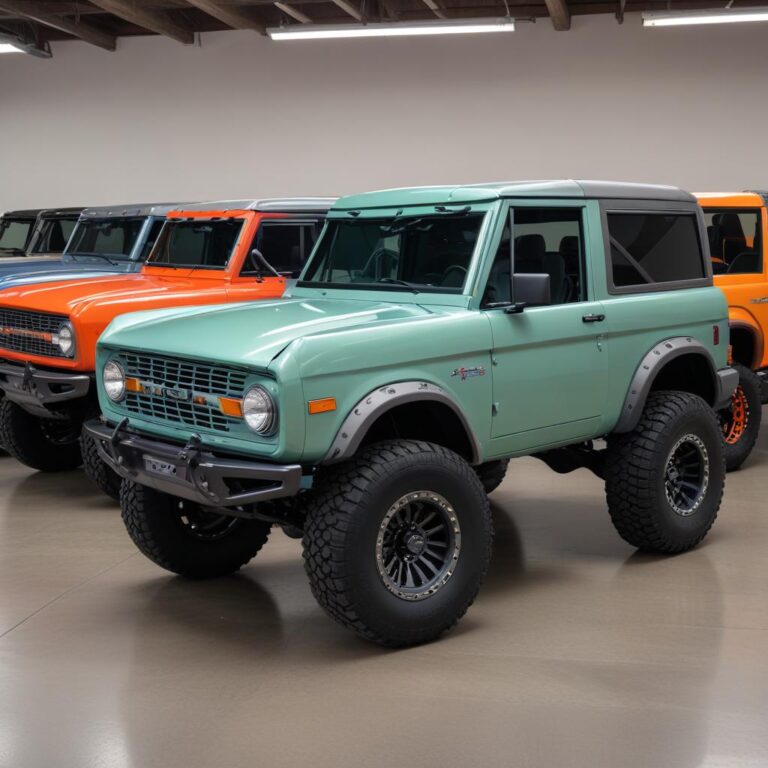
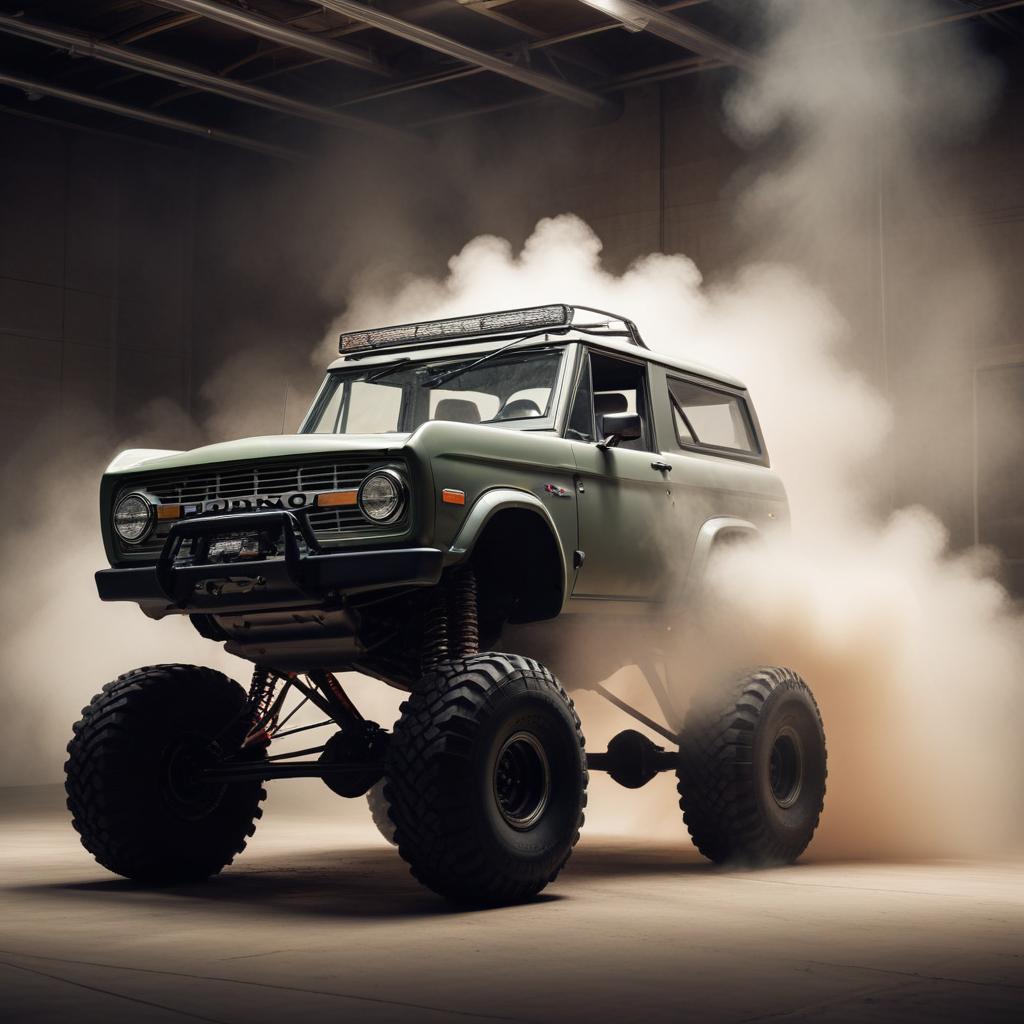
You just dropped $5,000 on a sweet 3-inch lift and 35-inch mud-terrains, and your Bronco looks absolutely menacing—but after your first highway trip, you’re staring at the dashboard wondering if there’s a hole in your gas tank.
Let’s be honest: we buy Broncos because they’re tough, capable, and look the part. But aerodynamics? A Bronco has the drag coefficient of a refrigerator. When you start adding lift kits and bigger tires, you’re not just changing the look—you’re fundamentally altering how air flows around (and under) your truck. And your wallet feels it every time you hit the pump.
TL;DR;
Lift kits and larger tires hurt your Bronco’s MPG through three main mechanisms: increased aerodynamic drag from more air getting underneath, higher rolling resistance from heavier, wider tires, and altered gearing that pushes your engine out of its efficiency sweet spot . Real-world data from Bronco owners shows a 1″ lift alone might cost you 1 MPG or less, but jumping to 35s or 37s can drop fuel economy by 2–5 MPG depending on your driving . The good news? You can mitigate some losses with proper tire pressure, regearing, and smart driving habits.
Key Takeaways
- Aerodynamics Matter More Than You Think: Lifting your Bronco increases the frontal area and allows turbulent air under the truck—think of it as a parachute dragging behind you .
- Tire Weight is the Silent Killer: A 35-inch mud-terrain can weigh 15–20 lbs more than a stock tire. That rotating mass requires significant energy to accelerate .
- Gearing Changes Everything: Bigger tires effectively “tall” your gear ratio, making your engine work harder. Regearing can recover some lost MPG and performance .
- Real-World Numbers: Owners report 1–2 MPG loss with mild lifts and 33–35″ tires, and 3–5 MPG loss with 3″+ lifts and 37s .
- Speed is Your Enemy: That lifted Bronco that got 16 MPG at 65 mph might drop to 13 MPG at 75 mph—aerodynamic drag increases with the square of speed .
The Science of a Brick: Why Broncos Hate Wind
Ever wonder why semi trucks have those big fairings and why your lifted Bronco feels like it’s pushing a wall at highway speeds?
Let’s break down the physics in plain English. Your Bronco is what engineers call a “bluff body”—basically, it’s not winning any beauty contests in a wind tunnel. The stock Bronco has a drag coefficient around 0.40–0.45, which is already terrible compared to a sedan’s 0.25–0.30. When you add a lift kit, you’re making that number worse in two specific ways.
The Underbody Nightmare
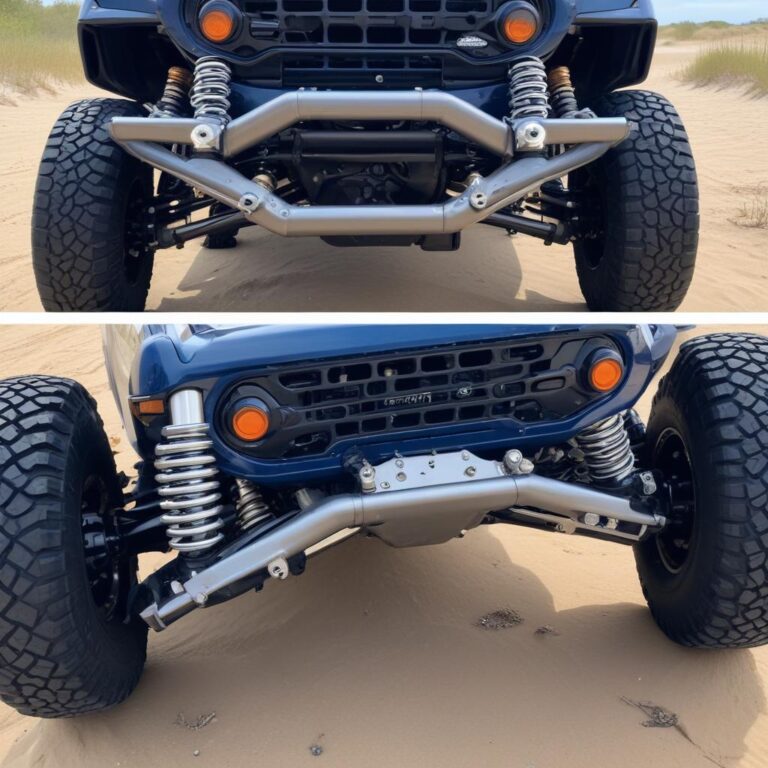
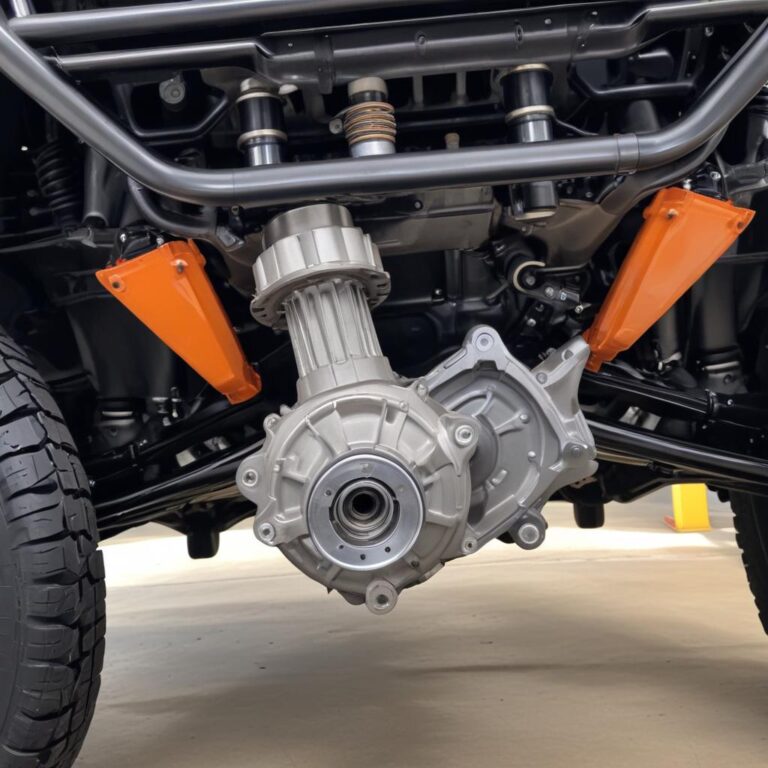
When you lift your Bronco, you’re creating a massive gap underneath where air can get trapped and create turbulence. Think of it like this: stock, the air slides under the truck with some resistance. Lifted, that air slams into differentials, control arms, and driveshafts, creating drag that literally pulls you backward .
One forum user put it perfectly: “The bottom line is the aerodynamics of the vehicle are ruined with all this add-on equipment and the lift kit. Air can’t pass easily underneath, because now the axle and suspension are hanging down” .
The speed connection: Here’s where it hurts. Aerodynamic drag doesn’t increase linearly—it increases with the square of velocity. Double your speed, and you quadruple the drag force. That lifted Bronco that feels fine at 55 mph becomes a gas-guzzling monster at 75 mph .
Frontal Area: You’re Getting Bigger
Every inch of lift increases your Bronco’s frontal area—the size of the hole you’re punching through the air. Add wider tires that stick out past the fenders, and you’re catching even more air. Those 35×12.50s that look awesome poking out? They’re acting like air brakes .
“The power required to accelerate a car is a square function. Doubling the acceleration requires four times the energy. Aerodynamic drag is a cube function. Doubling the speed requires eight times the power” .
The Tire Weight Spiral
Here’s something most people don’t consider: rotating mass. A heavier tire requires exponentially more energy to spin up to speed. One Bronco owner did the math:
“Two tires, same diameter, same tread—only difference is weight. One is 50 lbs, the other is 65 lbs. At 50 mph, the heavier tire requires 3.40 kJ more energy per tire, or 13.6 kJ for all four” .
That energy comes from gasoline, and you pay for it every time you accelerate.
The Gearing Compounding Effect
When you increase tire diameter, you effectively change your gear ratio. A stock Bronco with 32″ tires and 3.73 gears might be perfectly optimized. Put 35s on without regearing, and your effective ratio drops to roughly 3.40—meaning your engine has to work harder to maintain speed, especially on hills .
One forum member explained: “Lower RPM doesn’t necessarily mean better mileage since at a given RPM, a heavier load requires more fuel to maintain that RPM” .
Real-World Data: What Bronco Owners Are Actually Seeing
Let’s move from theory to reality. I’ve compiled experiences from Bronco owners who’ve made the mods you’re considering.
Mild Lifts (1–2 inches) with Stock-ish Tires
A Bronco Sport owner with a 1.25″ lift reported:
“I really didn’t notice any difference in MPG with the lift. It wasn’t until I installed the larger tires that I saw a drop, and that was only about 1–2 mpg less” .
This matches other reports—the lift alone, especially if you maintain stock tire sizes, has a minimal impact. The real killer is tires.
Moderate Upgrades (2–3 inches with 33–35″ Tires)
A Ranger owner (same platform as Bronco) with a 2–3″ lift and 33″ tires noted:
“The sample size is too small but so far it seems like I may have lost ~1 MPG with the lift and tires” .
Another Bronco owner with 33s and a moderate lift reported dropping from about 17 MPG to 15–16 MPG in mixed driving .
Heavy Mods (4+ inches with 35–37″ Tires)
This is where it gets painful. Owners running 37s with significant lifts report 12–14 MPG highway, down from 17–18 stock . One FJ owner with similar aerodynamics noted:
“Highway at 85mph—15mpg. Highway at 60–65mph—22mpg. If there is a headwind the mpg drops noticeably” .
That 10 mph difference cutting 7 MPG? That’s aerodynamic drag in action.
The Regearing Redemption
Here’s the encouraging part. One Bronco owner documented his experience:
“When it comes to lifts if you regear correspondingly to offset the effects of larger diameter tires, then the fuel mileage hit isn’t quite as bad… With the lift, tires, and new gears, fuel economy was only about 2 MPG less than it was stock” .
He went from 3.55 gears to 4.56 with 33s—actually steeper than stock equivalent—and traded some highway MPG for better acceleration and hill-climbing.
The Modification Impact Comparison
To help you visualize what different setups cost you at the pump, here’s a breakdown based on real owner reports:
| Modification Level | Typical Setup | MPG Loss (Highway) | Notes |
|---|---|---|---|
| Leveling Kit Only | 1–1.5″ front lift, stock tires | 0–1 MPG | Minimal aero change |
| Mild Lift + Tires | 2″ lift, 33″ all-terrains | 1–2 MPG | Tire weight is main factor |
| Sasquatch Equivalent | 1.2″ lift, 35″ mud-terrains | 2–3 MPG | Factory-optimized gearing helps |
| Full Overland Build | 3–4″ lift, 37″ tires, bumpers, rack | 4–6 MPG | Aero + weight + gearing triple threat |
| Extreme Build | 6″+ lift, 40″ tires, full armor | 6–10 MPG | Single-digit MPG possible at highway speeds |
Visualizing the Impact
This chart shows the relationship between tire diameter and fuel economy based on owner-reported data. Notice how the curve steepens as tires get larger—that’s the compounding effect of weight, rolling resistance, and gearing changes.
Bronco Fuel Economy vs. Tire Diameter
Estimated highway MPG based on owner reports (2.3L/2.7L combined).
The Hidden Factors Most People Miss
Speedometer and Odometer Errors
Here’s a trap many fall into: when you put on bigger tires, your speedometer reads slower than you’re actually going. If you’re calculating MPG based on your odometer without correcting for tire size, you’re short-changing yourself on miles traveled .
One owner calculated: Going from 29″ to 31″ tires means your odometer reads 6% fewer miles than you actually traveled. That 12.5 MPG you’re calculating might actually be 13.4 MPG .
The fix: Use a GPS to verify your speed, or recalibrate your speedometer using Ford’s programming tools (FORScan or dealer). Many aftermarket tuners also offer speedometer calibration.
Tire Pressure: The Free MPG Hack
Here’s something that costs nothing but gets overlooked constantly:
“Most guys complaining of loss of MPG due to heavier tires do not have the pressure adjusted correctly… Optimum MPG needs a crown for less rolling resistance” .
Aggressive mud-terrain tires often require different pressures than your door jamb sticker suggests. Running them at 35–40 psi (cold) instead of 30–32 can reduce rolling resistance significantly—but never exceed the tire’s maximum sidewall pressure.
Driving Style Adjustments
The way you drive a lifted Bronco matters more than the lift itself. One forum member nailed it:
“Drive as if there was a raw egg in its shell between your foot and the pedals. Only use slow and gentle pressure on both gas and brake pedals” .
With heavy tires, hard acceleration burns fuel at an alarming rate. Smooth inputs = saved gas.
Mitigation Strategies: Getting Some MPG Back
Regearing: The Math
If you’ve gone to 35s or larger, regearing should be on your radar. Here’s the target effective ratio:
- Stock 32″ tires with 3.73 gears = baseline
- For 35s: Target 4.10–4.56 gears (depending on engine and driving)
- For 37s: Target 4.56–4.88 gears
- For 40s: 5.13 or lower
“Typically when you see Jeeps talking about getting 12-13 MPG it’s because they’ve moved up with 37-38 and haven’t regeared” .
Weight Reduction Where Possible
That roof rack you only use twice a year? Take it off. The 100 lbs of recovery gear in the cargo area? Leave the essentials, store the rest at home. Every pound you remove reduces the energy needed to move your Bronco .
Tire Choice Matters
Not all 35s are created equal. A set of 35″ all-terrains might weigh 55 lbs each, while 35″ mud-terrains can hit 70+ lbs. That’s 60 lbs of rotating mass difference—huge for acceleration and MPG. If you don’t need extreme mud traction, consider lighter all-terrains .
Slow Down
This is the hardest one for most of us, but the math doesn’t lie. Dropping from 75 mph to 65 mph on the highway can improve MPG by 10–20% in a lifted truck .
“If there is a headwind the mpg drops noticeably” . You can’t control the wind, but you can control your speed.
FAQ Section
1. How much MPG will I lose with a 2-inch lift and 33-inch tires on my Bronco?
Most owners report a loss of 1–3 MPG depending on driving conditions. The lift alone has minimal impact (0–1 MPG), while the heavier tires account for the rest . If you stick with all-terrains instead of mud-terrains, you’ll be on the lower end of that range.
2. Do I need to regear my Bronco after installing 35s?
It depends on your engine and driving. The 2.3L EcoBoost benefits from regearing to 4.10 or 4.56 for 35s, especially if you drive in mountainous areas. The 2.7L has more torque and can handle 35s with stock gearing (4.70 in Sasquatch) reasonably well, but regearing will improve performance and potentially recover some MPG .
3. Why did my MPG drop so much after my lift even though I kept stock tires?
If you installed a leveling kit or lift without changing tires, the drop is likely due to increased aerodynamic drag from more air flowing underneath. A 1–2″ lift alone shouldn’t cost more than 1 MPG—if you’re seeing more, check that your alignment was done correctly and that brakes aren’t dragging .
4. Will a tuner or programmer help recover lost MPG?
Yes, if you recalibrate your speedometer for larger tires. Many tuners also optimize shift points and fuel mapping, which can help. However, don’t expect miracles—a tuner might recover 1 MPG, not the 3–5 you lost .
5. Are 35s really that much worse than 33s for MPG?
Yes, and here’s why: 35s are significantly heavier, have more rolling resistance, and create more aerodynamic turbulence if they stick past the fenders. The jump from 33 to 35 often costs 2 MPG, while 31 to 33 might cost 1 MPG .
6. Does tire pressure affect MPG on lifted Broncos?
Absolutely. Heavier, larger tires often need higher pressures than stock to maintain proper shape and minimize rolling resistance. Start at the door jamb pressure and increase in 2-psi increments while monitoring tread wear. Never exceed the tire’s max pressure .
7. What’s the best lift kit for maintaining MPG?
The Ford Performance lift kit or Sasquatch package is engineered to minimize negative impacts—they maintain proper geometry and often include tuned shocks. Aftermarket kits vary widely; look for kits that include control arm drops or corrections to maintain factory suspension angles .
8. How much does a roof rack affect MPG?
A roof rack alone can cost 1–2 MPG, even empty. Load it with gear, and you’re looking at 3–5 MPG loss. The rack creates turbulence and increases frontal area. If you only need it for trips, consider a removable system .
9. Will going to 4.56 gears make my MPG worse on the highway?
If you’ve installed 35s or 37s, 4.56 gears will put your RPMs back in the efficient range. Without regearing, your engine lugs and works harder, burning more fuel. Most owners report similar or slightly better highway MPG after proper regearing, plus much better around-town performance .
10. Is it worth lifting a Bronco if I care about MPG?
That depends on your priorities. If you want the capability and look, accept the 2–5 MPG hit as the cost of admission. If fuel economy is your primary concern, a lifted Bronco might not be the right vehicle. But for most of us, the smile per gallon ratio makes it worthwhile .
References
- Bronco Sport Forum: 1.25″ Lift 65,000 Mile Review
- Bronco6G Forum: Tire Size and MPG Discussion
- Ranger6G Forum: Dobinsons 2-3″ Lift MPG Impact
- Car Talk Community: Regearing to Offset Lift MPG Loss
- Ford-Trucks.com: Tire Size Change MPG Calculation
- Car Talk Community: Aerodynamic Factors in Fuel Economy
Call to Action
Have you lifted your Bronco or swapped to bigger tires? What kind of MPG are you seeing, and what’s your setup? Drop your numbers in the comments below—real-world data helps the whole community make better decisions! And if you’re planning a build, what’s your target: maximum capability or balanced daily driver?