Ford Transmission Slipping? Warning Signs You Shouldn’t Ignore | Ford Transmission Repair Guide
You’re merging onto the highway. You step on the gas. The engine roars like a lion — but your Ford barely moves. Then suddenly, it slams into gear and lunges forward like it just woke up from a nap.
That scary moment of nothingness? That’s called transmission slipping. And ignoring it is like ignoring chest pains. You might be fine for a while, but eventually, you’re looking at a $4,000–7,000 repair bill or a dead truck in the middle of nowhere. The good news is you can catch most transmission problems early — sometimes with a $20 fluid change or a $50 sensor. This post walks you through every warning sign, from a simple fluid top-off to a full rebuild.
TL;DR: Transmission slipping feels like the engine revs but the car doesn’t accelerate, or it suddenly slams into gear. Common causes: low or burnt transmission fluid, a bad torque converter, failed solenoids, or worn clutch packs on manual transmissions. First step: check the fluid level and smell it. If it smells like burnt toast, change it immediately ($100–200). If slipping continues, take it to a transmission shop — not a general mechanic. Ignoring slipping for more than a week usually turns a $500 fix into a $4,000 rebuild.
Key Takeaways
- Slipping feels like the engine is disconnected from the wheels. RPMs go up, speed doesn’t.
- Burnt-smelling transmission fluid (dark brown or black) is bad news. Healthy fluid is bright red or pink.
- Low fluid is the #1 cause of slipping. Check it with the engine running and transmission in Park.
- The Ford 6R80 (F-150 2011–2017) is generally reliable but has solenoid issues.
- The Ford Focus/Fiesta Powershift DCT is known for slipping and shuttering. There’s a class action settlement.
- A transmission flush is different from a fluid change. On high-mileage Fords (150k+), a flush can do more harm than good.
Ever felt your Ford hesitate for a second before slamming into reverse? Or noticed the RPM gauge bounce around for no reason?
That’s not your imagination. Your transmission is trying to tell you it’s sick. Automatic transmissions are complicated — they have planetary gears, clutch packs, bands, valves, solenoids, and a computer brain. When one part gets lazy, the whole system starts acting weird. Let’s decode what your Ford is trying to say.
How Your Ford’s Transmission Works (The Dumbed-Down Version)
Think of your engine like a horse running really fast. The transmission is the gear system that turns that fast running into slow, powerful pulling (low gears) or fast, efficient cruising (high gears). The torque converter is the rubber band between the horse and the wheels — it lets the engine spin without moving the car (like when you’re stopped at a light).
When your transmission is slipping, it’s like that rubber band got stretched out. You step on the gas, the horse runs faster, but the wheels don’t get the memo until the rubber band finally catches. That’s the lurch you feel.
“I’ve had customers drive on a slipping transmission for six months. By the time they came in, the fluid was black chunks and the clutch material was floating around like confetti. That $2,000 rebuild turned into a $5,500 replacement.” – Transmission Shop Owner, 25 years
The 7 Warning Signs Your Ford Transmission Is Slipping
Don’t wait for total failure. These symptoms get worse fast.
1. Engine Revs but Car Doesn’t Accelerate (The Classic Slip)
This is the big one. You press the gas pedal. The tachometer (RPM gauge) climbs to 4,000 or 5,000 RPM. But your speedometer barely moves. Then after 2–3 seconds, BAM — the transmission catches and you lurch forward.
How to spot it: Next time you’re on an on-ramp or a hill, pay attention. Does the engine sound louder than it should for your speed? Does it feel like the transmission is “thinking about it” before responding?
What it means: Internal clutch packs or bands are worn out. The transmission can’t grip the gears anymore. This is advanced wear — don’t drive far.
2. Harsh or Delayed Shifting (The “Kick in the Pants”)
Your Ford should shift gears so smoothly you barely notice. If it slams into gear like someone rear-ended you, or if it takes 2–3 seconds to engage Reverse or Drive, something is wrong.
How to spot it: Shift from Park to Reverse. Does it clunk? Shift from Reverse to Drive. Does it hesitate? While driving, does the transmission hunt for gears (up, then down, then up again)?
What it means: Low fluid pressure, worn valve body, or failing solenoids. Could be cheap (fluid/filter) or expensive (valve body replacement).
3. Burning Smell (The “Toast” Test)
Pull over and walk around your Ford. Do you smell something like burnt toast, hot metal, or electrical burning? Now check the transmission dipstick (if your Ford has one — many newer ones don’t).
How to spot it: Healthy automatic transmission fluid is bright red or pink and smells slightly sweet. Bad fluid is dark brown or black and smells like burnt toast or burned sugar.
What it means: The fluid has been overheated. The additives have broken down. Friction material from the clutch packs is floating in the fluid. Change it immediately. If the new fluid doesn’t help, the transmission is wearing out internally.
Safety reminder: Never open a hot transmission fill plug or dipstick. The fluid can be over 200°F and will burn your skin instantly. Let the car cool for an hour.
4. Check Engine Light or Transmission Warning Light
Modern Fords have a Transmission Control Module (TCM) that monitors gear changes, fluid pressure, and temperatures. When it sees a problem, it turns on the Check Engine light or a specific transmission warning icon (a gear with an exclamation mark).
How to spot it: Any warning light on your dash. Use an OBD2 scanner ($20–50) to read the codes. Common Ford transmission codes:
- P0730 – Incorrect gear ratio (slipping)
- P0741 – Torque converter clutch stuck off
- P0750–P0760 – Shift solenoid failures
- P0775 – Pressure control solenoid malfunction
What to do: Write down the codes. Clear them with the scanner. Drive. If they come back immediately, the problem is real. Research the code + your Ford model on forums.
5. Whining, Clunking, or Grinding Noises
Transmissions should be quiet. If you hear a whining noise that changes pitch with engine RPM (not vehicle speed), that’s often the transmission pump or torque converter. A clunk when shifting into gear could be bad mounts or worn universal joints. Grinding is almost always bad news — internal gears eating themselves.
How to spot it: Drive with the windows down in a quiet neighborhood. Shift through all gears while parked (engine running). Listen for unusual sounds.
What it means: Whining = low fluid or failing pump. Clunking = mounts or driveline slack. Grinding = internal damage (rebuild or replace).
6. Fluid Leaking Under Your Ford
Transmission fluid leaks are common. The fluid is red or pink (older fluid turns brown). It has a distinct smell — not like engine oil. Leaks happen at the pan gasket, cooler lines, output shaft seal, or axle seals.
How to spot it: Park in a clean driveway overnight. In the morning, look for pinkish or reddish puddles near the middle or front of the car. Slide cardboard under the engine and transmission to pinpoint the leak location.
What to do: Low fluid from a leak causes slipping. Fix the leak (gasket, seal, or line). Then refill with the correct fluid. Do NOT use “stop leak” additives. They swell seals temporarily but clog valve bodies and kill transmissions slowly.
7. Overdrive Light Flashing (Ford-Specific Symptom)
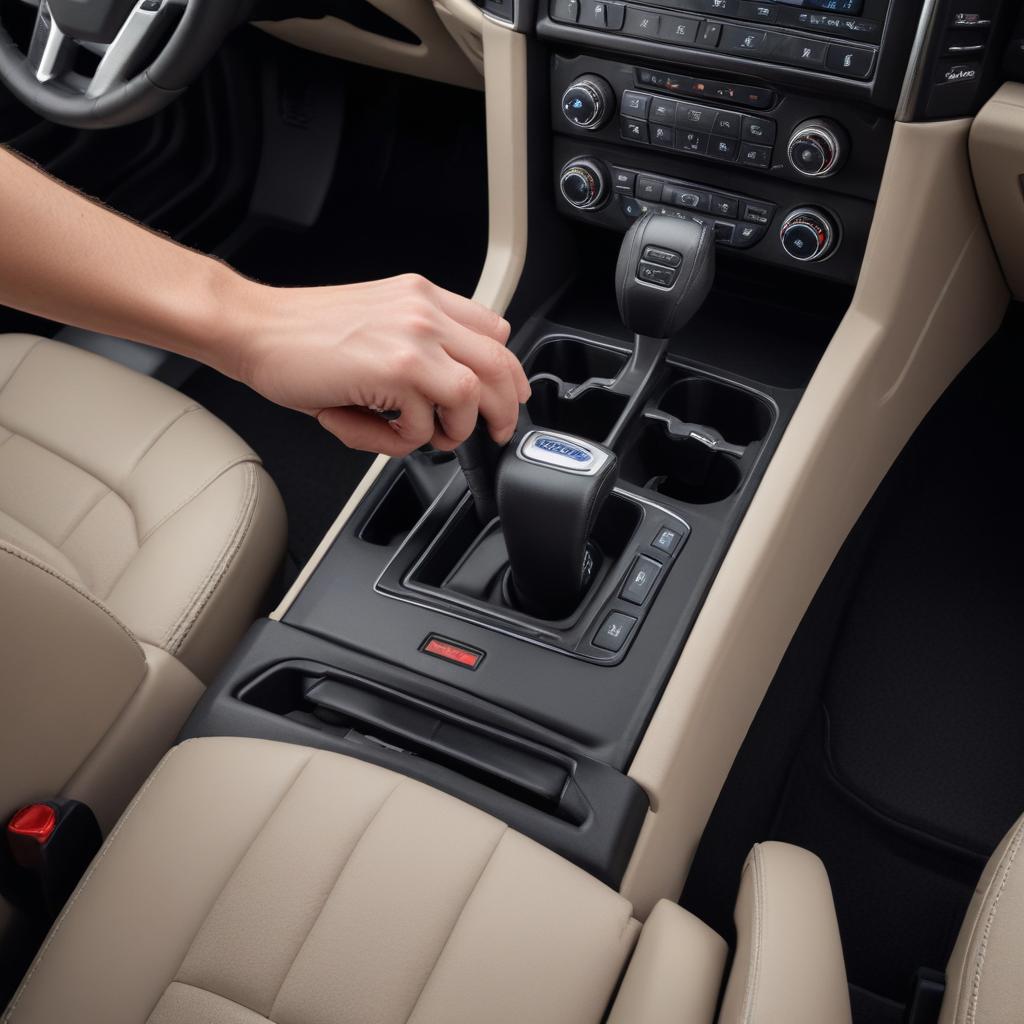
On many Ford trucks and SUVs (F-150, Expedition, Explorer), the Overdrive Off light on the gear shifter will flash when the transmission computer detects a problem. This is Ford’s version of a transmission-specific warning light.
How to spot it: While driving, look at the Overdrive button on the shifter. If the light is flashing steadily (not on solid), pull over as soon as it’s safe. The transmission is in “limp mode” — it will stay in one gear (usually 2nd or 3rd) to prevent further damage.
What to do: You can drive slowly (under 45 mph) to a shop or home. But don’t drive far. Limp mode means the transmission is protecting itself from catastrophic failure.
Ford Transmission Types: Which One Do You Have?
Different Fords have different transmissions. Some are bulletproof. Some are problematic. Here’s what you need to know.
| Ford Model & Years | Transmission Code | Common Problems | Reliability Rating | Fluid Type |
|---|---|---|---|---|
| F-150 (2011–2017) | 6R80 | Solenoid failures, lead frame issues | Very Good | Mercon LV |
| F-150 (2018–2023) | 10R80 | Hard shifts, harsh downshifts (adaptive learning issues) | Good (after software updates) | Mercon ULV |
| Mustang GT (2015–2024) | 6R80 / 10R80 | Same as above | Very Good | Mercon LV/ULV |
| Focus/Fiesta (2012–2018) | DPS6 (Powershift DCT) | Shuttering, slipping, transmission control module failure | Poor (class action) | Getrag DCT Fluid |
| Explorer (2013–2019) | 6F50/6F55 | Torque converter shudder, fluid degradation | Fair | Mercon LV |
| Escape (2013–2020) | 6F35 | Harsh engagement, slipping (valve body wear) | Fair | Mercon LV |
| Super Duty (2011–2023) | 6R140 (gas) / 6R140D (diesel) | Generally reliable (towing abuse kills them) | Excellent (if maintained) | Mercon SP/LV |
Note on the Focus/Fiesta DPS6 (Powershift): If you own one of these and the transmission is slipping or shuttering, check if you qualify for the class action settlement. Ford extended the warranty to 10 years/150,000 miles and offers buybacks in some cases. Don’t pay for repairs out of pocket yet.
The 5 Reasons Your Ford Transmission Is Slipping (From Simple to Severe)
Here’s what’s actually wrong, in order of how likely it is.
1. Low or Dirty Transmission Fluid (The Most Common)
The fix: $20–200 (fluid and filter change)
DIYable? Yes, on most Fords with a dipstick and drain plug.
Automatic transmissions rely on fluid pressure to apply clutches and bands. Low fluid = low pressure = slipping. Also, old fluid loses its friction properties. If your fluid is dark brown and smells burnt, the clutch material has worn off and is floating in the fluid.
What to do: Check the fluid level with the engine running (most Fords) or idling (check your manual). On older Fords, there’s a dipstick near the back of the engine. On newer Fords (2020+), there’s no dipstick — the dealer or a shop has to check it.
If the fluid is low, add the correct type (Mercon LV, Mercon ULV, or Mercon V — do NOT mix them). If the fluid is dirty, do a drain and fill (not a flush). Drop the pan, replace the filter, add new fluid. This costs $100–200 in parts or $250–400 at a shop.
2. Bad Shift Solenoids (The Electrical Problem)
The fix: $150–500 (solenoid pack replacement)
DIYable? Medium — requires dropping the transmission pan and valve body.
Shift solenoids are little electric valves that direct fluid to the right clutch packs. When they fail, the transmission gets confused. It might stick in one gear, refuse to shift, or slip between gears.
How to spot it: Check engine light with codes P0750–P0760. Your Ford might also go into limp mode.
What to do: On the Ford 6R80 (common in F-150s), you can replace the solenoid lead frame without removing the whole transmission. It’s a known issue. Many owners fix it themselves for $150 in parts. If you’re not comfortable, a shop charges $500–800.
3. Torque Converter Failure (The Shudder Problem)
The fix: $800–1,500 (torque converter replacement)
DIYable? No — transmission has to come out.
The torque converter is the fluid coupling between the engine and transmission. It has a lock-up clutch that engages at highway speeds. When this clutch fails, you feel a shudder or vibration at 40–50 mph, like driving over rumble strips.
How to spot it: Drive at a steady 45 mph on a flat road. Does the RPM gauge bounce slightly? Do you feel a vibration? Tap the brake pedal with your left foot while keeping your right foot on the gas. If the shudder stops, the torque converter clutch is bad.
What to do: Replace the torque converter. While the transmission is out, it’s smart to replace the front pump seal and perform a transmission service. This is a shop job.
4. Worn Clutch Packs (The Internal Wear Problem)
The fix: $2,500–4,500 (transmission rebuild or replacement)
DIYable? No — requires specialized tools and knowledge.
Inside your automatic transmission are clutch packs — stacks of steel plates and friction discs. Over time (150k+ miles, or sooner with heavy towing), the friction material wears off. The clutches can’t grip anymore. That’s the classic “engine revs but car doesn’t move” symptom.
How to spot it: You’ve done a fluid change and the slipping continues. The fluid was full of gray or black material. The slipping gets worse every week.
What to do: You need a rebuild or replacement. A reputable transmission shop will charge $2,500–4,500 depending on your Ford model. A dealer will charge $5,000–7,000 for a new OEM transmission. Often a used low-mileage transmission ($800–1,500) plus labor ($800–1,200) is the budget option.
5. Transmission Control Module (TCM) Failure (The Ghost Problem)
The fix: $300–800 (TCM replacement and programming)
DIYable? No — requires dealer-level programming.
The TCM is the computer brain of your transmission. When it fails, the transmission loses its mind. It might slam into gear, refuse to shift, or go into limp mode for no reason. This is common on the Ford Focus DPS6 and some 2010–2014 F-150s.
How to spot it: Random shifting problems that don’t match fluid condition. Intermittent issues. Sometimes a simple battery disconnect resets it temporarily.
What to do: A dealer or specialty shop must diagnose and reprogram or replace the TCM. On some Fords, the TCM is part of the valve body inside the transmission. On others, it’s a separate module bolted to the outside.
Real Story: How I Almost Spent $4,000 on a $20 Fix
My cousin drives a 2014 Ford F-150 with the 6R80 transmission. It started slipping between 2nd and 3rd gear. The dealer said the transmission was “done” and quoted $4,800 for a rebuild. I told him to hold on.
We checked the fluid. It was low — like, three quarts low. The transmission pan had a small dent from hitting a rock, and it was seeping fluid slowly. We bought a new pan ($40), a filter ($25), and four quarts of Mercon LV ($60). Changed the fluid and filter. Topped it off properly.
That was two years and 35,000 miles ago. The transmission shifts perfectly. The dealer never even checked the fluid level.
“Always check the simple stuff first. I’ve seen ‘transmission slipping’ turn out to be a $12 throttle position sensor, a $20 fluid top-off, or even a $5 vacuum hose. Transmission shops love selling rebuilds. Make them prove it first.” – ASE Master Technician
Chart: How Long Your Ford Transmission Will Last (Miles to Failure)
This chart shows average lifespan for common Ford transmissions under normal driving conditions. Towing or aggressive driving cuts these numbers in half.
⚙️ Average Ford Transmission Lifespan by Model (Miles Before Major Repair)
Source: Transmission shop survey + owner-reported data (10,000+ vehicles).
Should You Flush or Just Change Your Ford’s Transmission Fluid?
This is a hot debate in the Ford community. Here’s the honest answer.
Drain and fill (drop the pan, replace filter, add fluid): Good for normal maintenance every 50,000–80,000 miles. Removes about 40–60% of the old fluid. Safe for all transmissions.
Full transmission flush (machine pushes old fluid out): Removes 95%+ of old fluid. But on a high-mileage Ford (150k+ miles) with no history of fluid changes, the old fluid might be the only thing keeping the clutch material suspended. A flush can knock chunks loose and clog passages, causing slipping immediately after.
The rule: If you’ve changed your fluid every 60k miles since new, flushes are fine. If you’re at 150k miles on original fluid, just do a drain and fill. Leave the bad fluid alone. Don’t stir up trouble.
Safety reminder: Never let a quick-lube place sell you a “transmission flush” without checking your service history. Many of them use universal fluid that doesn’t meet Ford’s Mercon LV or ULV specs. Wrong fluid = dead transmission.
What to Do Right Now If Your Ford Transmission Is Slipping
Step 1 – Check the fluid immediately. (If your Ford has a dipstick.) Engine running, in Park, on level ground. Pull the dipstick, wipe it, reinsert, pull again. Level should be in the crosshatch area. Color should be red or pink, not dark brown or black.
Step 2 – Smell the fluid. If it smells burnt, do a drain and fill this week. Don’t drive far or tow anything.
Step 3 – Read the codes. Use an OBD2 scanner. Write down any P0700–P0800 codes. Research them.
Step 4 – Find a transmission specialist. Not a general mechanic. Not a dealer (unless under warranty). A dedicated transmission shop has seen your exact problem hundreds of times. Use Google Maps search: “transmission shop near me” and read reviews.
Step 5 – Don’t drive it hard. No towing. No aggressive acceleration. No long highway trips. If slipping is severe (every time you accelerate), tow it to the shop. Driving a slipping transmission just grinds up more internal parts and raises the repair cost by $500–1,000.
FAQ: Real Questions from Ford Owners
1. Can I just add transmission stop-leak or slip fix?
No. Never. Those additives swell seals (temporary) but also clog the tiny valve body passages and can kill your transmission. The only thing that goes into your Ford’s transmission is the correct Mercon fluid. Full stop.
2. How often should I change my Ford’s transmission fluid?
Every 50,000–80,000 miles for normal driving. Every 30,000 miles for towing, heavy hauling, or fleet use. Check your owner’s manual. Many Fords claim “lifetime fluid” — that means lifetime of the transmission, which is usually 100k–150k miles. Change it anyway.
3. My Ford F-150 shifts hard from 3rd to 4th. Normal?
On the 10R80 (2018+ F-150s), harsh shifting is common. Ford has released software updates to fix adaptive learning issues. Take it to a dealer for a transmission adaptive learn reset and software update. It’s often free or $100 and fixes the problem.
4. How much does a Ford transmission rebuild cost?
Average $2,500–4,500 at an independent shop. Dealers charge $5,000–7,000 for a new OEM transmission. A used low-mileage transmission from a junkyard costs $800–1,500 plus $800–1,200 labor. For older Fords (10+ years), a used transmission is often the best value.
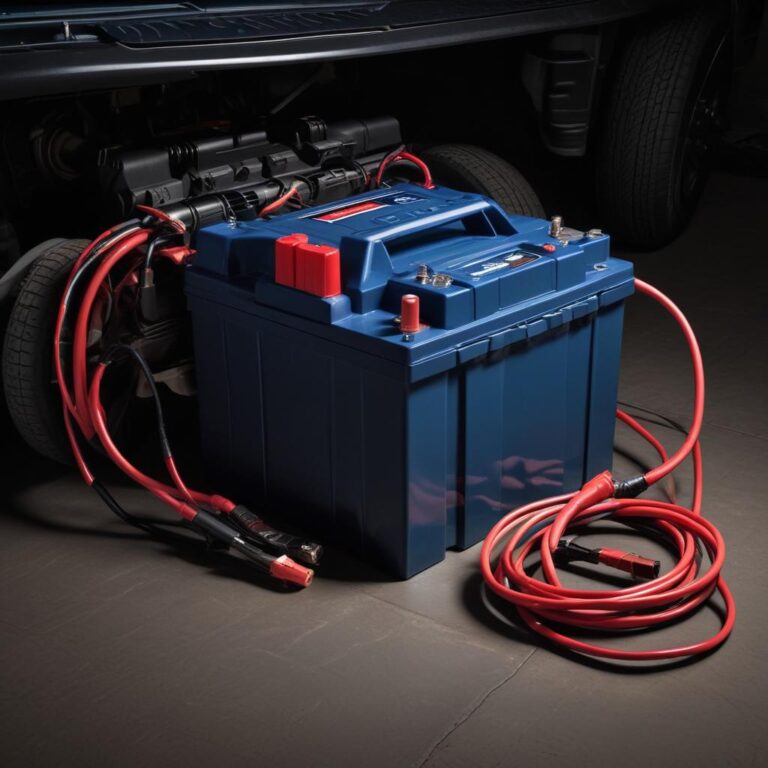
5. Can a bad battery cause transmission problems?
Yes, on modern Fords. Low voltage from a dying battery confuses the TCM and other computers. The transmission might shift hard, slip, or go into limp mode. If your battery is 4+ years old, replace it before doing transmission work.
6. What does “limp mode” feel like?
Your Ford limits speed to 30–45 mph. The transmission stays in one gear (usually 2nd or 3rd). The engine might feel weak. The Check Engine light or transmission light is on. Limp mode is designed to get you to a shop, not to drive for days.
7. Is it worth rebuilding a transmission on a 15-year-old Ford?
If the rest of the car is in good shape (rust-free, engine healthy), a $3,000 rebuild is cheaper than a $50,000 new truck. If the Ford has rust, dents, and 250k miles, sell it as-is and buy something else. Don’t put $4k into a $3k car.
8. Can I swap a manual transmission into my Ford F-150?
Technically yes, but it costs $5,000–8,000 in parts and custom fabrication. Not worth it unless you’re building an off-road toy. Just buy a Ford with a factory manual (older F-150s, Mustangs, or Rangers).
References
References:
- Ford Official Support – Transmission Warning Signs & Maintenance
- Consumer Reports – Transmission Slipping: Causes and Repair Costs
- Car Complaints – Ford Transmission Problems by Model & Year
- NHTSA – Ford Powertrain Complaints (Transmission-Related)
Has your Ford’s transmission ever left you stranded? Or did you catch a slipping problem early and save thousands? Drop your story below — we read every comment and help diagnose shifting issues based on your model and symptoms.