Why Your Ford Battery Keeps Dying Overnight | Find the Hidden Drain
You wake up, grab your coffee, and head out to your Ford. You turn the key. Click click click. Nothing. Just that awful ticking sound and dim dashboard lights. Again. This is the third time this month.
Few things are more frustrating than a dead battery that was fine when you parked it. You didn’t leave the lights on. You didn’t leave the door open. Your Ford just decided to commit battery seppuku in your own driveway for no reason. The good news? A battery that dies overnight almost always has a specific cause — and most of them are cheap or free to fix. This guide walks you through the real reasons your Ford loses charge while sitting, from the obvious (old battery) to the sneaky (a glove box light that never turns off).
TL;DR: Your Ford battery keeps dying overnight because the battery is old and can’t hold a charge (4+ years), you have a parasitic drain (something is staying on), the alternator isn’t charging properly, or you’re taking too many short trips. First test: jump start your Ford. If it starts, let it run for 30 minutes. If it’s dead again tomorrow, you have a drain. Second test: buy a $20 multimeter. With the car off, measure battery voltage (should be 12.4–12.6V). Then check for drain by disconnecting the negative cable and putting the meter in series — anything over 0.05 amps (50 milliamps) is a problem. Common Ford drains: glove box light, trunk light, stuck door ajar switch, aftermarket radio or remote start, or the SYNC module not sleeping.
Key Takeaways
- Old batteries die fast. If your battery is 4+ years old, replace it before hunting for other problems.
- A parasitic drain of more than 50 milliamps will kill a healthy battery overnight.
- The glove box light is the #1 sneaky drain on Ford trucks and SUVs. The switch fails, light stays on with the glove box closed.
- Short trips (under 10 minutes) never fully recharge your battery. Over time, it dies.
- A bad alternator can drain your battery while parked (bad diode lets current flow backward).
- Your Ford’s computers (SYNC, BCM, security system) draw a small amount all the time — usually 20–50 milliamps. That’s normal. More than that is a problem.
- Never store your Ford with a dead battery. It ruins the battery permanently. Charge it or replace it.
Ever notice your battery dies more often in winter? Or maybe after you park at the airport for a few days?
Cold weather slows down the chemical reaction inside your battery. A weak battery that worked fine in summer can’t produce enough power at 20°F. And leaving your Ford parked for days gives any small drain time to add up. Let’s find out what’s sucking the life out of your truck.
The Simple Reason Batteries Die (No Engineering Degree Required)
Think of your battery as a bucket of electricity. The alternator is a hose that fills the bucket while you drive. When you park, small things still take water from the bucket — your clock, the security system, the SYNC computer memory, the keyless entry receiver. Normally, they take just a tiny drip (20–50 milliamps). A healthy battery can handle that drip for weeks.
But if your battery is old (the bucket has cracks), the alternator isn’t filling it (the hose is clogged), or something is taking a big gulp (a light staying on), the bucket empties overnight.
“Half the dead battery calls I get are just old batteries. People don’t realize that a battery’s lifespan is 3–5 years. If yours is 5 years old, it’s not ‘dying.’ It’s dead. Replace it.” – Mobile Mechanic, 20 years
The 8 Reasons Your Ford Battery Dies Overnight
From most likely to least. Start at the top.
1. The Battery Is Old (The “It’s Just Time” Problem)
This is the #1 cause of overnight death on Fords of all ages. Car batteries last 3–5 years. After that, the lead plates inside corrode, the acid weakens, and the battery can’t hold a charge. It might start your Ford fine in the morning, but after sitting all day at work, it’s dead.
How to check: Look for a date sticker on your battery. It might have a month and year (for example: 6/20 = June 2020). If it’s older than 3 years, start saving. If it’s older than 5 years, replace it now. Also, look for white or green crusty buildup on the terminals — that’s corrosion and a sign the battery is degrading.
What to do: Take your Ford to any auto parts store. They test batteries for free. The test puts a load on the battery and measures its health. If it says “Replace Battery,” do it. A new battery costs $150–250 depending on your Ford model. Installation is free at most parts stores (AutoZone, O’Reilly, Advance) or takes 10 minutes DIY.
Pro tip: Ford F-150s, Explorers, and Super Dutys need an AGM (Absorbent Glass Mat) battery for models with start-stop technology (2018+). Regular lead-acid batteries will fail in a year. Check your owner’s manual. AGM batteries cost $200–300 but last longer.
2. Parasitic Drain (Something Is Staying On)
This is the #2 cause, especially on Fords with lots of electronics. A parasitic drain is anything that draws power when the car is off. A little draw (under 50 milliamps) is normal — the security system, the clock, the radio memory. But a faulty module or stuck light can draw 500 milliamps or more, draining a healthy battery in 8–12 hours.
Common Ford parasitic drains:
- Glove box light – The switch fails, light stays on even with the door closed. You can’t see it because the glove box is closed.
- Trunk or cargo light – Same problem. On Ford Explorer and Escape, the rear cargo light switch is famous for failing.
- Door ajar switch – If your Ford thinks a door is open (even when it’s closed), it keeps interior lights on or keeps the computer awake.
- Aftermarket radio or remote start – Poorly installed aftermarket electronics often ignore Ford’s “sleep” signal and stay on.
- SYNC module – Some Ford SYNC 2 modules (MyFord Touch) forget to go to sleep. They draw power all night.
- Brake pedal switch – If stuck on (brake lights on with car off), drains quickly. Check if your brake lights are stuck on after parking.
- Faulty relay – A stuck relay can keep a module (fuel pump, cooling fan, etc.) powered 24/7.
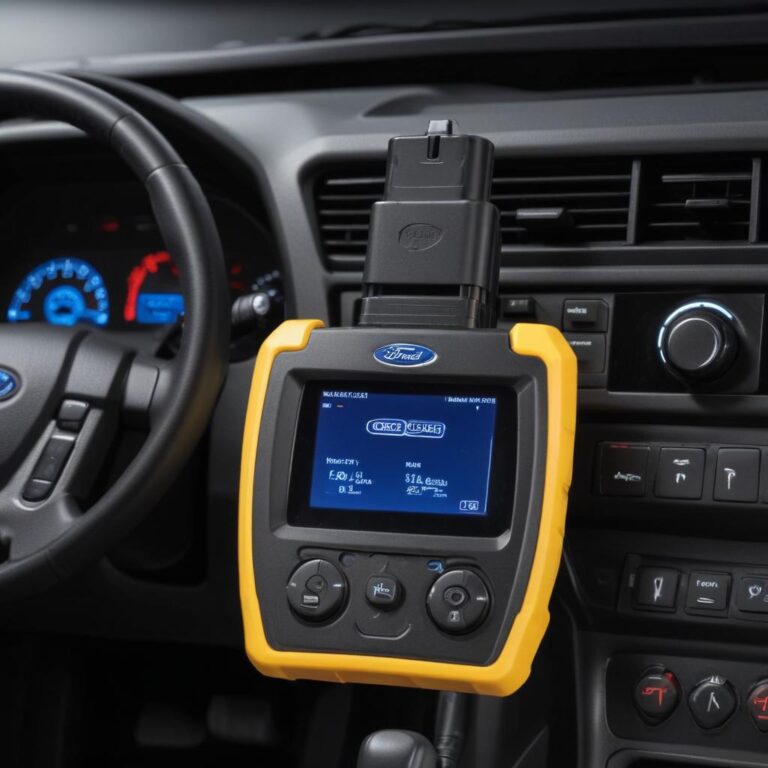
How to check for a drain (requires $20 multimeter):
- Make sure your Ford is off. Keys out of the ignition. Doors closed. Glove box closed. Trunk closed.
- Wait 30–60 minutes. Modern Fords take this long for all computers to go to “sleep.”
- Open the hood. Disconnect the negative battery terminal (black cable).
- Set your multimeter to measure DC amps (usually 10A or 20A setting).
- Connect the multimeter in series between the negative battery terminal and the negative cable — one probe on the terminal, one probe on the cable clamp.
- Read the number. Normal is 0.02 to 0.05 amps (20–50 milliamps). If you see 0.1 amps (100 milliamps) or higher, you have a drain.
What to do next: Start pulling fuses one by one while watching the multimeter. When the number drops to normal, that fuse’s circuit has the drain. Look up what that fuse powers in your owner’s manual. Then investigate that component.
3. Short Trips (The Accumulation Problem)
This isn’t a failure — it’s a driving habit problem. Starting your Ford takes a big gulp of battery power. If you only drive 5–10 minutes to work and back, the alternator doesn’t have enough time to recharge what the starter used. Over days or weeks, the battery slowly drains until one morning — click click click.
How to check: Do you drive less than 15 minutes each way? Do you have stop-and-go traffic? Do you make several short trips per day (to work, to the store, to pick up kids)? If yes, this is likely your problem.
What to do: Once a week, take your Ford for a 30-minute drive. Highway is best, but any steady driving works. This gives the alternator time to fully recharge the battery. Also, turn off unnecessary electronics (heated seats, rear defrost, radio) on short trips to reduce the load.
The honest truth: If you only drive short trips forever, even a new battery will die in a year. You need to drive longer occasionally or buy a battery tender.
4. Bad Alternator Diode (The Backwards Drain)
The alternator charges your battery when the engine is running. Inside the alternator are diodes (one-way electrical valves). When a diode fails, it becomes a two-way valve. Current can flow backward from the battery through the alternator and to ground — draining your battery overnight.
How to spot it: This is tricky. The car runs fine. The battery light might not be on. But every morning, the battery is dead. A shop can test for a bad diode with a special alternator tester. You can also test with a multimeter: With the engine running, battery voltage should be 13.8–14.5V. With the engine off, if you have a bad diode, the battery voltage will drop noticeably over 10–15 minutes.
What to do: Replace the alternator. A diode can’t be replaced separately — the whole alternator needs to go. Cost $400–800 depending on your Ford model. A bad diode will kill a new battery in a few months, so don’t ignore it.
Safety reminder: A bad diode can also cause your battery to overheat and swell. If your battery case looks bulging or bloated, replace the alternator immediately before replacing the battery.
5. Corroded or Loose Battery Terminals (The Connection Problem)
Your battery can be full of power, but if the connection to your Ford’s electrical system is bad, nothing works. Corrosion (white or green crust) acts as an insulator. Loose clamps mean the alternator can’t charge the battery and the battery can’t start the car.
How to spot it: Look at your battery terminals. Do you see white powdery stuff? Green fuzzy corrosion? Can you wiggle the clamps by hand? If yes, that’s your problem.
What to do: Clean the terminals and clamps. Disconnect the negative (black) first, then positive (red). Mix baking soda and water (1 tablespoon baking soda in 1 cup water). Scrub the terminals and clamps with an old toothbrush. Rinse with clean water. Dry with a rag. Reconnect positive first, then negative. Tighten firmly — you shouldn’t be able to twist the clamps by hand.
Pro tip: After cleaning, coat the terminals with petroleum jelly (Vaseline) or dielectric grease. This prevents future corrosion. A $5 tube lasts for years.
6. Extreme Hot or Cold Weather (The Environmental Factor)
Heat kills batteries faster than cold. High temperatures (over 90°F) evaporate the water inside the battery (even “sealed” batteries lose moisture). Cold (under 32°F) slows the chemical reaction and thickens engine oil, making the starter work harder.
How to spot it: Does your battery die every summer? Or every winter? If the problem is seasonal, weather is the culprit.
What to do: If your battery is 3+ years old, replace it before summer or winter. Park in a garage if possible. Use a battery tender if the car sits for more than a week. For extreme cold, consider a block heater (standard on many Ford Super Dutys and some Canadian-market Fords).
The honest truth: You can’t change the weather. But you can buy a battery with higher cold cranking amps (CCA). If you live in Minnesota or North Dakota, get the highest CCA battery that fits your Ford. Ask the parts store for a “severe duty” or “northern climate” battery.
7. A Light Stays On (The Obvious Invisible Drain)
This sounds stupid, but it’s incredibly common. A glove box light, trunk light, vanity mirror light, or under-hood light stays on even when closed. You can’t see it because the door is shut. But that little 5-watt bulb draws about 0.4 amps. Over 12 hours, that’s 4.8 amp-hours — enough to kill an already weak battery.
How to check for a hidden light:
- Park your Ford in a dark garage at night.
- Make sure everything is closed (doors, trunk, glove box).
- Walk around the car. Do you see any light leaking from the edges of the trunk or glove box?
- For the under-hood light (some Fords have one), you can’t see it when the hood is closed. Disconnect it by pulling the bulb.
The #1 culprit on Ford F-150 and Explorer: The glove box light. The little plunger switch gets stuck. Glove box closes, but the light stays on. To test: Open your glove box. Locate the light (small white or yellow bulb). Push the plunger switch manually. Does the light turn off? If not, the switch is bad. Unplug the light or replace the switch ($10 part).
Safety reminder: A trunk light can get hot enough to melt plastic or start a fire if left on for days. If your trunk light stays on, disconnect the bulb immediately.
8. Faulty Aftermarket Accessories (The Installer’s Mistake)
If you’ve added anything aftermarket — remote start, stereo amplifier, dash cam, LED light bar, trailer brake controller — it might be wired incorrectly. Many cheap installers tap into constant power (always-on) instead of switched power (only on with the ignition). Your accessory stays on 24/7 and drains the battery.
How to spot it: Did the battery problems start right after you had something installed? If yes, that’s your problem.
What to do: Disconnect the aftermarket accessory. See if the drain stops. If it does, rewire it to a switched power source (use a multimeter to find a fuse that only has power when the ignition is on). Or bring it back to the installer and demand they fix it.
Common offenders:
- Dash cams with “parking mode” — some draw power constantly. Fine if you drive daily. Problematic if the car sits for days.
- Aftermarket remote start — bad installs can keep modules awake.
- LED light bars — wired directly to the battery without a relay.
- Power inverters — some draw power even when nothing is plugged in.
Comparison: Normal vs. Problematic Parasitic Drain on Ford Models
Different Fords have different normal drain amounts. Here’s what’s healthy.
| Ford Model | Normal Sleep Drain (milliamps) | Problematic Drain (milliamps) | Common Drain Source |
|---|---|---|---|
| F-150 (2011–2014) | 30–50 mA | >80 mA | SYNC 2 module, glove box light |
| F-150 (2015–2020) | 20–40 mA | >70 mA | Door ajar switch, aftermarket remote start |
| Mustang (2015–2024) | 25–45 mA | >70 mA | Trunk light, audio amplifier |
| Explorer (2011–2019) | 30–60 mA | >90 mA | Rear cargo light, liftgate actuator |
| Escape (2013–2020) | 20–50 mA | >80 mA | Glove box light, BCM not sleeping |
| Super Duty (2017–2024) | 40–70 mA (dual batteries) | >120 mA | Upfitter switches left on, snow plow controller |
| Edge (2015–2024) | 25–50 mA | >75 mA | SYNC module, heated seat module |
Real Story: How a $3 Glove Box Light Switch Cost Me a $200 Battery
My cousin has a 2015 Ford Explorer. Her battery kept dying overnight. She replaced the battery ( $200). Died again next week. Replaced the alternator ( $600). Died again. She was ready to sell the car.
I brought over my multimeter. Measured the drain: 0.28 amps — way too high. Started pulling fuses. When I pulled fuse #35 (interior lights), the drain dropped to 0.04 amps. That circuit included the glove box light.
I opened the glove box. Felt the light bulb. It was hot. Really hot. It had been on for weeks. The little plunger switch had failed in the “on” position. The glove box was closed, so she never saw it.
I unplugged the light (took 10 seconds). The drain disappeared. Her battery never died again. She had spent $800 on parts and labor for a $3 switch that took 10 seconds to unplug.
“I can’t tell you how many ‘parasitic drain’ problems I’ve solved by simply opening the glove box and feeling for heat. If the light bulb is warm after the car has been off for an hour, you found your drain. Unplug it. Done.” – Electrical Diagnostic Specialist, 25 years
How to Test Your Ford’s Battery at Home (No Tools Required? Kinda.)
The headlight test: With the car off, turn on your headlights. Are they bright? Dim? Turn the key to RUN (don’t start). Do the headlights get brighter? If yes, the battery is probably weak. A healthy battery won’t change brightness when you turn the key.
The starter sound test: When you try to start, does the engine crank strongly (Ruh-ruh-ruh-ruh-start) or weakly (Ruh…ruh…ruh…start)? Weak cranking means the battery is low.
The multimeter test (best method):
- Set your multimeter to DC volts (20V range).
- Touch red probe to positive (+), black to negative (-).
- Engine off, doors closed, lights off: Should read 12.4–12.6 volts.
- Below 12.0 volts: Battery is significantly discharged.
- Below 11.5 volts: Battery is dead or dying.
- Start the engine. Should read 13.8–14.5 volts (alternator charging).
- If voltage is below 13.5 with engine running, alternator isn’t charging.
How to Stop Your Ford Battery from Dying (Prevention)
A little prevention saves a lot of frustration.
- Drive longer once a week. At least 30 minutes at highway speeds. This fully recharges the battery.
- Turn off everything before parking. Heated seats, rear defrost, radio, headlights (if not automatic), interior lights.
- Check your battery age. If it’s 4+ years old, replace it before winter or summer.
- Clean your terminals every oil change. Baking soda and water. Takes 2 minutes.
- If your Ford sits for more than a week, buy a battery tender (maintainer, not a charger). $30–50 on Amazon. It keeps the battery at full charge without overcharging. Plug it in when parked.
- For Fords with start-stop technology (2018+), use AGM batteries only. Regular batteries will fail in 6–12 months.
- Don’t use your Ford’s electronics with the engine off. Listening to the radio for 30 minutes with the engine off drains a weak battery significantly.
Chart: Battery Drain Rate vs. Time to Dead (Healthy Battery)
This chart shows how long a healthy battery (60 amp-hour capacity) can survive different drain rates.
⏱️ How Fast Different Drains Kill Your Ford Battery
Assumes healthy 60 Ah battery, 50% discharge threshold (won’t start below ~12.0V).
What to Do Right Now (Step-by-Step)
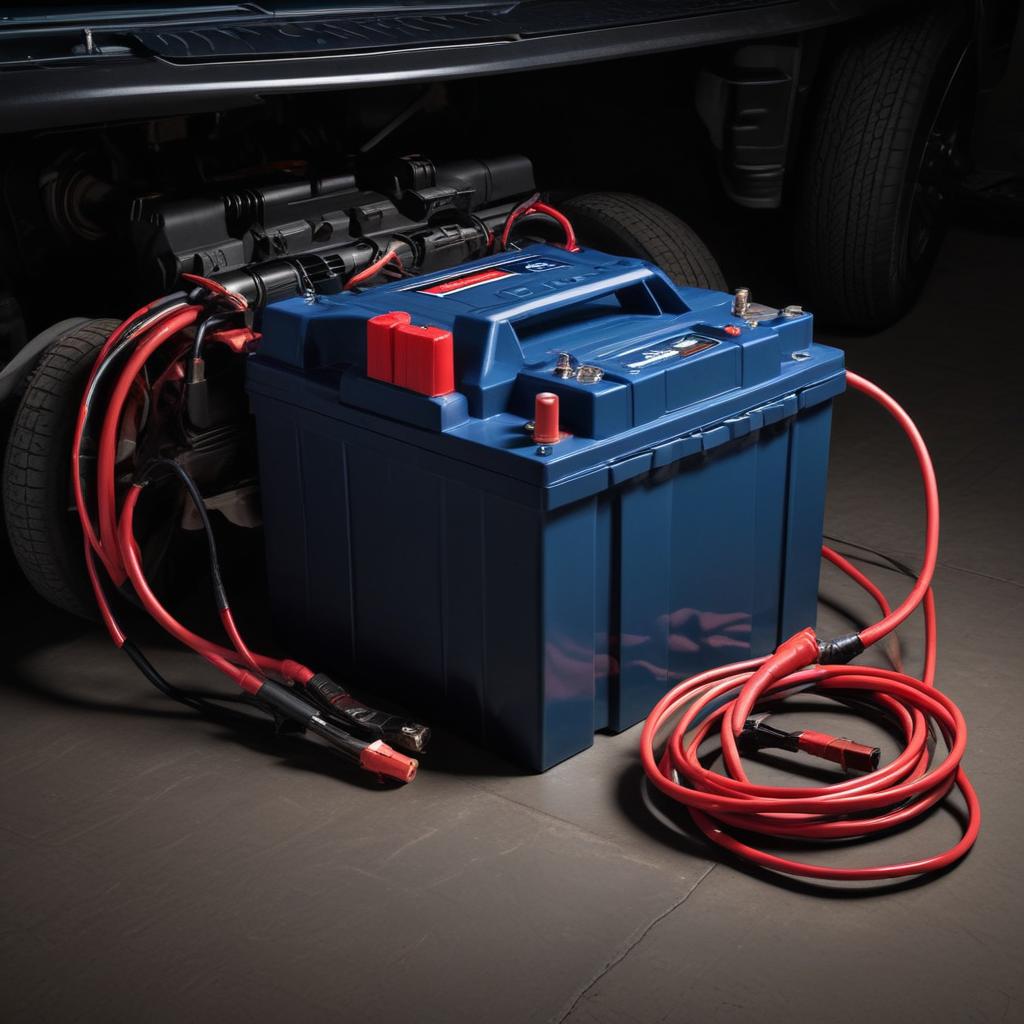
Step 1 — Jump start your Ford. Use jumper cables or a jump pack. Let it run for 30 minutes. Don’t just start it and shut it off — the alternator needs time to charge.
Step 2 — Drive to an auto parts store. AutoZone, O’Reilly, Advance. Ask for a free battery and alternator test. They do it in the parking lot. Takes 5 minutes.
Step 3 — If they say “replace battery,” buy a new one. Have them install it (free or $10). See if the problem returns.
Step 4 — If you still have problems, measure parasitic drain with a multimeter. See instructions above. Anything over 0.05 amps (50 milliamps) is suspicious.
Step 5 — Check your glove box light. Open the glove box. Feel the light bulb. Is it hot? Has it been on for hours? Unplug it or replace the switch.
Step 6 — Check your driving habits. Do you only drive short trips? Take a long drive once a week. Or buy a battery tender.
Step 7 — If all else fails, take it to a shop for a professional parasitic draw test. They’ll hook up a special meter and find the drain in 1–2 hours. Cost $100–200.
FAQ: Real Questions from Ford Owners
1. How long should a Ford battery last?
3–5 years. In hot climates (Arizona, Texas, Florida), expect closer to 3 years. In cold climates, 4–5 years. If your battery is 4+ years old and dying, just replace it. You’re on borrowed time.
2. Can a bad alternator drain my battery overnight?
Yes — a bad diode inside the alternator allows current to flow backward from the battery to ground. This is less common than an old battery or a parasitic drain, but it happens. A shop can test your alternator diodes in 2 minutes.
3. Why does my Ford F-150 battery die after sitting for 3 days?
You have a parasitic drain over 50 milliamps. Most common causes on F-150: glove box light, door ajar switch (the computer thinks a door is open), aftermarket remote start, or SYNC module not sleeping. Test with a multimeter.
4. Is it bad to let my Ford sit for a week without driving?
Not for a healthy battery. A normal Ford draws 20–50 milliamps. That’s 0.48–1.2 amp-hours per day. A healthy 60 amp-hour battery can sit for 25–50 days before it won’t start. But if your battery is old or you have a drain, a week is too long.
5. Can I use a regular charger on my Ford’s AGM battery?
Yes, but make sure the charger has an AGM setting. AGM batteries need a slightly different charging voltage. Using a regular “lead-acid” setting on an AGM battery will eventually damage it. Most modern smart chargers ($30–60) have an AGM mode.
6. My Ford battery died after I left the door open overnight. Normal?
Yes. Leaving a door open keeps the interior lights on (0.5–1.5 amps) and keeps the body control module awake (adds another 0.5 amps). After 12 hours, that’s 12–24 amp-hours — enough to kill an old or weak battery. Close your doors. If your door ajar switch is bad, replace it.
7. How do I know if my Ford has a battery drain or just a bad battery?
The parts store battery test tells you. If they say “battery is healthy but discharged,” you have a drain. If they say “replace battery,” the battery is bad. Start there.
8. Will disconnecting my battery when parked stop the drain?
Yes — but that’s a pain. You’ll lose radio presets, clock time, and the transmission will have to relearn shift patterns. Instead, fix the drain. Or buy a battery disconnect switch ($10) that mounts on the terminal — twist to disconnect, twist to reconnect.
9. My 2019 Ford Escape battery keeps dying. The dealer says “normal.” Is it?
No. There was a known issue on 2017–2020 Escapes where the BCM (body control module) didn’t go to sleep. Ford released a software update to fix it. Ask your dealer to check for TSB 20-2147 (Technical Service Bulletin). The update is free if you’re still under warranty.
10. Can I jump start my Ford with a portable jump pack?
Yes — and you should own one. A portable jump pack ($60–120) is smaller than a paperback book. It will start your dead Ford without another car. Keep it charged in your glove box or under the seat. It’s the best insurance against a dead battery.
References:
- Ford Official Support – Battery Drain & Parasitic Draw Troubleshooting
- Consumer Reports – Why Your Car Battery Keeps Dying
- F-150 Forum – Battery Drain Issues & Fixes (Real Owner Solutions)
- Battery University – How Lead-Acid Batteries Fail (Technical, but Helpful)
Is your Ford leaving you stranded in your own driveway? Drop your year, model, and what you’ve tried in the comments. We’ve diagnosed hundreds of battery drains and can point you to the most likely culprit on your specific Ford.