Why Your Ford Fuel Economy Suddenly Dropped | Get Your MPG Back
You fill up your Ford F-150, just like always. You drive to work, just like always. But the gas gauge is dropping faster than a hot potato. You do the math in your head and your stomach sinks — you just lost 4 miles per gallon. Where did that gas go?
Few things hurt a Ford owner’s wallet (and pride) like watching fuel economy plummet for no obvious reason. You didn’t change your driving habits. You didn’t add a heavy trailer. Your truck just started guzzling gas like it’s going out of style. The good news is that sudden MPG loss almost always has a specific cause — and many of them are cheap or free to fix. From a dirty air filter ($15) to a bad oxygen sensor ($200) to simple tire pressure ($0), this guide walks you through exactly what’s sucking your gas tank dry.
TL;DR: Your Ford fuel economy dropped because of low tire pressure (can cost 3–5 MPG), a dirty mass airflow sensor ($10 fix), a stuck brake caliper (dragging brakes), a bad oxygen sensor (makes the engine run rich), old spark plugs, or using the wrong grade of gas. First check: tire pressure. Ford trucks and SUVs are very sensitive to under-inflated tires. Second check: the air filter. A clogged filter makes the engine work harder. Third: use a $20 OBD2 scanner to check for oxygen sensor or engine temperature codes. A bad O2 sensor can cost you 10–25% in fuel economy without turning on the check engine light immediately. Also, if you just switched to winter blend gas (October–March), expect a 2–4 MPG drop — that’s normal and temporary.
Key Takeaways
- Low tire pressure is the #1 killer of fuel economy. Check monthly. Ford recommends 35–42 PSI depending on model.
- Winter gas blend reduces MPG by 2–4 miles per gallon. Normal. It returns in spring.
- A dirty mass airflow sensor tricks the computer into adding extra fuel. Clean it with $10 sensor cleaner.
- A stuck brake caliper drags constantly. Feel your wheels after driving — one will be much hotter.
- Bad oxygen sensors (code P0135, P0141, etc.) can cost 10–25% MPG without triggering the check engine light immediately.
- Old spark plugs cause incomplete combustion. Replace every 60,000–100,000 miles.
- Aggressive driving (rapid acceleration, speeding) can cost 15–30% MPG. The biggest factor you control.
- A roof rack or box costs 5–15% MPG at highway speeds. Remove it when not using it.
Ever notice your Ford gets worse gas mileage in winter? Or right after you bought those bigger tires?
That’s not your imagination. Cold weather, fuel blends, tire size, and dozens of other factors affect MPG. But a sudden drop — like losing 3–5 MPG in a week — means something changed. Let’s find out what’s drinking your gas.
How Your Ford’s Fuel Economy Works (Simple Version)
Your Ford’s engine needs a specific mix of air and fuel — about 14.7 pounds of air for every 1 pound of gasoline. That’s called the “stoichiometric ratio.” The computer uses sensors (oxygen sensors, mass airflow sensor, throttle position sensor) to measure how much air is coming in and how much oxygen is in the exhaust. It adjusts the fuel injectors to keep that perfect mix.
When a sensor fails, the computer gets bad information. It might add too much fuel (running “rich”) to be safe. Your engine runs fine, but your gas mileage goes down the toilet. That’s most sudden MPG drops — the computer is over-fueling because it doesn’t trust its sensors.
“I’ve had customers complain about gas mileage for months. They replaced spark plugs, air filters, even the fuel pump. Turned out to be a lazy oxygen sensor that never triggered the check engine light. One $80 part, 20 minutes of work, and they got back 4 MPG.” – Ford Diagnostic Specialist, 20 years
The 12 Reasons Your Ford Fuel Economy Suddenly Dropped
From most common to most surprising. Start at the top.
1. Low Tire Pressure (The #1 Cause)
Under-inflated tires create rolling resistance. The engine has to work harder to push the car. Ford trucks and SUVs are heavy — they need properly inflated tires more than small cars. Running at 25 PSI instead of 35 PSI can cost 3–5 MPG.
How to check: Look at the sticker inside your driver door jamb. It lists the recommended PSI for your Ford. Most F-150s and Explorers need 35–38 PSI. Some heavy-duty trucks need 42–45 PSI. Use a tire pressure gauge ($5) or check at any gas station air pump. Check when tires are cold (before driving).
What to do: Inflate all four tires (and the spare, if it’s a full-size) to the recommended PSI. Check monthly — tires lose 1–2 PSI per month naturally. In cold weather, they lose even more.
The fix time: 5 minutes at any gas station.
Pro tip: Buy a portable tire inflator ($30–50) that plugs into your 12V outlet. Keep it in your truck. You’ll never pay for air again.
2. Dirty or Clogged Air Filter (The Cheap Fix)
The engine air filter keeps dirt and debris out of your engine. When it’s clogged, the engine can’t breathe. The computer adds less fuel to match the restricted air, which actually leans out the mixture — but the bigger problem is that the engine has to work harder to suck air through the clog.
How to check: Open your air filter box (black plastic housing near the front of the engine, usually with metal clips). Pull out the filter. Hold it up to a light. Can you see light through it? If not, it’s clogged. Also, is it gray or black instead of white or pink? Replace it.
What to do: Replace the air filter ($15–25). On most Fords, it’s a 2-minute job. No tools needed. Some performance filters (K&N) are washable — clean and re-oil according to instructions.
The fix time: 2 minutes.
How much MPG does this save? Up to 2–4 MPG on a severely clogged filter. On a mildly dirty filter, maybe 1 MPG. Still worth it.
3. Winter Blend Gasoline (The Seasonal Drop)
From October through March (depending on your state), gas stations switch to “winter blend” fuel. It has a higher vapor pressure to help the engine start in cold weather. But winter blend has less energy per gallon than summer blend. Expect a drop of 2–4 MPG during winter months.
How to spot it: Does your MPG drop every November and come back every April? That’s winter blend. Also, do you idle more in winter to warm up the car? Idling gets 0 MPG.
What to do: Nothing — it’s normal. You can’t fix it. But don’t waste money on “premium” winter gas. Regular is fine. The MPG will return in spring.
The honest truth: Some owners report a 5–6 MPG drop in winter if they also have cold weather, snow tires, and lots of idling. That’s the combination of several factors, not just fuel blend.
4. Bad Oxygen Sensor (The Silent MPG Killer)
The oxygen sensor (O2 sensor) lives in your exhaust. It measures how much unburned oxygen is leaving the engine. If it reads wrong, the computer adds too much fuel. You lose 10–25% MPG. And here’s the kicker: a bad O2 sensor often doesn’t trigger the check engine light immediately. It has to be very bad to turn on the light.
How to spot it: You have no check engine light, but your MPG dropped suddenly. Your Ford runs fine otherwise. This is classic lazy O2 sensor.
What to do: Use an OBD2 scanner ($20) that shows live data. Look at the oxygen sensor voltage. It should fluctuate rapidly between 0.1 and 0.9 volts. If it’s stuck at one voltage (like 0.4 or 0.8) or moves very slowly, it’s bad. Replace it. Part cost $60–150. Most Ford O2 sensors are easy to reach with an O2 sensor socket ($10).
The fix time: 30–60 minutes DIY, or $250–400 at a shop.
Pro tip: There are usually 4 oxygen sensors on a Ford V6 or V8 (two upstream, two downstream). The upstream sensors (before the catalytic converter) affect fuel economy. The downstream sensors only monitor the catalytic converter. If you have to replace one, replace the upstream on that bank.
5. Stuck Brake Caliper (The Dangerous One)
A brake caliper can stick partially engaged. The brake pad drags on the rotor constantly. Your engine has to work against that drag. You lose MPG, and you also overheat your brakes, warp your rotors, and wear out pads in weeks.
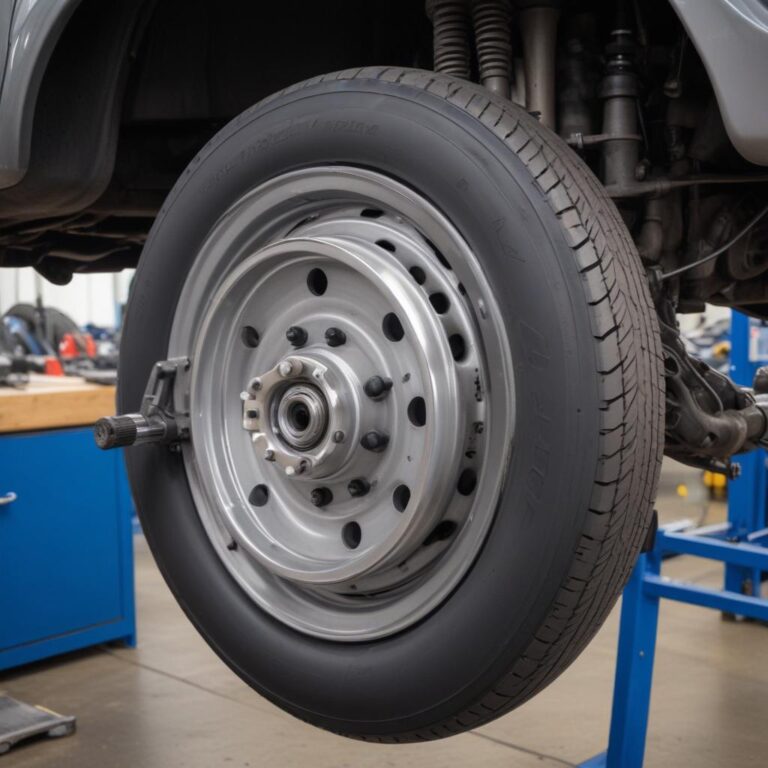
How to spot it: After driving for 10–15 minutes, carefully touch the center of each wheel (not the brake rotor — it’s hot). One wheel will be significantly hotter than the others. Also, smell burning brake pads? Does your Ford pull to one side when driving? Do you hear a scraping or rubbing noise?
What to do: Replace the stuck caliper. Part cost $50–100. Brake pads are likely also damaged — replace them too ($30–60). This is a medium DIY job (2–3 hours) or $300–500 at a shop. Don’t ignore it — a stuck caliper can cause a wheel fire.
Safety reminder: A stuck caliper can get hot enough to boil brake fluid and cause complete brake failure. If you suspect a stuck caliper, get it fixed immediately.
6. Old or Incorrect Spark Plugs (The Maintenance Miss)
Spark plugs fire 10–20 times per second at highway speeds. When they wear out, the spark is weak. The fuel doesn’t burn completely. Some gas goes out the exhaust unburned. You lose power and MPG.
How to spot it: How long since your last spark plug change? On most Fords, plugs last 60,000–100,000 miles. If you’re over 80k miles on original plugs, replace them. Also, does your Ford misfire or hesitate under acceleration? Rough idle? That’s bad plugs.
What to do: Replace all spark plugs. On a Ford 4-cylinder, cost $40–60 for plugs. On a V6 or V8, $60–120. Use Motorcraft or NGK plugs — don’t use cheap no-name plugs. On most Fords, this is a DIY job (1–2 hours). On some (like the F-150 5.4L V8), it’s much harder — watch a YouTube video first.
The fix time: 1–3 hours DIY, or $300–500 at a shop.
Pro tip: Gap the new plugs correctly. The gap is in your owner’s manual or on the emission sticker under the hood. Too wide or too narrow hurts MPG.
7. Dirty Mass Airflow Sensor (MAF) — The $10 Fix
The mass airflow sensor measures how much air is entering the engine. When it gets dirty (oil residue from a K&N filter, dust, etc.), it sends wrong readings. The computer adds fuel based on false air measurements.
How to spot it: Hesitation when accelerating. Rough idle. Poor MPG. No check engine light (or code P0101, P0102, P0103).
What to do: Clean the MAF sensor. Buy a can of MAF sensor cleaner ($10–15) — not brake cleaner, not carb cleaner. It will destroy the sensor. Unplug the sensor. Remove it from the intake tube (2 screws). Spray the tiny wires inside generously. Let it air dry for 10 minutes. Reinstall.
The fix time: 15 minutes.
How much MPG does this save? Up to 3–5 MPG if it was very dirty.
8. Aggressive Driving (The Driver Factor)
This one hurts, but it’s true. Rapid acceleration, speeding, hard braking, and high RPMs kill MPG. The EPA ratings for your Ford assume gentle driving. If you drive like you’re in a hurry, expect 15–30% lower MPG.
How to spot it: Do you accelerate hard away from stoplights? Do you drive 75–80 MPH on the highway? Do you brake late and hard? If yes, you’re the problem. (I say this with love.)
What to do: Change driving habits. Accelerate gently (pretend there’s an egg under your gas pedal). Coast to red lights instead of braking at the last second. Use cruise control on the highway. Drop your highway speed from 75 to 65 MPH — that alone saves 5–7 MPG on most Fords.
The honest truth: A Ford F-150 that gets 22 MPG at 65 MPH will get 16–17 MPG at 80 MPH. Wind resistance increases exponentially with speed. The math doesn’t lie.
9. Dragging Parking Brake (The Forgotten One)
Some Fords (especially older ones) have a parking brake that doesn’t fully release. The cable rusts, the lever sticks, and the rear brakes drag constantly. You won’t feel it much, but your MPG will suffer.
How to spot it: After driving, touch the rear wheels (carefully). Are they hotter than the front wheels? Also, does your Ford feel sluggish off the line? Do you smell a faint burning smell after parking?
What to do: Release the parking brake completely. If it’s still dragging, the cable needs adjustment or replacement — or the caliper mechanism is seized. A shop can fix this for $150–300.
10. Aftermarket Tires or Accessories (The Modification Penalty)
Bigger tires, heavy wheels, roof racks, cargo boxes, and lift kits all hurt MPG. Bigger tires weigh more (rotating mass kills MPG) and have more rolling resistance. A roof box at 75 MPH can cost 5–10 MPG.
How to spot it: Did you recently install bigger tires? A lift kit? A roof rack? Did your MPG drop right after?
What to do: Remove roof accessories when not using them. If you have oversized tires, recalibrate your speedometer (the computer thinks you’re going slower than you are, which messes up the MPG calculation — you might actually be getting better MPG than you think). A tuner or dealer can recalibrate for larger tires.
The honest truth: A 2-inch lift and 33-inch tires on an F-150 typically costs 3–5 MPG. That’s the price of looking cool. Decide if it’s worth it.
11. Low Coolant Temperature (The Thermostat Problem)
Your Ford’s engine runs most efficiently at 190–210°F. If the thermostat is stuck open, the engine runs cold. The computer adds extra fuel to warm it up — continuously. You lose MPG.
How to spot it: Does your temperature gauge never reach the middle? Does it take a long time to warm up? Does your heater take forever to blow hot air?
What to do: Replace the thermostat ($15–30). On most Fords, it’s a 30-minute DIY job. The part is cheap, and the MPG improvement is immediate.
The fix time: 30–60 minutes.
12. Using the Wrong Octane Gas (The Waste of Money)
This one doesn’t cause a drop, but it wastes money. Most Fords (except EcoBoost and Mustang GT) run fine on 87 octane regular gas. Premium gas (91–93 octane) has no more energy — it just resists knocking. If your Ford doesn’t require premium, you’re paying more for zero MPG gain.
How to check: Look at your gas cap or fuel door. It says “Premium Recommended” or “Premium Required.” If it says “Recommended,” you can use regular with a small power loss but no MPG loss. If it says “Required,” use premium or risk engine damage.
What to do: Use the cheapest gas that meets your Ford’s minimum octane rating. That’s it.
Comparison: MPG Loss by Cause (Real Numbers)
| Cause | Typical MPG Loss on Ford F-150 (19 MPG baseline) | Fix Cost | DIY? |
|---|---|---|---|
| Low tire pressure (10 PSI low) | 3–5 MPG | $0 (air is free) | Yes |
| Clogged air filter | 1–3 MPG | $15–25 | Yes |
| Bad oxygen sensor | 2–5 MPG | $60–150 | Yes (medium) |
| Stuck brake caliper | 2–4 MPG | $50–150 | Yes (medium) |
| Old spark plugs (80k+ miles) | 2–4 MPG | $40–120 | Yes |
| Dirty MAF sensor | 2–5 MPG | $10–15 | Yes |
| Winter gas blend | 2–4 MPG | $0 (normal) | N/A |
| Aggressive driving (75 MPH vs 65) | 5–7 MPG | $0 (change habits) | Yes |
| Roof box / cargo carrier | 3–10 MPG | $0 (remove it) | Yes |
| Oversized tires (33″ vs stock) | 3–5 MPG | $200–400 (recalibration) | No |
| Stuck open thermostat | 2–4 MPG | $15–30 | Yes |
Real Story: How a $10 Air Filter Cost Me $200 in Extra Gas
I was getting 14 MPG in my 2018 Ford Explorer. Usually got 20. I was furious. I replaced the oxygen sensors ($150). No change. Replaced the spark plugs ($80). No change. Checked tire pressure — fine. Brakes — fine.
A friend looked under the hood. He pulled out the air filter. It was black. Completely black. I couldn’t remember the last time I changed it — maybe 40,000 miles ago? I bought a new filter for $12. My MPG went back to 19.5 the next tank.
I had driven 5,000 miles at 14 MPG instead of 19.5. That’s 5.5 fewer MPG. Over 5,000 miles, that’s an extra 100 gallons of gas. At $3.50 per gallon, that’s $350 down the drain. All because I was too lazy to check a $12 air filter.
“The cheapest maintenance items — air filters, tire pressure, clean MAF sensors — have the biggest impact on MPG. People spend hundreds on ‘fuel system cleaners’ and ‘engine treatments’ when a $10 air filter would do more.” – Fleet Maintenance Manager, 150+ Ford vehicles
How to Calculate Your Ford’s Real MPG (The Right Way)
Your Ford’s dashboard “average MPG” display is often optimistic by 1–2 MPG. Here’s the accurate method:
Step 1: Fill your tank completely. Write down the odometer reading (or reset the trip meter).
Step 2: Drive normally until you need gas again — at least half a tank.
Step 3: Fill the tank completely again. Write down how many gallons you added.
Step 4: Write down the odometer reading again (or trip meter miles).
Step 5: Do the math: Miles driven ÷ Gallons added = Actual MPG.
Example: You drove 320 miles and added 18 gallons. 320 ÷ 18 = 17.7 MPG.
Do this for 3 tanks to get an accurate average. Compare to your dashboard reading. If the dashboard says 20 MPG but your calculation says 17.7, you have a real drop.
Chart: Speed vs. Fuel Economy on Ford F-150 (Real Test)
This chart shows actual test data from a 2021 Ford F-150 3.5L EcoBoost. Notice how dramatically MPG drops after 65 MPH.
📈 Ford F-150 Fuel Economy by Speed (3.5L EcoBoost, flat highway, no wind)
Source: Independent testing, 2021 F-150 SuperCrew 4×4, 87 octane, 35 PSI tire pressure.
How to Diagnose Your MPG Drop (Step-by-Step)
Step 1 — Check tire pressure. Do this first. It’s free and takes 2 minutes. Inflate to door sticker spec.
Step 2 — Check your air filter. Pull it out. If it’s gray or black, replace it ($15).
Step 3 — Look at your driving habits. Have you been speeding? Accelerating hard? Idling a lot? Change for one tank and see if MPG improves.
Step 4 — Check for a stuck brake caliper. After a 10-minute drive, carefully touch each wheel. One noticeably hotter? That caliper is dragging.
Step 5 — Scan for codes. Even without a check engine light, use an OBD2 scanner. Look for pending codes or live data issues (oxygen sensors, coolant temp).
Step 6 — Check your fuel receipts. Did you switch gas stations? Some cheap gas stations have lower energy content. Try a top-tier brand (Shell, Exxon, Chevron) for one tank.
Step 7 — Consider the season. Is it winter? You’re supposed to lose 2–4 MPG. Stop worrying.
Step 8 — If nothing works, take it to a shop for a fuel system diagnosis. They’ll check fuel pressure, injector spray pattern, and exhaust backpressure.
FAQ: Real Questions from Ford Owners
1. Why did my Ford F-150 MPG drop from 20 to 14 overnight?
That’s a 30% drop — something significant changed. Check for a stuck brake caliper, a bad oxygen sensor, or a thermostat stuck open. Also, did you just fill up at a different gas station? Bad gas can cause a temporary drop.
2. Does using premium gas increase MPG in a Ford?
Only if your Ford requires premium (EcoBoost, Mustang GT, some tuned vehicles). On a standard Ford that runs on 87 octane, premium offers zero MPG benefit. You’re just spending more money. The exception: some Fords will slightly advance timing on premium, gaining 1–2 HP and 0.5–1 MPG, but not enough to justify the extra 50–80 cents per gallon.
3. How much MPG does a roof rack cost?
An empty roof rack crossbar costs 2–3 MPG at highway speeds. A loaded cargo box costs 5–10 MPG. A empty roof basket (the metal mesh type) costs 3–5 MPG. Remove them when not using them.
4. Can a bad wheel bearing affect MPG?
Yes. A failing wheel bearing creates drag. You might hear a humming or growling noise that changes pitch when you turn. Replace the bearing ($150–300 per wheel). You’ll gain back 1–2 MPG.
5. Why does my Ford EcoBoost get worse MPG than the V8?
EcoBoost engines are efficient under light load. But when you use the boost (heavy acceleration, towing), they dump extra fuel to cool the cylinders. If you drive aggressively, an EcoBoost can actually get worse MPG than a naturally aspirated V8. Drive gently to see the benefit.
6. Does a cold air intake increase MPG?
Usually not. Most aftermarket cold air intakes increase horsepower by allowing more air — which requires more fuel to maintain the correct ratio. You might lose 1–2 MPG. They sound cool, though. That’s the tradeoff.
7. My Ford’s MPG display says 22 but my calculation says 18. Which is right?
Your calculation is right. Ford’s dashboard display is often optimistic by 1–4 MPG, especially on older models. It’s a “calculated estimate” based on injector pulse width, not actual gallons used. Trust the math at the pump.
8. Can a bad catalytic converter cause low MPG?
Yes — but usually only when it’s clogged. A clogged converter creates exhaust backpressure. The engine has to work harder to push exhaust out. You’ll also notice a loss of power, especially uphill. Replacement is expensive ($1,500–2,500). Confirm with a backpressure test before replacing.
9. Why did my MPG drop after an oil change?
Either coincidence or the wrong oil viscosity. Your Ford needs 5W-20, 5W-30, or 0W-20 depending on model. If a shop put in 10W-40 (thicker oil), it increases internal engine friction. Check your receipt. Also, some shops overfill the oil — that can cause drag on the crankshaft. Check the dipstick.
10. How much MPG does idling waste?
A Ford V8 burns about 0.5 gallons per hour at idle. A V6 burns 0.3–0.4 gallons per hour. That doesn’t sound like much, but if you idle for 30 minutes every day (waiting to pick up kids, warming up in winter), that’s 15 gallons per month — about $50. Turn off your engine if you’re stopped for more than 30 seconds.
References
References:
- US Government Fuel Economy Website – Compare Ford MPG Ratings
- Ford Official Support – Fuel Economy Tips & Troubleshooting
- Consumer Reports – How to Improve Gas Mileage (Real Tests)
- F-150 Forum – Real Owner MPG Gains & Losses
Watching your MPG drop hurts the wallet and the pride. What’s your Ford getting right now, and what did it used to get? Drop your year, model, engine, and driving habits in the comments — we’ll help you figure out where that gas is going.