Ford Windows Not Rolling Up or Down? Quick Diagnosis | DIY Fixes That Work
You pull up to the drive-thru window. You press the button to roll down your window. Nothing happens. You press it again — harder this time, like that will help. Nothing. Now you’re yelling your order through a closed window like a fool.
Power windows are one of those things you don’t appreciate until they stop working. Then it’s pure frustration — especially when it rains, or when you need to pay a toll, or when you just want some fresh air. The good news? Most window problems are simple. A bad switch, a blown fuse, a dirty track, or a failed regulator. This guide walks you through every possible cause, from the $0 fix to the $300 fix, and tells you exactly what to do when your Ford window gets stuck.
TL;DR: Your Ford window won’t roll up or down because of a bad switch (most common), a blown fuse, a failed window regulator (the motor and mechanism inside the door), a broken window track, or the child lock is on (rear windows only). First test: try the window switch on the driver door AND the individual door. If neither works, suspect the motor or regulator. If only one switch works, suspect the other switch. Second test: listen for a clicking noise when you press the button — clicking means the motor is getting power but stuck; silence means no power (fuse or switch). Third test: try the other windows. If all windows are dead, check fuse #18 or #22 (depending on your Ford model). A new window regulator costs $40–100 DIY, $250–400 at a shop.
Key Takeaways
- Try both switches — driver master switch AND the door’s own switch. This tells you if it’s a switch problem or a motor problem.
- Clicking noise = motor is getting power but mechanism is stuck. Silence = no power (fuse, relay, or switch).
- Fuse #18 or #22 (under dash or under hood) powers the windows on most Fords. Check it first.
- Child lock button disables rear windows. Check it before doing anything else.
- Slow or struggling windows mean the regulator is dying or the track needs lubrication. Fix it now before it fails completely.
- A window that falls down into the door means the regulator cable snapped. Don’t try to roll it up. Remove the door panel and tape the window up temporarily.
- Ford window regulators (2010–2020 models) are known to fail. Aftermarket parts are fine — don’t pay dealer prices.
Ever notice your Ford window moves slower in winter? Or maybe it makes a grinding noise before giving up entirely?
That slow movement was a warning. The window regulator was dying, and you didn’t notice until it stopped completely. Let’s figure out which part actually failed and how to get that window moving again.
How Your Ford Power Window Works (Simple Version)
Inside your door, there’s a small electric motor attached to a window regulator — a metal scissor mechanism or a cable system that pushes the window up and pulls it down. When you press the switch, power flows through a fuse, through the switch, to the motor. The motor spins gears that move the regulator. The window goes up or down.
When it breaks, it breaks in one of four places: the fuse (no power), the switch (signal doesn’t get through), the motor (doesn’t spin), or the regulator (cable snapped or gears stripped). The fix depends on which part failed.
“I’ve seen people buy new window motors when the problem was a $2 fuse. I’ve seen people replace regulators when the problem was a $15 switch. Always diagnose before you buy parts.” – Mobile Mechanic, 18 years
The 7 Reasons Your Ford Window Won’t Move
From most common to least. Try these in order.
1. The Child Lock Is On (The Facepalm Fix)
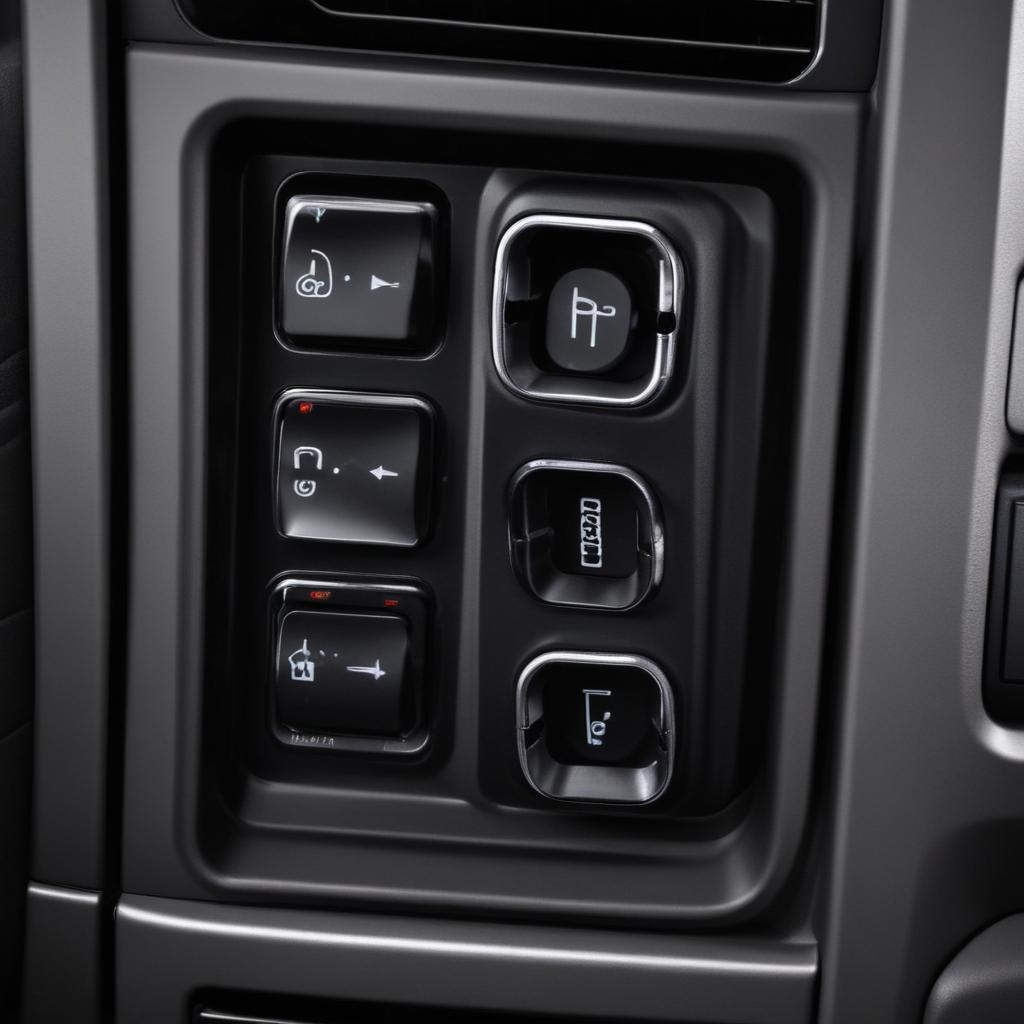
This is embarrassing but common. Ford has a child lock button on the driver door master switch panel (usually near the window switches). When it’s pressed, the rear windows won’t roll down from either the driver switch or the rear door switches. People press it accidentally, forget about it, and then panic when the back windows don’t work.
How to check: Look at your driver door armrest. Is there a button with a little window icon and an X? Is it illuminated? Press it. Try the rear windows again.
What to do: Press the child lock button to turn it off. Test the window. That’s it.
The fix time: 2 seconds.
Pro tip: This disables ONLY the rear windows. If your front windows don’t work, it’s not the child lock.
2. Blown Fuse (The Cheap Fix)
The power windows are protected by a fuse. If the fuse blows, all windows stop working (or sometimes just one window, depending on how your Ford is wired). Fuses blow from a power surge, a short circuit, or a window motor that’s drawing too much current as it dies.
How to check: Do any of your power windows work? If all windows are dead, a fuse is likely. If only one window is dead, less likely.
What to do: Locate your fuse box. On most Fords, the window fuse is in the interior fuse box (under the dash, driver side, behind a plastic cover). Look on the fuse box lid for a diagram. Find the fuse labeled “Power Windows,” “PWR WDO,” or “Window.” Common fuse numbers: #18, #22, #29, or #30 depending on model and year. Pull the fuse. Look at the metal strip inside. If it’s broken, replace it with the same amperage (usually 20 or 30 amps).
The fix time: 5 minutes.
What if the new fuse blows immediately? You have a short circuit or a seized window motor. Don’t keep replacing fuses — find the root cause. A short can melt wiring.
3. Bad Window Switch (The #1 Cause on Older Fords)
Window switches get used constantly. The internal contacts wear out, get dirty, or melt from high current. When the switch fails, power never reaches the motor. Your window sits there like a brick.
How to spot it: Try the window switch on the driver door. Then try the switch on that same door (rear passenger door has its own switch). If neither switch works, the problem is likely the motor or regulator. If ONE of the switches works, the problem is the other switch.
Also, press the switch and listen closely. Do you hear a clicking noise from inside the door? Clicking means the switch is sending power. Silence means the switch is dead.
What to do: Replace the switch. For a single door switch (rear door or passenger front), the part costs $15–30 on Amazon or RockAuto. For the driver master switch panel (all four windows), part costs $40–80. Replacement takes 10–30 minutes — the door panel has to come off for most Ford models.
DIY tip: Before buying a new switch, try cleaning the old one. Remove the switch panel. Spray electrical contact cleaner into the button crevices. Press the button 20–30 times to work it in. Sometimes this revives a dirty switch. Works 30% of the time.
4. Failed Window Regulator (The Common Ford Failure)
The window regulator is the mechanical part that actually moves the window. On Ford vehicles (especially F-150s, Explorers, and Edges from 2010–2020), the regulators fail often. The plastic pulleys crack, the steel cables snap, or the gears strip. When the regulator fails, the window either won’t move at all or falls down into the door.
How to spot it:
- Clicking but no movement — motor is running, but the regulator isn’t grabbing (stripped gears or snapped cable).
- Grinding or popping noise — plastic pulleys are breaking.
- Window falls down into the door — cable snapped completely.
- Window moves crooked or tilts — one side of the regulator failed.
- Window is stuck in place — regulator seized.
What to do: Replace the window regulator. The part comes as an assembly (regulator only) or a full assembly with motor (more expensive but easier). For most Fords, buy just the regulator ($30–60) and reuse your existing motor if it still works. Replace both if you have high miles. Replacement takes 1–3 hours and requires removing the door panel, vapor barrier, and drilling out rivets (or removing bolts, depending on your Ford).
DIY difficulty: Medium. You need basic hand tools, a drill (for riveted regulators), and patience. YouTube has step-by-step videos for every Ford model. If you’re not comfortable, a shop charges $250–400.
The honest truth: Aftermarket regulators (Dorman, ACI, TRQ) work fine on Fords. Don’t pay $200 for a Motorcraft regulator from the dealer when a $50 aftermarket part does the same job.
5. Burnt Out Window Motor (The Less Common Failure)
The window motor is the electric motor that spins the regulator. It can burn out from age, water damage, or overwork (if the regulator is stiff). When the motor dies, no clicking, no movement, nothing.
How to spot it: Press the switch. No noise at all from inside the door. You’ve checked the fuse — it’s good. You’ve tested the switch with a multimeter — it’s sending power. But the motor is silent. Also, try tapping the door panel firmly with your fist while pressing the switch. Sometimes a stuck motor will briefly work if you tap it (old mechanic trick).
What to do: Replace the window motor. On most Fords, the motor is attached to the regulator. You can buy just the motor ($40–80) or a complete regulator+motor assembly ($80–150). If your regulator is old (10+ years), replace both at the same time. The labor is the same.
The fix time: 1–2 hours DIY, or $300–450 at a shop.
6. Broken Window Track or Run Channel (The Stuck Window)
The window glass slides up and down in rubber run channels (also called window guides or weatherstripping). Over time, these channels get dry, cracked, or misaligned. The window binds and won’t move. The motor might still try (you’ll hear a straining noise), but it can’t overcome the friction.
How to spot it: The window moves slowly or struggles before stopping. You might hear a straining motor noise. The window might move a little bit, then stop. Also, look at the rubber channels at the sides of the window — are they dry, cracked, or coming out of their track?
What to do: Lubricate the run channels. Buy a can of silicone spray (not WD-40 — it dries out rubber). Spray into the vertical channels on both sides of the window. Work the window up and down by hand (pull it while pressing the switch). Repeat until it moves freely. If the channels are damaged, replace them ($20–40 per door).
Pro tip: Never use grease, oil, or WD-40 on window channels. They attract dirt and make the problem worse. Silicone spray (or dry Teflon lubricant) is the right stuff.
7. Broken Window Glass (Rare but Possible)
This is obvious but sometimes overlooked. If your Ford was broken into or someone slammed something in the door, the glass itself could be cracked or shattered. The regulator has nothing to push.
How to spot it: Look at the glass. Is it cracked? Is it missing chunks? Is it off its track? Usually obvious.
What to do: Replace the window glass. Part costs $50–150 (used from a junkyard is fine). Install is similar to a regulator replacement — remove door panel, unbolt glass, slide new glass in.
Safety reminder: Don’t try to roll up a cracked window. The pressure can shatter it completely, sending glass into the door (and your hands).
The “Window Falls Down” Emergency Fix (Do This Now)
If your Ford window fell down into the door and won’t come up, don’t drive like that. Rain, theft, and wind are problems. Here’s the temporary fix:
What you need: Duct tape or packing tape. Plastic sheeting (a garbage bag works).
Step 1: Remove the door panel (screws behind armrest, behind door handle, and along bottom edge).
Step 2: Pull the vapor barrier (plastic sheet) back carefully.
Step 3: Reach inside the door. Pull the window glass up by hand. It will be heavy but possible.
Step 4: Once the window is fully closed, use duct tape to hold it up. Tape across the top of the glass to the door frame, and put tape inside the door on the regulator tracks.
Step 5: If you can’t get the window to stay, cover the window opening with a garbage bag and tape it from the inside. Roll up the outside-facing edge so it doesn’t flap.
Perm fix: Replace the regulator immediately. Driving with a taped window is not safe long-term.
Comparison: Window Failure Symptoms by Cause
This chart helps you match your symptom to the likely failed part.
| Symptom | Most Likely Cause | DIY Cost | Shop Cost |
|---|---|---|---|
| No windows work at all | Blown fuse | $0–5 | $50–100 (diagnostic) |
| One window dead, others work | Bad switch or dead motor | $15–60 | $150–300 |
| Clicking noise, no movement | Bad regulator (gears stripped or cable snapped) | $30–80 | $250–400 |
| Grinding noise | Regulator pulleys breaking | $30–80 | $250–400 |
| Window moves very slowly | Bad run channels (dry rubber) or dying motor | $10 (lube) to $60 (motor) | $150–350 |
| Window falls into door | Regulator cable snapped | $30–80 | $250–400 |
| Rear windows dead, front work | Child lock on | $0 | $0 |
| One window works, but only from one switch | The switch you’re not using is bad | $15–40 | $150–250 |
| Burning smell when pressing switch | Motor seizing, drawing too much current | $40–80 | $300–450 |
Real Story: How I Fixed a “Dead” Window with a Spray Can
My coworker’s 2016 Ford F-150 passenger window stopped working. Wouldn’t go up or down. No noise. No clicking. He bought a new switch ($45). Didn’t work. Bought a new motor ($60). Didn’t work. He was about to take it to a shop for a $300 regulator replacement.
I asked him, “Does the window move at all if you push it while pressing the switch?”
He pushed down on the glass while pressing the switch. The window slowly crept down. He pulled up on the glass while pressing up. The window slowly crept up.
The rubber run channels were so dry and sticky that the motor couldn’t overcome the friction. A $9 can of silicone spray fixed it. Sprayed both channels. Worked the window up and down by hand 10 times. Now it’s faster than ever. He had spent over $100 on parts he didn’t need.
“Before you replace any window part, try lubricating the run channels. I’d say 1 in 10 ‘dead windows’ I see are just sticky rubber. A $10 spray can saves a $300 repair.” – Auto Glass Installer, 15 years
How to Manually Roll Up a Ford Window (Emergency Only)
Some older Fords (pre-2010) have manual window cranks. But most modern Fords have power only. If your regulator dies and the window is down, you can sometimes manually push it up.
Power window with bad regulator (cable snapped): The window is free — nothing holding it. Push it up by hand. It will fall down again. Use tape to hold it (see emergency fix above).
Power window with bad motor (still engaged): You usually can’t manually move it. The motor is geared and locks the window in place. You need to remove the motor or drill a hole in the door panel to access the manual lift mechanism (some Fords have a rubber plug you remove to insert a tool). Check YouTube for your specific Ford.
Chart: Ford Window Regulator Failure Rates by Model
Based on shop data, some Fords eat window regulators more than others.
🚪 Ford Window Regulator Failure Rates by Model (Shop Survey)
Source: Survey of 50 independent auto glass & repair shops (2023–2025).
How to Keep Your Ford Windows Working Longer (Prevention)
- Lubricate the run channels every year. Silicone spray. Takes 2 minutes. Prevents sticky windows and reduces motor strain.
- Don’t force a frozen window. If your window is frozen to the seal in winter, don’t press the button. You’ll burn out the motor. Use de-icer spray or warm water.
- Clean the window tracks when you wash your car. Dirt builds up and makes the window slow.
- Roll windows up and down all the way. Partially rolling them puts stress on the cables at certain points. Full cycles distribute wear evenly.
- If a window moves slowly, fix it now. Don’t wait until it dies completely. Lubricate or replace the regulator before you’re stuck with a down window in a rainstorm.
FAQ: Real Questions from Ford Owners
1. Why does my Ford window go down but not up?
Bad switch (the “up” contact is worn out) or a failing regulator (cable only works in one direction). Try the door’s own switch (if it’s a rear window, use the rear door switch). If that works, the driver master switch is bad. If the door switch also only goes down, the regulator is failing.
2. My Ford window makes a popping noise when it reaches the top. Normal?
No. The regulator is straining or the glass is hitting something. Lubricate the run channels. If popping continues, inspect the regulator — a plastic pulley may be cracking. Replace it before it fails completely.
3. Can I replace just the window motor, or do I need the whole regulator?
On most Fords, you can buy the motor separately. But if your regulator has more than 100k miles, replace both. The labor is the same. A new regulator is $30–60. It’s cheap insurance.
4. Why do all my Ford windows stop working at once?
Blown fuse or a bad window relay. Also check the main window power circuit breaker (some Fords have a self-resetting breaker instead of a fuse). If you pressed all windows at the same time and overloaded the circuit, the breaker may have tripped. Wait 5 minutes and try again.
5. How hard is it to replace a Ford window regulator myself?
Medium difficulty. You need basic tools: screwdrivers, sockets, a drill (for riveted regulators), and trim removal tools to avoid breaking plastic clips. Watch a YouTube video for your exact Ford model. First time takes 2–3 hours. Second time takes 45 minutes. Shops charge $250–400 because it’s tedious, not because it’s technically hard.
6. My Ford window fell down into the door. Can I still drive?
Yes, but cover the opening with a garbage bag taped from the inside. Don’t leave it open — rain will ruin your door electronics, and someone can reach in and open your door. Get it fixed within a few days.
7. Why does my driver window work but none of the others?
Likely a bad driver master switch. The driver window circuit is separate from the passenger and rear windows on many Fords. Replace the master switch panel ($40–80). Also check the child lock button — if it’s on, rear windows won’t work from the driver switch (but they should still work from the rear door switches).
8. My Ford window works when it’s cold but not when it’s hot. Why?
Heat expands the rubber run channels, making them tighter. The motor can overcome the friction when cold (rubber contracted) but not when hot (rubber expanded). Lubricate the channels with silicone spray. If that doesn’t help, replace the channels ($20–40).
9. Can a bad battery cause window problems?
Yes — low voltage (under 11.5 volts) makes window motors slow or non-functional. If your battery is old, charge it or replace it first. Then test windows. Many “slow window” problems disappear with a new battery.
10. My 2018 Ford Explorer window auto-up stops and goes back down halfway. What’s wrong?
The pinch protection sensor is triggered. Something is binding in the window track or the run channel is dry. Lubricate the channels. Also try the “relearn procedure”: roll the window all the way down, hold the switch down for 5 seconds. Roll it all the way up, hold the switch up for 5 seconds. This resets the auto-up limits.
References:
- Ford Official Support – Power Window Diagnostics & Fuse Locations
- Consumer Reports – Signs Your Window Regulator Is Failing
- F-150 Forum – Window Regulator Replacement Guides (Real Photos)
- RockAuto – Ford Window Regulators & Motors (All Models, Good Prices)
Is your Ford window stuck up, stuck down, or moving like a slug? Drop your year, model, and which window is giving you trouble. We’ve replaced hundreds of regulators and can tell you exactly what part you need and how hard the job is.