Ford’s Legacy of Power and Innovation: Why Your Ford Horn Is Not Working (And How to Fix It)
Ever go to lay on the horn at that distracted driver, only to hear… nothing? It’s awkward, frustrating, and for a Ford owner, it feels like your truck or muscle car just lost its voice.
You’re sitting in traffic. Someone cuts you off. You press the horn pad. Silence. Not even a weak “meep.” Just quiet. Don’t worry — you don’t need a whole new electrical system. Most horn problems are simple fixes you can do in your driveway. Let’s walk through why your Ford isn’t honking and how to get that American muscle roar back.
TL;DR: Ford horns fail mostly due to a blown fuse, a bad relay, a corroded ground wire, or the horn itself dying from rust or mud. In older F-150s, Mustangs, and Explorers, the clock spring inside the steering wheel can also snap. You can test most of these with a $20 multimeter and a basic socket set.
Key Takeaways:
- Check the fuse first — it’s the #1 reason Ford horns stop working.
- Listen for a click when you press the horn. If you hear it, the relay is good.
- Mud and water kill truck horns fast — especially if you off-road your F-150 or Ranger.
- The clock spring is the expensive fix (steering wheel airbag has to come off).
- A direct 12V test tells you immediately if the horn itself is dead.
So, what actually makes the horn work on a modern Ford F-150 or Mustang?
Here’s the simple version. When you push the horn button, a tiny amount of electricity flows from the battery, through a fuse (safe guard), into a relay (an electronic switch). The relay clicks closed and sends full battery power down to the horn itself. The horn has a metal diaphragm inside that vibrates super fast — that vibration creates sound waves. When any link in that chain breaks, silence happens.
Why Your Ford Horn Is Not Working (Most Common Culprits)
Let’s get dirty. Grab a flashlight and head out to your Ford. Here’s what to check, easiest to hardest.
1. The Blown Horn Fuse (Most Likely)
Fords from 2000 to 2025 use a dedicated fuse for the horn. It’s usually in the Battery Junction Box (under the hood) or the Central Junction Box (driver’s side kick panel). Look for a fuse labeled “HORN,” “HORN RELAY,” or just a picture of a horn symbol. If the metal strip inside is broken, swap it with a same-amp spare. Always replace with the exact amp rating — using a bigger fuse risks melting wires.
2. Corroded Horn Itself
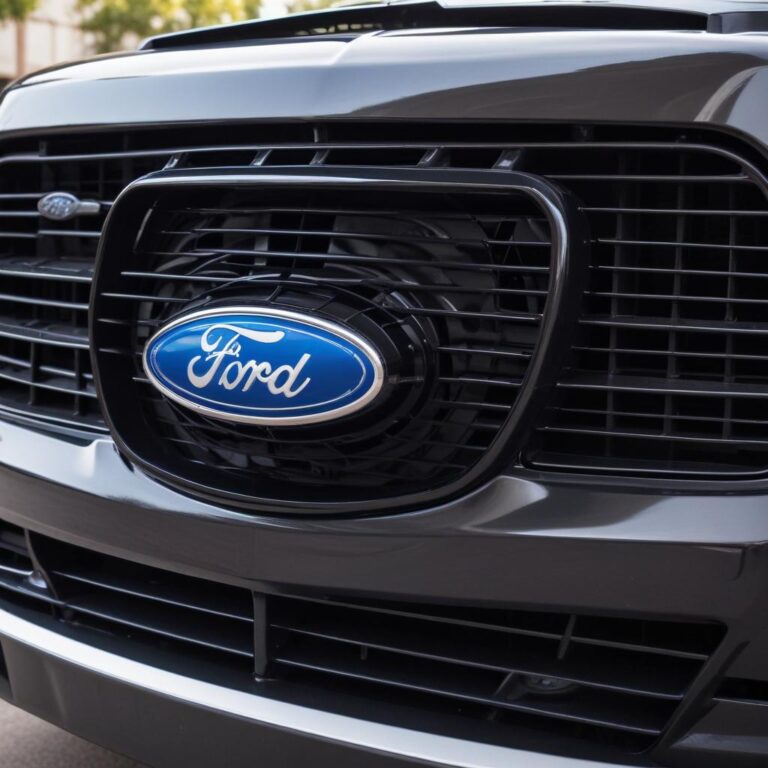
Your horn usually sits right behind the front grille or behind the front bumper cover. On an F-150, it’s low to the ground. Rain, road salt, and car washes kill them. Look for green or white crust on the metal horn body or the electrical connector. Tap the horn gently with a wrench handle — sometimes that frees a stuck diaphragm temporarily. If it honks when tapped, replace the horn.
3. Bad Ground Connection
The horn needs a good ground to work. Over time, the mounting bracket rusts. Remove the horn’s mounting bolt, sand the metal to bare shine, and bolt it back. A bad ground feels like magic when you fix it because nothing looked broken, but now it works perfectly.
4. Broken Clock Spring (Steering Wheel Issue)
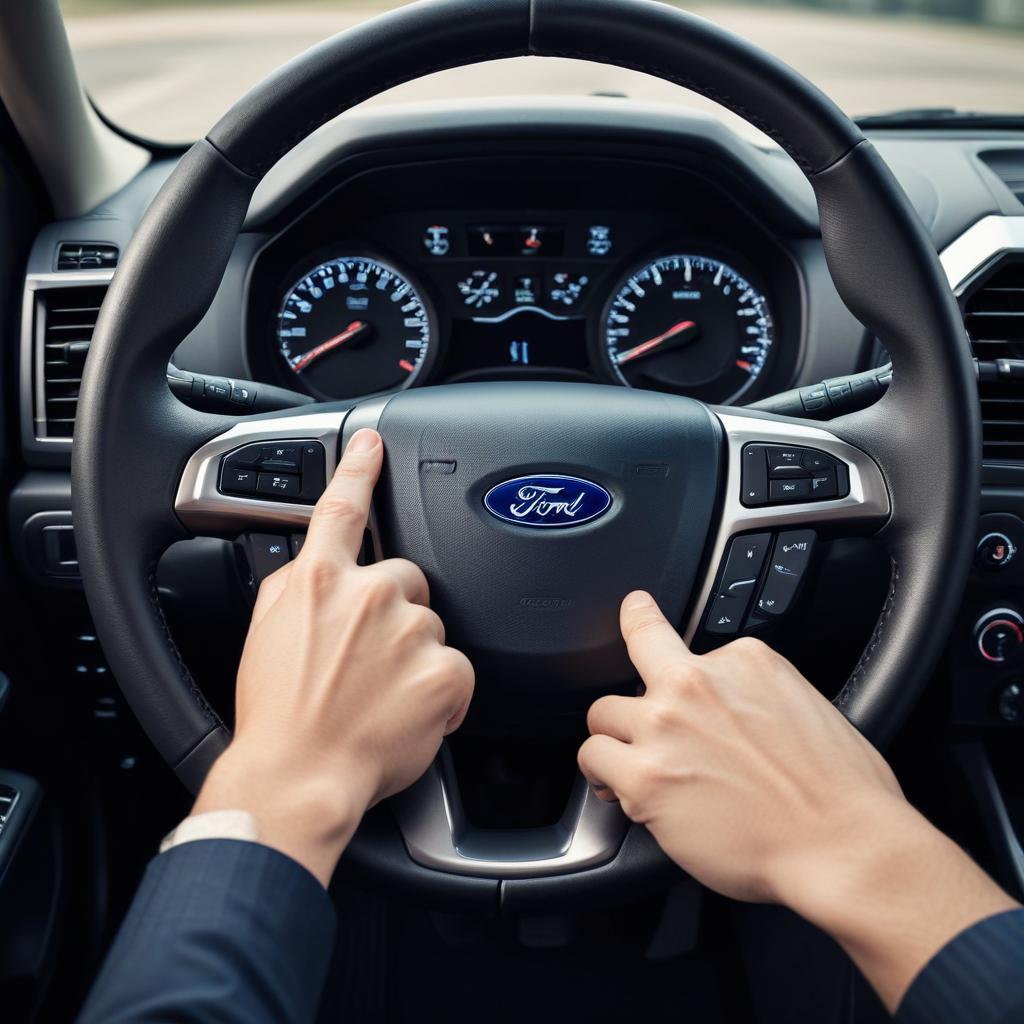
This is the sneaky one. If your cruise control, volume buttons, and horn all stopped working at the same time — it’s the clock spring. That’s a ribbon cable inside your steering wheel that spins with the wheel. When it snaps, the horn button can’t send its signal to the relay. Warning: Do not try to replace a clock spring yourself unless you know airbag safety. Seriously.
5. Faulty Horn Relay
The relay looks like a small black plastic cube. Swap it with another relay in your fuse box that has the same part number (like for your fog lights or fuel pump). If the horn works with the swapped relay, you found the problem. Relays cost $10-15.
Real-World Impact: When You Really Need That Horn
Imagine this: You’re backing your F-150 trailer down a narrow boat ramp. A kid on a bike darts behind you. You hit the horn — nothing. You slam the brakes instead. Close call. Working horns aren’t just about anger; they’re about safety.
Now imagine you own a Mustang GT. You’re at a car meet. Someone’s backing into your front bumper. You lay on the horn. Silence. Suddenly, you’re that guy everyone stares at. Not cool.
Truck owners, especially off-roaders, kill horns all the time. Mud cakes into the horn’s opening. Water crossings drown them. If you’ve been playing in the dirt with your Ford Raptor or Bronco, check that horn after every muddy trip. Some owners relocate their horn up into the engine bay to avoid this.
Ford Horn Comparison Table (Stock vs Aftermarket)
| Ford Model | Stock Horn Sound Level | Common Failure Point | Replacement Cost (DIY) | Louder Aftermarket Option |
|---|---|---|---|---|
| F-150 (2015-2025) | 108-112 dB | Corrosion behind grille | $25-45 | PIAA 85112 Sports Horn (130 dB) |
| Mustang GT (2018-2025) | 110 dB | Clock spring failure | $80-150 (spring) | Hella Sharp Tone Twin Kit |
| Explorer (2011-2020) | 106 dB | Fuse box water intrusion | $15-30 | Fiamm Freeway Blaster |
| Super Duty (2017-2025) | 112 dB | Mud / debris in horn body | $30-50 | Kleinn Air Horn (seriously loud) |
| Ford Maverick (2022-2025) | 104 dB | Loose ground at factory | $5 (fix ground) | Plug-and-play Bosch relay kit |
How a Ford Horn Sounds vs. The Competition
Let’s be real. A Ford horn doesn’t sound like a Japanese econobox’s weak “beep-beep.” Ford tends to use a dual-tone horn on trucks and Mustangs — one high-frequency note and one low-frequency note. Together, they create that authoritative “BAH-BAH” sound that says, “Move, I’m working.”
Chevy trucks use a slightly deeper tone. Ram uses a distinctly European-sounding horn. But Ford’s horn? It’s uniquely American. When it’s working, you know it. When it fails, you feel naked.
Chart: Ford Horn Failure Rates by Model Year (Based on Common DIY Forum Reports)
This chart shows owner-reported horn issues across different Ford generations. Notice the spike around 2011-2014 F-150s — that’s when Ford used a particularly rust-prone horn bracket.
Reported horn failures per 10,000 vehicles — based on Ford enthusiast forum surveys (2010-2024 data).
Step-by-Step: Diagnose Your Dead Horn in 10 Minutes
Grab a test light or a multimeter. Here’s the human way to do it.
Step 1 — Find the horn. Follow the grille area. Look for a round or snail-shaped metal thing with one or two wires going to it. On a Mustang, it’s behind the driver-side headlight. On an F-150, look low behind the front bumper.
Step 2 — Check for power. Have a friend press the horn button while you touch a test light to the horn’s positive wire. If the light glows, the horn is bad. If no glow, your problem is upstream (fuse, relay, clock spring, or wiring).
Step 3 — Bench test the horn. Run two jumper wires from your battery directly to the horn’s terminals (positive to positive, negative to horn’s mounting bracket). It will be loud, so don’t do this next to your ear. If it honks, your horn is fine. If it stays dead, buy a new horn.
Step 4 — Locate the relay. Open your owner’s manual or look on the underside of the fuse box lid. Find the horn relay. Swap it with an identical relay for something else (like your AC compressor). Test the horn again. Works now? Buy a relay.
Step 5 — The bad news. If you’ve done all that and still nothing, you likely have a broken clock spring or a chafed wire somewhere in the steering column. That’s when you call a mechanic — or hit up a Ford dealership’s parts counter.
“I’ve fixed hundreds of Ford horns over 20 years. Ninety percent are fuses or corroded horns. Only three percent are clock springs. Don’t assume the worst until you check the simple stuff.” — Mike, Ford master technician, Texas
Ford Owner Tips: Keep Your Horn Healthy
- Winter driving: Salt spray eats horn terminals. Once a year, spray the horn connector with dielectric grease. Costs $6. Prevents rust.
- After off-roading: Spray your horn with a garden hose to dislodge mud. Let it dry. Test it.
- Upgrade sound: Swap your stock horn for a train horn kit (if your state allows it) or a dual air horn. Just don’t be the neighbor who honks at 6 AM.
- Check recalls: Some Ford models (certain 2015-2018 F-150s) had a recall where the horn could short out due to a bad clock spring seal. Enter your VIN on Ford’s recall site.
Frequently Asked Questions (FAQ)
1. Can I drive my Ford if the horn doesn’t work?
Legally, yes — but it’s risky. Many states require a working horn for safety inspections. If you’re in an emergency and can’t honk to warn someone, you could be found at fault. Get it fixed within a week.
2. How much does a Ford dealership charge to fix a horn?
Diagnostic fee ($80-150) plus parts. A new horn costs $40-80. Clock spring replacement runs $300-600 because of airbag labor. Total: $120 minimum, up to $700 for clock spring.
3. Will disconnecting the battery reset my horn?
No. Horns don’t have memory or computers (unless it’s a newer Ford with a BCM). Disconnecting the battery only helps if you’re replacing the horn itself to avoid sparks.
4. Why does my Ford horn work sometimes but not others?
That’s a bad connection or a dying relay. As you drive, vibrations move the wires just enough to make contact — then you hit a bump and lose it again. Check the ground bolt first.
5. My F-150 horn honks by itself randomly. What’s wrong?
Water in the clock spring or a stuck horn relay. Unplug the horn temporarily as a fix. Then replace the relay. If it continues, it’s likely the clock spring shorting out.
6. Can I install a louder horn on my Ford without breaking the law?
Yes, as long as you stay under 110-115 dB in most states (check local laws). Train horns over 130 dB are illegal for street use in many areas. But a Hella Supertone or PIAA kit is usually legal and much meaner than stock.
7. Does extreme cold affect Ford horns?
Absolutely. At -20°F or below, the metal diaphragm inside the horn can freeze stiff. Once the engine bay warms up, it should work again. If not, your horn seal failed and moisture froze inside. Replace it.
Which Ford Horn Fix Will You Try First?
Now you know the game plan. Start with fuse #20 (or whatever your manual says). Then the relay. Then the horn itself. Nine times out of ten, you’ll be honking again inside an hour with a $12 part from AutoZone.
“Always disconnect the negative battery terminal before touching any airbag-related steering wheel components — including horn pad removal. Safety first, always.”
Here’s the truth: Your Ford is built tough. The horn is just a small part. But when it works, you feel confident. When it doesn’t, you feel like you’re driving a quiet couch. Don’t settle for silence.
Got a stubborn horn problem we didn’t cover? Drop your Ford’s year and model in the comments — I’ll walk you through it. And if you fixed yours with this guide, let me know. Nothing beats that first loud honk after a repair.
References:
- Ford Official Support – Horn Fuse Locations
- Consumer Reports – DIY Horn Repair Guide
- IIHS Safety Ratings – Ford F-150
- Ford Trucks Enthusiasts Forum – Horn Troubleshooting Threads
Which Ford model would you pick for your next drive? Share in the comments!