
Why Your Ford Smells Like Gas Inside the Cabin? (Common Causes & Quick Fixes) | Ford Fuel Odor, EVAP Leak, Gas Fume Diagnosis
You’re driving to work. Windows up. AC on. Then you smell it – raw gasoline. Strong. Like you just spilled a gallon at the pump. You look at your feet. No puddle. You check your mirrors. No smoke. But the smell is getting stronger. Is your Ford about to catch fire? Is this a fuel leak? A bad EVAP canister? A cracked filler neck?
That gas smell inside the cabin is terrifying. And honestly, it should be. Raw gasoline vapor is flammable. But here’s the good news: most Ford fuel odors come from cheap, easy fixes – not a fuel leak that’s about to explode. You just need to find it fast. This guide covers Ford gas fume diagnosis, EVAP system leaks, fuel injector problems, and everything you need to get that smell out of your Ford F-150, Explorer, Mustang, or Focus.
The short version: Gas smell inside your Ford usually comes from leaky fuel injectors, a bad evaporative emissions (EVAP) canister, a cracked fuel filler neck, or a loose gas cap. The #1 cause on older Fords is a leaking fuel pressure regulator vacuum line. On newer Fords, it’s often a cracked EVAP hose or bad purge valve. Don’t ignore this – gasoline vapor is flammable. But don’t panic either. Most Ford fuel smell fixes cost under $100. Dealer wants $400 to diagnose. You can find the leak yourself with your nose and a flashlight.
Key Takeaways (Ford Fuel Smell Diagnosis)
- Ford cabin gas odor is serious – vapor is flammable. Fix it this week, not next month.
- Cracked fuel filler neck – common on older Ford F-150 and Ranger. Rubber rots, fumes come in through rear vents.
- Leaky fuel injector – smells strongest near the engine. O-rings fail ($5 fix for Ford fuel injector seal).
- EVAP canister cracked – common Ford EVAP system leak on 2009-2020 F-150. Vapors vent under rear seat.
- Bad EVAP purge valve – stuck open pulls fuel vapor into engine when off. $40-60 part.
- Overfilling the gas tank – fuel goes into the EVAP system. Stop at the first click.
- Loose or missing gas cap – cheapest Ford fuel smell fix. Tighten it or replace it ($10).
The Real Reason Your Ford Smells Like Gas
Ever notice how the Ford fuel odor is worse when you’re idling? Or when the AC is on? Or after you fill up the tank? That’s a clue to where your Ford gas leak is coming from.
Here’s what’s happening inside your Ford: Gasoline evaporates easily. Those vapors are supposed to be captured by the EVAP system and burned in the engine. When there’s a leak anywhere in the fuel system – from the gas cap to the injectors – vapors escape. If they escape near the firewall or under the hood, they get sucked into the cabin through the vents. That’s why you smell gas inside your Ford even without a visible puddle.
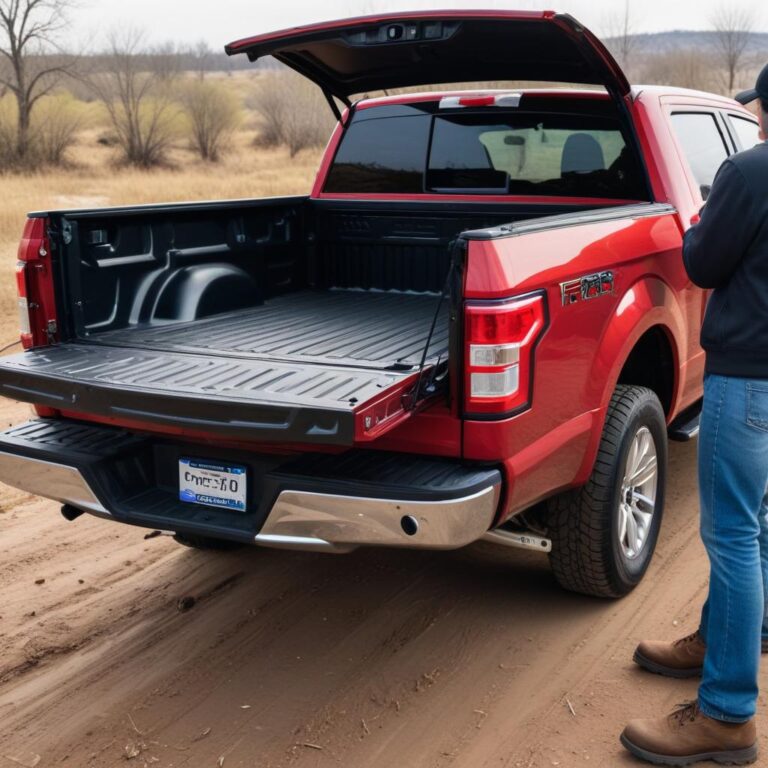
On Ford F-150 and Ranger (1997–2008) , the fuel filler neck rubber hose rots out. Cracks let fumes escape near the rear wheel. Those fumes drift forward and enter the cab through the rear sliding window or floor vents. This is one of the most common Ford gas leak causes.
On Ford Explorer (2002–2010) , the fuel pressure regulator has a vacuum line that fails. Gas gets sucked directly into the intake. You smell raw fuel inside the cabin. This smells strongest under the hood.
On Ford Mustang (2005–2014) , leaky fuel injector O-rings are common. Gas drips on the hot intake manifold. The smell comes through the vents immediately.
On newer Ford F-150 and Explorer (2010+) , the EVAP canister cracks or the purge valve sticks open. The canister is mounted near the gas tank. Vapors vent right under the rear seat. You’ll smell gas inside the Ford cabin strongest in the back.
“A Ford gas smell inside the cabin is like a smoke alarm. Don’t ignore it. But don’t assume your F-150 is about to explode either. Most Ford fuel odors come from the EVAP system or a small rubber EVAP hose. A $10 part and 20 minutes usually fixes the problem.”
Quick Diagnosis: Where Is the Ford Gas Smell Strongest?
| Strongest Ford Fuel Odor Location | What’s Likely Wrong on Your Ford | Ford Model Most Affected |
|---|---|---|
| Front of car (under hood) | Leaky fuel injector, fuel rail, or pressure regulator | Mustang, F-150 5.4L |
| Rear of car near gas cap | EVAP canister, fuel filler neck, or gas cap gasket | F-150, Explorer, Ranger |
| Strongest when AC is on | Leak near cowl or firewall | All Ford models |
| Strongest after fill-up | Overfilled tank or cracked filler neck | F-150, Explorer |
| Inside the trunk | EVAP canister or fuel pump access cover leak | Ford Taurus, Crown Victoria |
| Passenger floor wet | Heater core leak (sweet smell – not gas) | All models |
| Check engine light on | EVAP system leak code (P0442, P0455, P0456) | All Ford models |
⚠️ Safety reminder: Gasoline vapor is heavier than air. It sinks to the floor of your Ford. If you smell gas while driving, roll down the windows immediately. Don’t use your phone. Don’t light a cigarette. Don’t park in a garage. Get the Ford inspected within 24 hours.
Ford EVAP system problems cause nearly a third of all gas smell complaints. Start at the back of your Ford. The charcoal canister cracks, and EVAP hoses rot out – especially on F-150 and Explorer.
The Gas Cap Test (Cheapest Ford Fix – Do This First)
Before you do anything else on your Ford, check the gas cap. It’s the simplest fix – and the most embarrassing when you realize that’s all it was.
Step 1: Get out of your Ford. Go to the gas cap.
Step 2: Is it loose? Tighten it until you hear clicks (three clicks on most Ford models).
Step 3: Is the cap missing? Buy a replacement Ford gas cap ($10–15).
Step 4: Is the rubber gasket cracked or dry? Replace the Ford gas cap.
Step 5: Drive your Ford for a day. Did the gas smell go away?
The gas cap seals the Ford fuel system. A loose cap lets vapors escape. Those vapors get sucked into the cabin through the rear vents. Tighten your Ford gas cap. It fixes a shocking number of gas smell complaints on F-150, Explorer, and Mustang.
The Fuel Filler Neck (Ford F-150 & Ranger – Common Leak)
On older Ford trucks – F-150 (1997–2008) and Ranger (1998–2011) – the rubber hose that connects the gas cap to the fuel tank rots out. It cracks. Gas fumes escape. You smell gas inside the cabin – especially through the rear window or floor vents. This is one of the most common Ford fuel leak problems.
Ford gas smell symptoms:
- Gas odor strongest near the rear driver side wheel
- You might see wetness around the Ford filler neck
- Sometimes you hear a hissing sound when you remove the Ford gas cap
- Check engine light with Ford EVAP codes (P0442, P0455, P0457)
The Ford fuel filler neck fix: Replace the hose. It’s a 1-hour DIY job for most Ford owners.
Step 1: Buy the replacement hose for your Ford model (Dorman – $30–50).
Step 2: Remove the gas cap. Loosen the clamps on the old Ford filler neck hose.
Step 3: Pull the hose off. Expect some gas to drip – have a rag ready.
Step 4: Install the new Ford fuel filler neck hose. Tighten the clamps.
Step 5: Replace the gas cap if it’s old.
On Ford F-150, the filler neck also includes a metal tube that can rust through. Replace the whole Ford filler neck assembly if needed ($60–100).
The EVAP Canister (Cracked Plastic – Ford F-150 & Explorer 2010+)
The EVAP (Evaporative Emissions) system captures fuel vapors and stores them in a charcoal canister. On many Ford models – especially F-150 (2009–2020) and Explorer (2011–2019) – the plastic canister cracks. Vapors leak out right under the car. They rise up into the Ford cabin through floor vents or the rear seat.
Ford gas smell symptoms:
- Gas odor strongest near the rear driver side tire
- Smell is worse when your Ford is parked in the sun (heat expands vapors)
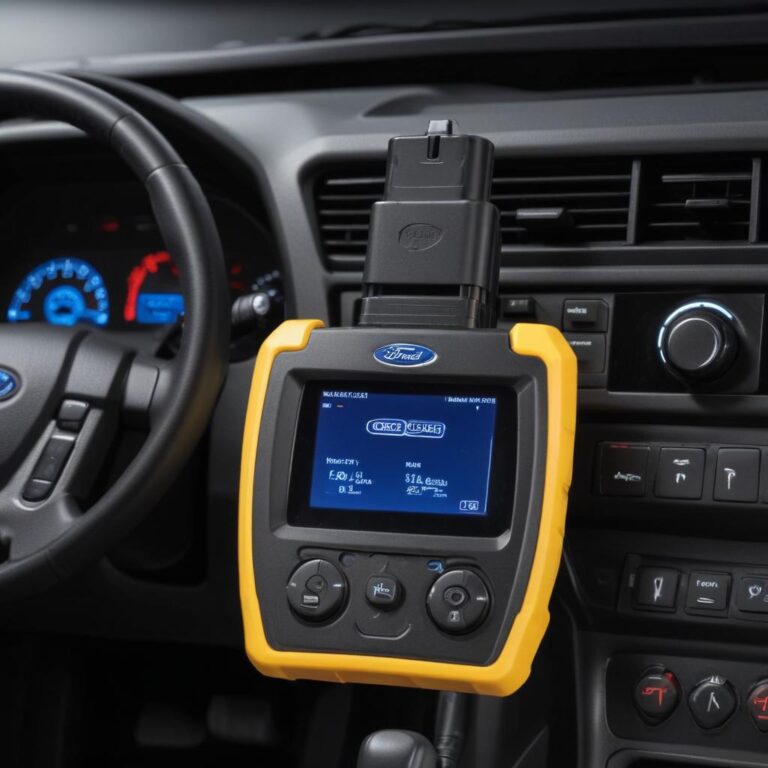
- Check engine light with Ford EVAP codes (P0442, P0455, P0446, P0456)
- No visible fuel leak – just vapor from your Ford’s EVAP system
The Ford EVAP canister fix: Replace the canister. Part cost: $60–120. Time: 1–2 hours for most Ford DIY owners.
Step 1: Locate the EVAP canister on your Ford. On F-150, it’s behind the driver side rear wheel, above the spare tire.
Step 2: Unplug the electrical connector and EVAP hoses. Label them.
Step 3: Remove the mounting bolts. Pull the Ford canister out.
Step 4: Install the new Ford EVAP canister. Reconnect hoses.
Before replacing the canister on your Ford, check the EVAP hoses connected to it. One small cracked hose can cause the same gas smell. A Ford EVAP hose costs $5. A canister costs $100. Check Ford EVAP hoses first.
The EVAP Purge Valve (Ford Focus, Fusion, F-150)
The EVAP purge valve opens to let fuel vapors from the canister be burned in the engine. When this Ford part sticks open, it can pull raw fuel vapor into the intake when the engine is off. You smell gas inside the cabin – especially after parking.
Ford gas smell symptoms:
- Gas smell inside the cabin after driving (not just at startup)
- Hard starting after refueling
- Rough idle on your Ford
- Check engine light with Ford EVAP codes (P0443, P0455, P0496)
The Ford purge valve fix: Replace the EVAP purge valve. Cost: $40–60. Time: 30 minutes.
Step 1: Locate the purge valve on your Ford. On most models, it’s near the intake manifold with a hose going to the EVAP canister.
Step 2: Unplug the electrical connector. Remove the hoses.
Step 3: Install the new Ford purge valve. Reconnect everything.
This is a very common failure on Ford Focus (2012–2018) and Ford Fusion (2010–2019). Replace it. The gas smell will disappear.
| Ford Model | Most Common Gas Smell Cause | DIY Fix Cost | Ford Dealer Cost |
|---|---|---|---|
| Ford F-150 (1997–2008) | Cracked fuel filler neck rubber | $30–50 | $200–300 |
| Ford F-150 (2009–2020) | EVAP canister cracked / purge valve | $40–120 | $400–600 |
| Ford Explorer (2002–2010) | Fuel pressure regulator vacuum line | $10–20 | $200–300 |
| Ford Explorer (2011–2019) | EVAP hose cracked / canister | $5–120 | $400–600 |
| Ford Mustang (2005–2014) | Leaky fuel injector O-rings | $5–10 | $300–500 |
| Ford Mustang (2015–2024) | EVAP purge valve stuck open | $40–60 | $250–350 |
| Ford Focus (2012–2018) | EVAP purge valve / fuel tank recall | $40–60 (or recall free) | $0 under recall |
| Ford Fusion (2010–2019) | EVAP purge valve | $40–60 | $300–400 |
| Ford Ranger (1998–2011) | Filler neck or fuel pump gasket | $30–80 | $250–400 |
The 2012–2018 Ford Focus has a known problem: the fuel tank can deform and crack. Ford issued a recall. Check your VIN on Ford’s recall site. The fix is free at a Ford dealer.
The Fuel Injector Leak (Ford Mustang & F-150 – Under Hood Smell)
If the gas smell in your Ford is strongest under the hood, you have a raw fuel leak in the engine bay. This is more urgent – raw fuel near hot exhaust manifolds on your Ford is dangerous.
Ford gas smell symptoms:
- Strong fuel odor at the front of your Ford
- You might see wetness around the Ford fuel rail or injectors
- Hard starting or rough idle on your Ford
- Poor fuel economy in your Ford
The #1 cause on Ford vehicles: Leaking fuel injector O-rings. The rubber rings dry out and crack. Fuel seeps past them onto the hot Ford engine.
The Ford injector fix: Replace the O-rings on the leaking injector. Cost: $5–10 for a set. Time: 1–2 hours for most Ford DIY owners.
Step 1: Let your Ford engine cool completely. Disconnect the battery.
Step 2: Remove the fuel rail cover on your Ford if equipped.
Step 3: Relieve fuel pressure. Then unbolt the Ford fuel rail.
Step 4: Remove the bad Ford injector. Replace the O-rings (top and bottom). Lubricate with a drop of clean engine oil.
Step 5: Reinstall. Check for Ford fuel leaks.
If the Ford injector itself is leaking (cracked plastic body), not just the O-rings, replace the whole Ford fuel injector ($50–100). On Ford 5.4L V8, the intake manifold has to come off – bigger job.
Overfilling the Ford Gas Tank (User Error)
This is the most common “user error” cause of Ford gas smell. You pull up to the pump. You fill until the nozzle clicks. Then you squeeze one more time. Then another. You want that round number dollar amount on your Ford.
What happens to your Ford: When you overfill, liquid gas goes past the filler neck and into the EVAP system. The charcoal canister gets saturated. It can’t hold any more vapors. Raw gas smell vents out from your Ford.
The fix for Ford owners: Stop at the first click. Don’t top off your Ford. Ever.
If you already overfilled your Ford: Drive normally for a few days. The smell should go away as the canister dries out. If it doesn’t, you may have damaged the Ford EVAP canister.
This is so common on Ford F-150 that Ford put a warning in the owner’s manual. First click means full. Stop there.
The “Sniff Test” for Your Ford (Find the Leak Yourself)
You don’t need a Ford mechanic to find a fuel smell. Your nose is the best tool.
Step 1: Park your Ford in a garage or enclosed space if possible (helps trap the smell).
Step 2: Open the Ford hood. Sniff near the fuel rail and injectors.
Step 3: Go to the back of your Ford. Sniff near the gas cap and filler neck.
Step 4: Crawl under the rear of your Ford (on jack stands – safety first). Sniff near the EVAP canister and fuel tank.
Step 5: The strongest Ford fuel smell is your leak location.
If you can’t find the Ford gas leak, have the vehicle smoke tested at a shop. They inject harmless smoke into the Ford fuel system. The smoke comes out where the leak is. Cost: $100–150. Worth it for stubborn Ford EVAP problems.
What NOT to Do on Your Ford (Mistakes That Cost Money or Safety)
| Ford Gas Smell Mistake | Why It’s Bad |
|---|---|
| Ignoring the Ford fuel smell for months | Gas vapor is flammable. A spark could ignite it. |
| Smoking near your Ford | You could literally explode. Don’t. |
| Using a lighter to look for the Ford fuel leak | See above. Use a flashlight. |
| Parking your Ford in a garage with gas smell | Vapor accumulates. Water heater pilot light could ignite it. |
| Replacing Ford EVAP canister without checking hoses | A $5 cracked Ford EVAP hose becomes $100 canister you didn’t need. |
| Driving a Ford with strong gas smell | Fumes can make you dizzy or sick. Roll down windows. |
| Tightening Ford gas cap with gorilla strength | You can crack the cap or filler neck. Three clicks – that’s it. |
⚠️ Safety reminder: Gasoline vapor is extremely flammable. If the smell in your Ford is strong enough to make you dizzy, the vapor concentration is high enough to ignite. Don’t start your Ford. Push it out of the garage. Call a tow truck.
FAQ (Real Questions from Ford Owners)
1. Is a gas smell in my Ford dangerous?
Yes, if it’s strong and constant. Vapor can ignite from a spark – static electricity, a phone, a cigarette lighter. If you smell gas in your Ford, get it fixed within days. If the smell is overwhelming, don’t drive your Ford. Tow it to a shop.
2. Can a bad Ford EVAP purge valve cause gas smell?
Yes. The Ford purge valve opens to let fuel vapors from the canister into the engine. If it’s stuck open, it can pull raw gas vapor into the intake when the engine is off. You smell it inside your Ford. Replace the Ford purge valve ($40–80).
3. Why does my Ford smell like gas only when the AC is on?
The Ford AC pulls air from the cowl (the vent at the base of the windshield). If the leak is near your Ford engine or firewall, the AC sucks those fumes straight into the cabin. Turn off the Ford AC (use vent mode) to test.
4. Can a Ford gas smell be from a leaky fuel tank?
Yes, but it’s rare on Ford vehicles. The fuel tank is plastic on most modern Fords. Plastic tanks rarely crack. A metal Ford tank can rust through. Check for wetness under your Ford tank. If it’s wet, don’t drive it.
5. My Ford smells like gas after I fill up – then it goes away. Normal?
You probably overfilled your Ford. Stop at the first click of the pump. If the Ford gas smell persists for more than 10 minutes after driving, you have a real leak in your Ford fuel system.
6. How much does it cost to fix a gas smell in a Ford?
Most Ford fixes: $10–100 DIY. $200–500 at a shop. Ford EVAP canister replacement: $100 DIY, $400–600 shop. Ford fuel injector leak: $5–10 DIY, $300–500 shop. Loose Ford gas cap: $0–15.
7. Will a check engine light come on for a Ford gas leak?
Usually yes for Ford EVAP system leaks (P0442, P0455, P0456, P0457). For a raw fuel leak on your Ford (injector, regulator), maybe not. A Ford gas smell without a check engine light is still a problem.
8. Is there a Ford recall for gas smell problems?
Yes. Ford Focus (2012–2018) has a fuel tank deformation recall. Ford F-150 (2015–2018) had an EVAP canister recall. Check your VIN on Ford’s recall site – repairs are free at Ford dealers.
Ford Gas Smell Prevention Tips
- Don’t overfill your Ford – stop at the first click of the pump.
- Replace your Ford gas cap every 5 years – the rubber gasket dries out.
- Inspect Ford fuel filler neck rubber – look for cracks or dry rot annually.
- Listen for hissing when removing Ford gas cap – that’s a sign of EVAP system problems.
- Address check engine lights promptly – Ford EVAP codes lead to gas smells.
- Use Top Tier gasoline in your Ford – cleaner fuel means less EVAP system contamination.
The Bottom Line (Get That Gas Smell Out of Your Ford Cabin)
Here’s your game plan for fixing Ford gas smell based on your symptoms:
- Ford gas smell + loose gas cap → tighten it. Drive. Smell gone? Done.
- Ford gas smell after filling up → you overfilled. Stop topping off your Ford. Drive until tank is half empty.
- Ford gas smell strongest under hood → leaky Ford injector O-rings or fuel pressure regulator. Check for wetness.
- Ford gas smell strongest at rear of car → Ford EVAP canister, filler neck, or gas cap gasket.
- Ford gas smell strongest when AC is on → leak near Ford cowl or firewall. Check engine bay.
- Ford check engine light with EVAP codes → start with Ford gas cap, then filler neck, then EVAP canister.
- No check engine light but Ford gas smell persists → raw fuel leak on your Ford. Get it smoke tested.
Here’s the honest truth: That gas smell inside your Ford cabin is your car’s way of waving a yellow flag. It’s not a red flag – yet. You have time to fix it. But don’t ignore your Ford for months.
Start with the cheap stuff on your Ford. Tighten the gas cap. Stop overfilling at the pump. Check the filler neck for cracks on your F-150 or Ranger. Follow your nose to the strongest smell. Most Ford gas smell problems cost under $50 and take an hour of your time.
And if you can’t find the leak on your Ford? Pay a shop for a smoke test. It’s cheaper than a fire or an explosion. Fix your Ford fuel smell this week – not next month. Your nose (and your safety) will thank you.
Has your Ford ever smelled like gas inside the cabin? What was the cause – EVAP canister, filler neck, or leaking injector? Share your Ford repair story in the comments – someone else is holding their nose right now trying to figure it out.
Ford Gas Smell Keywords Summary
This guide covers: Ford gas smell inside cabin, Ford fuel odor diagnosis, Ford EVAP system leak, Ford F-150 gas fume fix, Ford Explorer fuel smell, Ford Mustang gas leak, Ford purge valve replacement, Ford EVAP canister cracked, Ford fuel filler neck repair, Ford gas cap problems, P0442 Ford code, P0455 Ford code, Ford fuel injector leak, Ford cabin fuel vapor smell, Ford gasoline odor when driving.
References: