Ford Engine Stalling at Stops: What’s Going Wrong?
You’re pulling up to a red light. Foot on the brake. The engine is purring. Then suddenly – silence. The RPM gauge drops to zero. The steering wheel gets heavy. The brake pedal gets hard. Your Ford just died. Right there in the middle of traffic. You throw it in park, turn the key, and it starts right back up. But now you’re nervous. Is it going to happen again at the next light?
Yeah, that’s terrifying. And embarrassing. And honestly, dangerous. Stalling at stops is one of the most common Ford problems – especially on F-150s, Explorers, and Focus models. The good news? Most causes are simple and cheap. You don’t need a new transmission. You probably don’t even need a tow truck.
The short version: Stalling at stops means your engine isn’t getting enough air or fuel when you take your foot off the gas. The #1 cause on older Fords is a dirty idle air control valve (IAC) – clean it with $7 spray. On newer Fords, it’s usually a dirty throttle body or a bad torque converter not unlocking. Start with cleaning the throttle body – it’s free if you have cleaner already. Dealer wants $200 to diagnose. You can fix most stalling problems for under $50.
Key Takeaways (Stop That Stalling)
- Dirty throttle body = #1 cause on 2010+ Fords. Carbon blocks the idle air passage.
- Dirty idle air control valve = #1 cause on older Fords (pre-2010). Clean or replace it.
- Stalls when coming to a stop = torque converter not unlocking (automatic transmission).
- Stalls when hot but not cold = vapor lock or failing fuel pump.
- Stalls when cold but not hot = dirty IAC valve or coolant temp sensor.
- Check engine light on? Get codes read for free. That’s your answer.
- Most fixes cost under $50 and take less than an hour.
The Real Reason Your Ford Stalls at Stops
Ever notice how the stall only happens when you’re coming to a stop? Never when you’re driving. Never when you’re parked. Always at the worst possible moment – in traffic, at a light, in a drive-through.
Here’s what’s happening inside your Ford: When you’re driving, your foot is on the gas. The throttle plate is open. Air is rushing in. The engine is happy.
When you take your foot off the gas to stop, the throttle plate closes. The engine now needs a different source of air – a small passage that bypasses the closed throttle plate. On older Fords, that passage is controlled by the Idle Air Control (IAC) valve. On newer Fords (2010+), the throttle body itself has a tiny computer-controlled gap.
If that passage is blocked with carbon, no air gets in. The engine starves. It dies.
On automatic transmissions, there’s another factor: the torque converter. When you slow down, the converter should unlock – like pushing in the clutch on a manual. If it stays locked, the engine is still connected to the wheels. When you stop, the engine has to fight the transmission. It stalls.
On Ford F-150s with the 5.0L V8, the throttle body gets caked with carbon. The idle passage gets blocked. The engine dies at stoplights.
On Ford Focus and Fiesta models with the automatic transmission, the torque converter clutch gets stuck. There was even a class-action lawsuit about this. Ford extended the warranty on these transmissions.
On Ford Explorers, a failing fuel pump can cause stalling when hot. The pump gets weak. It can’t keep up at idle. The engine dies.
“Stalling at stops is rarely a sign of a dying engine. It’s almost always a sign of a dirty part or a sensor that forgot its job. Clean the throttle body. Clean the IAC valve. Check the torque converter. Nine times out of ten, you’re back on the road for under $20.”
Quick Diagnosis: When Does Your Ford Stall?
| Symptom | What’s Likely Wrong | Fix Time |
|---|---|---|
| Stalls when coming to a stop (automatic) | Torque converter not unlocking | Needs diagnostic – shop |
| Stalls at idle, restarts immediately | Dirty throttle body or IAC valve | 15–30 minutes |
| Stalls when hot, fine when cold | Failing fuel pump or vapor lock | 1–2 hours (fuel pump) |
| Stalls when cold, fine when hot | Dirty IAC valve or coolant temp sensor | 15 minutes (IAC clean) |
| Stalls when AC is on | IAC valve can’t compensate for load | Clean or replace IAC |
| Stalls only when turning | Power steering load + dirty IAC | Clean IAC first |
| Stalls + check engine light | Read the code – multiple possibilities | Get codes for free |
⚠️ Safety reminder: If your Ford stalls in traffic, turn on your hazard lights immediately. Put it in neutral and restart while rolling if safe. If it won’t restart, push it to the shoulder or call for help. Never get out of a stalled car in moving traffic.
The Throttle Body Cleaning (2010+ Fords)
This is the #1 fix for stalling on newer Fords. It’s cheap, easy, and works shockingly well.
What you need: Throttle body cleaner ($7–10), a rag, a screwdriver or socket set, 15 minutes.
Why it works: Carbon builds up around the throttle plate. When you take your foot off the gas, the plate closes almost all the way. The computer opens it a tiny crack to let air through for idle. Carbon blocks that crack. No air = engine dies.
Step-by-step cleaning:
Step 1: Locate the throttle body. Follow the big rubber tube from your air filter box. It ends at the throttle body.
Step 2: Remove the tube. One or two clamps. Set it aside.
Step 3: Look inside. See black gunk around the edge of the metal plate? That’s your problem.
Step 4: Spray cleaner onto a rag – not directly into the throttle body. Wipe the gunk off the plate and the inside walls.
Step 5: Open the throttle plate by hand (push it – it’s spring loaded). Clean the back side and the edge.
Step 6: Let it dry for 2 minutes. Reinstall the tube.
Step 7: Start the engine. It might idle high for a minute while the computer relearns.
Important: On electronic throttle bodies, never force the plate open if it resists. Never spray cleaner directly into it. Spray the rag, then wipe.
Dirty throttle body and dirty IAC valve cause nearly two-thirds of all stalling problems on Fords. Clean them before you do anything else.
The Idle Air Control Valve (Older Fords – Pre-2010)
If you have an older Ford – F-150 from 2008 or earlier, Mustang from 2009 or earlier, Explorer from 2007 or earlier – your engine has a separate Idle Air Control (IAC) valve.
What it looks like: A small metal cylinder attached to the throttle body with two bolts. It has an electrical plug and two small hoses.
What it does: It opens and closes to let air bypass the throttle plate at idle. When it gets dirty, it sticks. The engine gets no air at idle. It stalls.
How to clean it:
Step 1: Locate the IAC valve on the side of the throttle body.
Step 2: Unplug the electrical connector. Remove the two bolts. Pull the valve off.
Step 3: Spray IAC cleaner or throttle body cleaner into both ports. Let it soak for 5 minutes.
Step 4: Shake out the dirty cleaner. Spray again. Repeat until the cleaner comes out clear.
Step 5: Let it dry completely (10 minutes). Reinstall.
If cleaning doesn’t work, replace the IAC valve. It costs $40–60. Two bolts and one plug – 10 minutes.
The Torque Converter Problem (Automatic Transmissions)
This is a different kind of stall. The engine runs fine. You’re slowing down. Right before you come to a complete stop – the engine dies. You put it in neutral or park, and it starts right back up.
What’s happening: The torque converter clutch isn’t unlocking. It’s like driving a manual transmission and coming to a stop without pushing in the clutch. The engine is still connected to the wheels. When the wheels stop, the engine has to stop too.
Which Fords have this problem:
- Ford Focus (2012–2016) – very common. There was a class-action lawsuit.
- Ford Fiesta (2011–2016) – same transmission. Same problem.
- Ford Fusion (2013–2016) – less common but happens.
- Ford F-150 (2011–2017) – rare, but possible.
What to do: This isn’t a DIY fix. The torque converter clutch solenoid or the torque converter itself needs replacement. A transmission shop charges $800–1500. Ford extended the warranty on Focus and Fiesta transmissions to 7 years / 100,000 miles. Check if you’re covered.
Temporary workaround: When coming to a stop, shift into neutral before the car fully stops. This disconnects the engine from the wheels. The engine won’t stall. Then shift back to drive when you’re ready to go. Annoying, but it works.
Which Ford Model Has Your Problem?
| Ford Model | Most Common Stalling Cause | DIY Fix Cost | Dealer Cost |
|---|---|---|---|
| F-150 (2011–2020) | Dirty throttle body | $7 | $200 |
| F-150 (1997–2010) | Dirty IAC valve | $7 (clean) or $40 (replace) | $300 |
| Mustang (2011–2023) | Dirty throttle body | $7 | $200 |
| Mustang (1996–2010) | Dirty IAC valve | $7 (clean) or $40 (replace) | $300 |
| Explorer (2011–2019) | Dirty throttle body | $7 | $200 |
| Explorer (2002–2010) | Dirty IAC valve | $7 (clean) or $40 (replace) | $300 |
| Focus (2012–2016) | Torque converter (automatic) | Not DIY | $800–1500 |
| Fusion (2013–2020) | Dirty throttle body | $7 | $200 |
| Edge (2011–2021) | Dirty throttle body | $7 | $200 |
The 2012–2016 Ford Focus with the automatic transmission is the worst stalling offender. Ford extended the warranty. Check your VIN online.
The Fuel Pump Problem (Stalls When Hot)
This one is tricky. Your Ford runs fine for 20–30 minutes. Then it starts to sputter. Then it dies. You wait 10 minutes. It starts again. Then it dies again after another 10 minutes.
What’s happening: The fuel pump is failing. When it gets hot, the internal windings expand. The pump stops working. When it cools down, it works again.
Symptoms specific to fuel pump:
- Stalls when engine is hot, starts fine when cold
- Long crank time before starting
- Loss of power going uphill before stalling
- Whining noise from the gas tank
What to do: Replace the fuel pump. On most Fords, the pump is inside the gas tank. This is a harder DIY job (3–4 hours) or a shop job ($500–800).
Temporary workaround: Keep your gas tank above half full. Fuel cools the pump. A fuller tank keeps the pump cooler and delays the stall.
The Vacuum Leak (Hunting Idle Then Stall)
A vacuum leak lets extra air into the engine. The computer adds fuel to compensate, but at idle it can’t keep up. The engine hunts – RPM goes up and down – then it stalls.
Symptoms:
- RPM bounces up and down at stoplights
- Hissing or whistling sound from under the hood
- Stalls after the RPM bounces a few times
- Check engine light with lean codes (P0171, P0174)
Where to look:
- Rubber hoses around the intake manifold
- PCV hose (passenger side)
- Brake booster hose
- Intake manifold gaskets
How to find it: With engine running, spray brake cleaner around hoses and gaskets. If the idle changes, you found the leak.
Fix: Replace the cracked hose. Most cost $5–15. Takes 10 minutes.
The Idle Relearn Procedure (Free – Do This After Cleaning)
After you clean the throttle body or IAC valve, your Ford’s computer needs to relearn how to idle. Here’s how to help it:
Step 1: Start the engine. Don’t touch the gas pedal.
Step 2: Let it idle for 5 minutes. No AC, no radio, no lights. Don’t touch anything.
Step 3: Turn on the AC. Let it idle for 2 more minutes.
Step 4: Turn the steering wheel all the way left and right a few times.
Step 5: Drive normally for 10–15 miles. The computer will learn the new idle.
If your Ford still stalls after this, the problem isn’t the throttle body or IAC valve.
The “Battery Reset” (Sometimes Works)
If your Ford started stalling after a battery change or jump start, the computer might have lost its idle memory.
Step 1: Disconnect the negative battery terminal.
Step 2: Wait 10 minutes.
Step 3: Reconnect the terminal.
Step 4: Do the idle relearn procedure above.
This resets the computer’s learned idle settings. It won’t fix a dirty throttle body, but it can fix a confused computer.
What NOT to Do (Mistakes That Cost Money)
| Mistake | Why It’s Bad |
|---|---|
| Replacing the IAC valve before cleaning it | Cleaning is free and usually works. Buy a new one only if cleaning fails. |
| Ignoring stalling because it restarts | It will get worse. Eventually it won’t restart. |
| Spraying cleaner into a running engine | Can hydrolock the engine. Don’t do this. |
| Replacing the fuel pump without testing fuel pressure | A $20 fuel pressure test kit saves you $500. Test first. |
| Letting it stall in traffic without hazards | Dangerous. Other drivers might not see you. |
⚠️ Safety reminder: If your Ford stalls and won’t restart, do not get out of the car in traffic. Call for help. Push it to the shoulder from the driver’s seat if possible. Never stand behind or in front of a stalled car in moving traffic.
FAQ (Real Questions from Ford Owners)
1. Why does my Ford only stall when the AC is on?
The AC compressor puts extra load on the engine. Your IAC valve or throttle body should open more to let in extra air. If they’re dirty, they can’t. Clean the throttle body or IAC valve.
2. Can a bad alternator cause stalling?
Yes. If the alternator isn’t charging at idle, the engine runs on battery power. When the battery voltage drops too low, the engine computer shuts down. Check your battery light – if it’s on, have the alternator tested.
3. Why does my Ford stall when I put it in reverse?
Same as stalling at stops – the engine isn’t getting enough air. Clean the throttle body or IAC valve. The engine load is higher in reverse than in drive, so the problem shows up there first.
4. My Ford stalls but has no check engine light. What now?
That’s actually good news. It means the problem is mechanical, not electronic. Dirty throttle body, dirty IAC valve, or vacuum leak. Clean the throttle body first. That fixes most no-code stalling.
5. Will a tune-up fix my stalling problem?
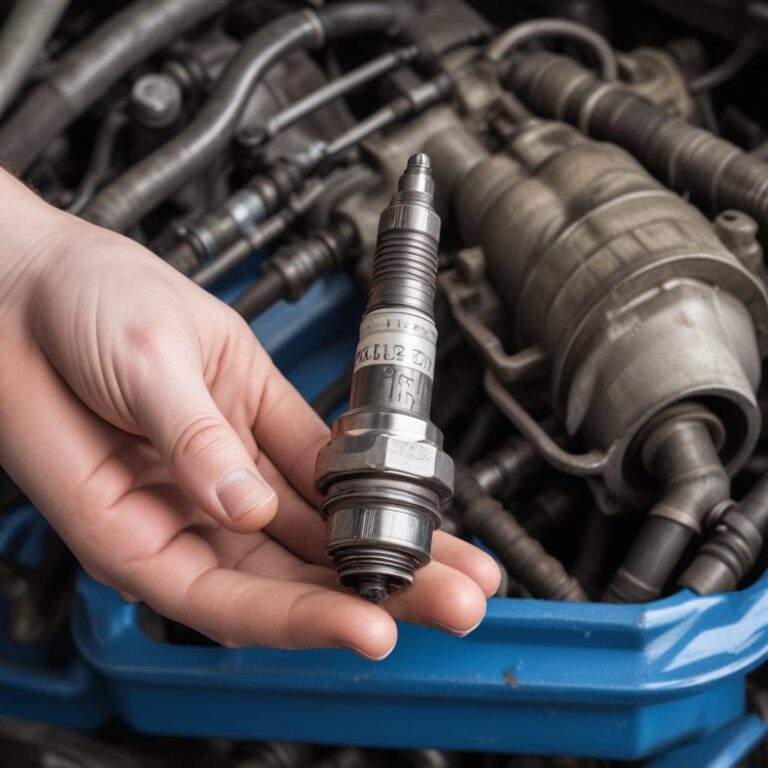
Depends. New spark plugs won’t fix a dirty throttle body. But if your plugs are old and you’re due for a tune-up anyway, do it. Just don’t expect it to fix stalling unless you also clean the throttle body.
6. Why does my Ford stall only when I’m turning?
The power steering pump puts load on the engine. If your idle air passage is partially blocked, that extra load can push it over the edge. Clean the throttle body. Also check your power steering fluid level – low fluid makes the pump work harder.
7. Can a bad coolant temperature sensor cause stalling?
Yes. The sensor tells the computer how much fuel the engine needs when cold. If it’s lying, the engine might get too much or too little fuel. It can stall when cold but run fine when warm. Replace the sensor ($20–30).
The Bottom Line (No More Stalling at Stoplights)
Here’s your game plan based on your symptoms:
- Newer Ford (2010+) stalls at stops → clean the throttle body. $7, 15 minutes.
- Older Ford (pre-2010) stalls at stops → clean the IAC valve. Free, 20 minutes.
- Stalls only when hot, restarts after cooling → failing fuel pump. Replace it.
- Stalls when coming to a stop (automatic) → torque converter issue. Shop time.
- Stalls + check engine light → get codes read for free. Follow the code.
- Stalls + hissing sound → vacuum leak. Find it, replace the hose.
- Stalls after battery change → do the idle relearn procedure. Free.
Here’s the honest truth: Most Ford stalling problems are caused by a part that got dirty. Your throttle body. Your IAC valve. A small passage that lets air through at idle. A $7 can of cleaner and 15 minutes of your time is usually the whole solution.
Don’t let a stalling Ford scare you into thinking you need a new engine or transmission. You almost certainly don’t. You need to clean something.
Start with the throttle body. Then the IAC valve if you have one. Then check for vacuum leaks. Ninety percent of the time, that’s the whole story. The other ten percent? Fuel pump or torque converter – and even those are fixable, not fatal.
Has your Ford ever stalled right in the middle of an intersection? What finally fixed it? Share your story in the comments – someone else is dealing with the same panic right now.
References: