Why Your Ford Parking Sensors Are Not Working (And How to Fix Them in 5 Minutes)
You’re backing into a tight parking spot. You’re waiting for that friendly beep… beep… BEEEEEP. But there’s nothing. Silence. You get closer. Closer. Then – CRUNCH. You just backed your F-150 into a concrete pole. And the parking sensors? Totally dead.
Yeah, that’s a bad day. Ford parking sensors (also called reverse sensors or Park Assist) are supposed to save you from exactly this. But when they quit, you’re suddenly driving blind. The good news? Most failures are stupidly simple to fix.
TLDR: Dirty sensors cause 80% of failures. They’re the little circles on your rear bumper. Wipe them with a wet rag. Still not working? Check the parking sensor button (near the gear shifter) – you probably turned it off by accident. Dealer wants $200 to diagnose; you can fix it yourself for free in under five minutes.
Key Takeaways (Because You Want Those Beeps Back)
- Dirty sensors = #1 killer. Mud, snow, ice, even thick wax blocks them.
- The “off” button – look for a P with waves icon near your shifter. You probably bumped it.
- One sensor failed = whole system stops. If one sensor dies, Ford shuts them all down.
- Trailer hitch confuses sensors. Unplug trailer or disable sensors in menu.
- Click test: Put your ear near each sensor. You should hear a faint clicking noise (like a watch ticking). No click = dead sensor.
- Bumper repainted? Thick paint blocks the radar. Needs special sensor-safe paint.
- Temporary fix: Use your backup camera or turn your head. Old school still works.
The Real Reason Ford Parking Sensors Go Silent
Ever notice how your parking sensors work perfectly in summer but act up in winter? Or how they fail right after a car wash?
Here’s what’s happening inside those little circles: Each sensor is a mini radar gun. It shoots out sound waves (ultrasonic, too high for you to hear) and listens for the echo. When the echo comes back faster, that means an object is close. The computer calculates distance and beeps faster.
But those sound waves are weak. A layer of mud, snow, or ice blocks them completely. Even a thick coat of wax or a poorly applied paint job will kill the signal.
On Ford F-150s and Super Dutys, the rear sensors are mounted low on the bumper. That’s exactly where road spray, salt, and mud collect. Drive one mile on a wet road, and your sensors are blind.
And here’s the annoying part: If one sensor fails, the whole system quits. Ford’s computer doesn’t try to guess with three working sensors. It just shuts down and stays silent. That’s why a single dead sensor (or dirty sensor) kills all your beeps.
“Ford’s parking sensor system is ‘fail-safe’ – meaning it fails completely rather than giving you false information. That’s good for safety but bad for your bumper. One dirty sensor = zero beeps.”
Quick Diagnosis: Why Aren’t You Hearing Beeps?
| Symptom | What’s Likely Wrong | Fix Time |
|---|---|---|
| No beeps at all | System turned off OR one dirty/dead sensor | 2 minutes |
| Constant solid beep | Something covering a sensor (dirt, ice, trailer) | 1 minute |
| Beeps when nothing is there | Sensor is loose or water got inside | 30 minutes |
| Beeps only sometimes | Intermittent wiring issue or moisture | 1 hour |
| Screen says “Park Aid Malfunction” | One sensor failed completely | Replace sensor |
| Beeps but seems slow/late | Sensors are partially dirty | Clean them |
⚠️ Safety reminder: Never rely 100% on parking sensors. They don’t see small objects like poles, chains, or children. Always look behind you. Always.
The 5-Minute Fix (Start Here Every Time)
Try these in order. Most people stop at step 2.
Step 1: Find the parking sensor button – it looks like a P with sound waves or a cone with lines. On most Fords, it’s near the gear shifter, the center console, or above the touchscreen. Press it. See a light turn on? You just turned the system back on.
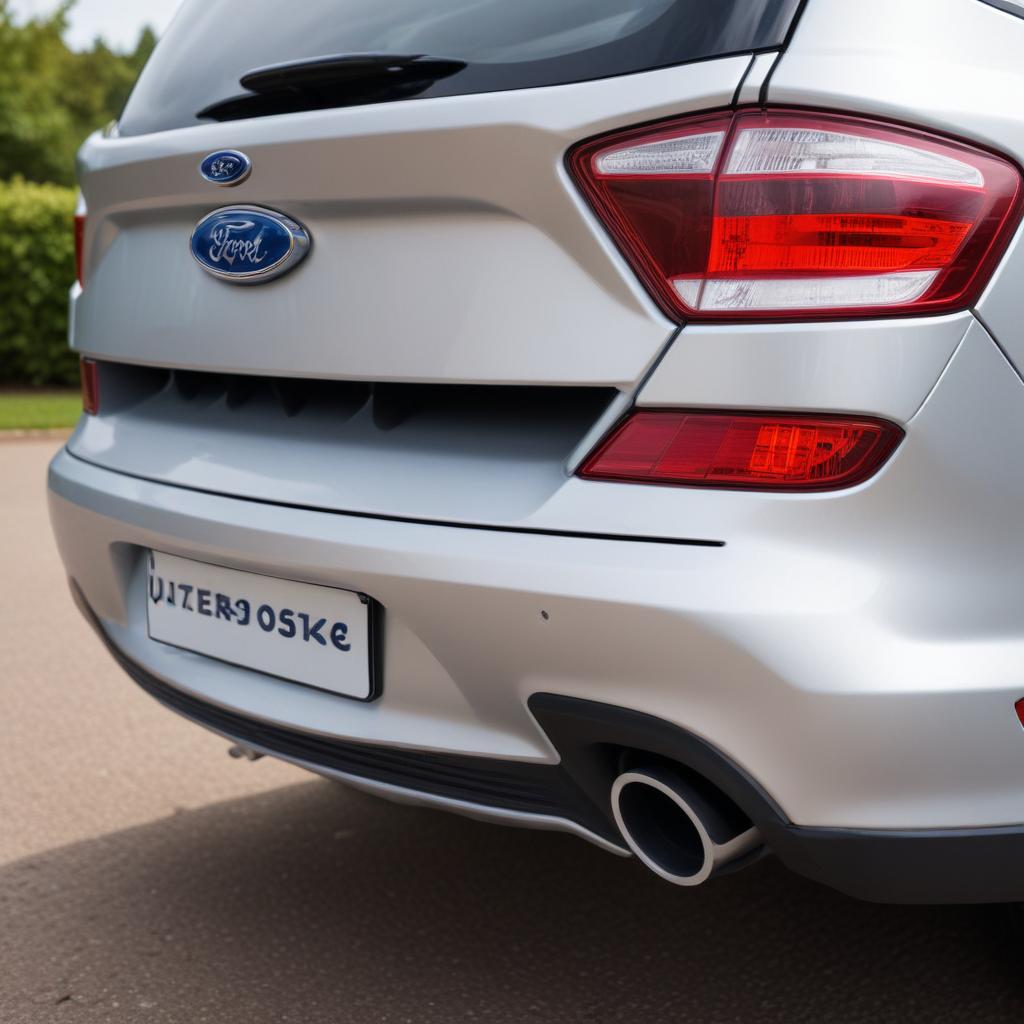
Step 2: Clean every sensor with soapy water and a soft cloth. The sensors are the little circles on your rear bumper (and front bumper if equipped). Don’t use a pressure washer – it can push water inside.
Step 3: Check for ice or snow. Scrape it off gently. Don’t use a metal scraper.
Step 4: If you have a trailer hitch ball installed, remove it or fold it away. The hitch confuses the sensors into thinking there’s always something there.
Step 5: Do the click test (see below). Put your ear next to each sensor. You should hear a faint clicking sound when the car is in reverse.
Step 6: Still dead? Disconnect the negative battery terminal for 5 minutes. Reconnect. This resets the parking sensor module.
Step 7: If nothing works, one sensor is probably dead. Replace it (see below).
Which Ford Model Has Your Problem?
| Ford Model | Common Issue | Easiest Fix | Sensor Cost |
|---|---|---|---|
| F-150 (2015–2024) | Mud on low-mounted sensors | Wipe after every off-road trip | $50–80 each |
| Explorer (2016–2022) | Trailer hitch confusion | Remove hitch ball | $0 |
| Mustang (2015–2024) | Rear sensors too sensitive | Clean wax residue | $0 |
| Edge (2015–2021) | Button accidentally turned off | Find and press button | $0 |
| Escape (2017–2023) | Water intrusion in sensor | Replace sensor + seal | $60–90 |
| Fusion (2013–2020) | One dead sensor kills all | Click test to find bad one | $40–70 |
Most common failure point: The two outer sensors on F-150 bumpers. They take the most road spray and rock impacts.
The “Click Test” (Find the Dead Sensor)
This works on every Ford with parking sensors. You need: Your ears and a quiet garage.
Step 1: Put the car in reverse (engine running, foot on brake). Don’t move.
Step 2: Get out of the car. Leave the door open so it stays in reverse.
Step 3: Put your ear right next to each sensor – one at a time.
Step 4: Listen for a rapid clicking sound – like a watch ticking but faster. It’s faint.
Step 5: If all sensors click, they’re all working. The problem is the button or the computer module.
Step 6: If one sensor is silent, that’s your dead one. Replace it.
Pro tip: Record a video with your phone near each sensor. Play it back with volume max. Sometimes you hear the click better on recording.
Dirty sensors cause more than half of all failures. Clean your sensors every time you wash your truck. It takes five seconds.
How to Replace a Dead Parking Sensor (DIY)
You found the silent sensor with the click test. Now replace it. You need: One new sensor ($40–80 from Amazon or RockAuto), plastic trim tool, 30 minutes.
Step 1: Buy the exact match for your Ford model and year. Sensors are different colors and have different part numbers. Don’t guess.
Step 2: Remove the rear bumper cover. On most Fords, that means: wheel well screws, under-bumper clips, and tail light removal. Watch a YouTube video for your specific car.
Step 3: Reach behind the bumper. The sensor twists and pops out from behind.
Step 4: Unplug the old sensor. Plug in the new one. Twist it back into place.
Step 5: Test it before reassembling. Put the car in reverse and do the click test again. You should hear clicking from the new sensor.
Step 6: Reinstall the bumper cover. Done.
Too hard? Some Ford dealers will replace a single sensor for $200–300 parts and labor. Still cheaper than body work from backing into something.
The “I Turned It Off By Mistake” Button (Check This First)
This is so embarrassing. And so common.
On most Fords, the parking sensor button is near the gear shifter. It has a P and three sound waves or a cone with lines. When the system is ON, a green light is usually lit. When it’s OFF, the light is dark or amber.
You probably bumped it with your knee, your purse, or while reaching for something.
Press the button. Does a message appear on your screen saying “Park Aid On”? If yes, you just fixed it. Go celebrate.
On Ford F-150s (2021+), the button is near the camera button, below the touchscreen. On Ford Explorers, it’s near the dial shifter. On Mustangs, it’s above the climate controls.
What About Front Parking Sensors?
Some Ford models (Edge, Explorer, Expedition) have front parking sensors too. They work the same way as rear sensors – but they only activate when you’re moving slowly forward (under 6 mph) or when you shift from Park to Drive.
If your front sensors aren’t working:
- Check that you’re moving slow enough (under 6 mph).
- Clean the front bumper sensors (they get bug guts and road grime).
- Check the same P button – it turns off front AND rear sensors.
Front sensors fail less often because they’re higher on the bumper and get less road spray.
⚠️ Safety reminder: Front sensors don’t see curbs, low obstacles, or anything under about 10 inches tall. Don’t trust them when parking near a low wall or parking block.
Common Mistakes That Make It Worse
| Mistake | Why It’s Bad |
|---|---|
| Pressure washing sensors | Forces water inside. Sensor dies permanently. |
| Painting over sensors | Thick paint blocks ultrasonic waves. Sensor becomes useless. |
| Ignoring the “off” button | You drive for months without sensors. Then hit something. |
| Replacing one sensor with wrong part | Ford sensors must be programmed to your car. Wrong part = still dead. |
| Using armor-all on bumpers | Leaves a film that blocks sensors. Stop doing this. |
Pro tip: When you wash your Ford, wipe each sensor individually with a clean, dry microfiber cloth. Make it a habit. Your future bumper will thank you.
FAQ (Real Questions from Ford Owners)
1. Why do my Ford parking sensors beep when nothing is behind me?
Something is covering or confusing one sensor. Check for: trailer hitch, dirt, ice, a loose license plate, or water inside the sensor. If it’s dry and clean, the sensor is failing internally and needs replacement.
2. Can I add parking sensors to a Ford that doesn’t have them?
Yes, but aftermarket sensors cost $50–150 and require drilling holes in your bumper. They won’t show on your screen – they just beep. Or buy a $30 backup camera instead – way easier.
3. How long do Ford parking sensors last?
Usually 5–8 years before failing. Salt state trucks fail faster (3–5 years). Garage-kept cars can last 10+ years. They’re exposed to everything the road throws at them.
4. My screen says “Park Aid Malfunction” but everything seems fine.
One sensor is failing intermittently. Do the click test in a quiet garage. The failing sensor will click unevenly or sometimes go silent. Replace it soon – it will fail completely within months.
5. Will a new Ford bumper come with sensors?
No. Sensors are separate. If you buy an aftermarket bumper (like a steel off-road bumper), you have to transfer your old sensors or buy new ones. Many aftermarket bumpers don’t have sensor holes – measure twice before buying.
6. Do parking sensors work with a trailer attached?
They try to, but usually fail. The trailer hitch confuses the sensors into thinking an object is always there. Either unplug trailer, remove hitch ball, or disable sensors in the menu while towing.
7. Can extreme cold kill parking sensors?
Temporarily, yes. Ice buildup blocks the signal. But the sensors themselves survive down to -40°F. Once ice melts, they work again. Don’t try to chip ice off with metal – use warm water.
The Bottom Line (Get Those Beeps Back in Minutes)
Here’s your game plan based on your situation:
- No beeps and you have a trailer hitch? Remove it. Problem solved.
- No beeps after a car wash? Wipe each sensor with a dry cloth. Water film confuses them.
- No beeps and you live where it snows? Check for ice. Thaw with warm water.
- No beeps and your button light is off? Press the P button. You turned it off.
- No beeps after all that? Do the click test. Find the silent sensor. Replace it.
Eighty percent of Ford owners fix their parking sensors with a wet rag and two minutes. Don’t be the person who pays a dealer $200 to wipe your bumper.
And here’s the honest truth: Even when your sensors work perfectly, they’re not magic. They miss small poles, chains, trailer hitches, and kids on bikes. Use your eyes, use your backup camera, and turn your head. The beeps are a helper – not a replacement for looking.
Have your Ford parking sensors ever failed at the worst possible moment? What did you back into? Share your story in the comments – we’ve all been there.
References: