Ford Cruise Control Not Working? Here’s What to Check
You’re cruising down the highway. Foot resting easy. Music playing. Then you tap the brake to let someone merge. You try to resume your cruise control… nothing. You press the button again. Still nothing. You tap “Set.” Nothing. Now you’re holding the gas pedal like some kind of caveman. Your right foot is getting tired. And you have no idea what happened.
That’s frustrating. Cruise control is one of those things you don’t appreciate until it’s gone. Then suddenly every long drive feels like a punishment. But here’s the good news: most Ford cruise control problems are simple, cheap, and easy to fix in your driveway. A bad brake light switch. A blown fuse. A dirty sensor. These are all DIY repairs.
The short version: Ford cruise control stops working for four main reasons: a failed brake pedal switch (tells the computer you’re braking), a blown fuse (cruise shares with brake lights or horn), a dirty or blocked radar sensor (on adaptive cruise models), or a bad clockspring in the steering wheel. First, check your brake lights – if they’re not working, cruise won’t work. Check fuses. Clean the radar sensor behind the front grille (on adaptive cruise). Most Ford owners fix this for under $50 – not $500 at a dealer.
Key Takeaways
- Brake light test – if your brake lights aren’t working, your cruise control won’t work either. Fix the brake lights first.
- Brake pedal switch – tells the computer when you’re braking. When it fails, the computer thinks you’re always braking. Common failure.
- Check your fuses – cruise control shares fuses with brake lights, horn, and other systems. On F-150, check fuse #5 (under hood) and #13 (under dash).
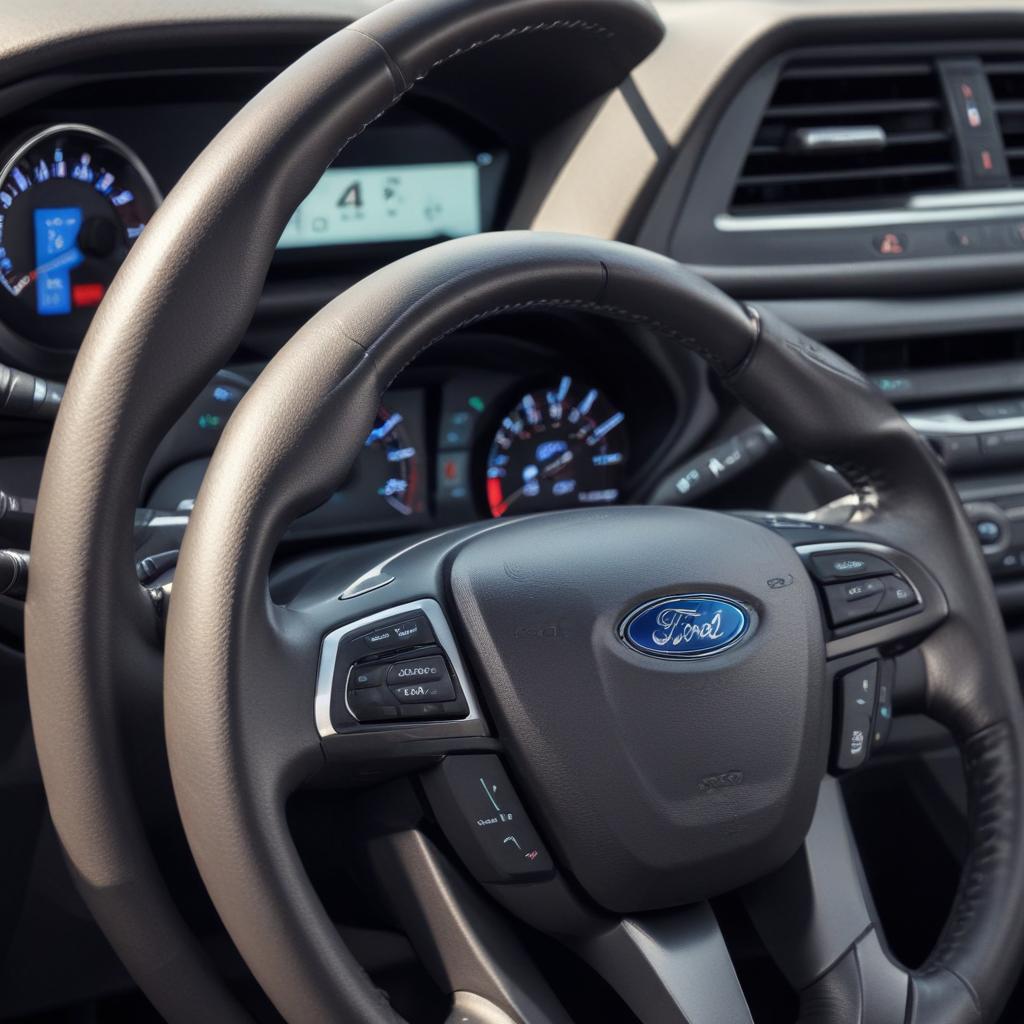
- Clockspring failure – steering wheel buttons send signals through the clockspring. When it breaks, all steering wheel controls stop working.
- Radar sensor blocked (adaptive cruise) – mud, snow, ice, or even heavy rain can block the sensor behind the front grille.
- Speed threshold – most Ford cruise controls won’t activate below 25-30 mph.
- Most repairs cost under $100 – brake switch ($15-30), fuses ($2), or a simple cleaning ($0).
The Real Reason Your Ford Cruise Control Stopped Working
Ever notice how the cruise control worked fine yesterday, then today – nothing? Or how it works sometimes but not others? Maybe it stopped working after you hit a pothole or drove through a car wash?
Here’s what’s happening inside your Ford: The cruise control system is a loop of safety checks. The computer won’t engage cruise unless it gets the “all clear” from several sensors: the brake pedal (not pressed), the brake lights (working), the steering wheel buttons (sending signal), and (on adaptive cruise) the radar sensor (clean and aligned).
When any one of these checks fails, the cruise control refuses to turn on. It’s designed this way for safety. A cruise control that doesn’t disengage when you brake would be dangerous.
The most common failure points on Ford vehicles:
- Brake pedal switch (brake pressure switch) – This switch tells the computer when you’re braking. On older Ford models (1994-2002), a defective cruise control deactivation switch caused fires and massive recalls. On newer models, the switch still fails – just without the fire risk.
- Brake light bulbs – If a brake light bulb burns out, the computer detects lower electrical resistance. It assumes a fault and disables cruise.
- Fuses – Cruise control shares fuses with your brake lights and horn. A blown fuse kills everything on that circuit.
- Clockspring – A ribbon cable inside your steering wheel that connects the buttons to the computer. It breaks from years of turning the wheel.
- Radar sensor (adaptive cruise) – Located behind the front grille or bumper. Dirt, snow, ice, or even heavy rain can block it.
Quick Diagnosis: What Is Your Ford Cruise Control Doing?
| Symptom | What’s Likely Wrong | Fix Time |
|---|---|---|
| Cruise won’t turn on at all – no light on dash | Blown fuse, bad clockspring, or faulty main switch | 10 minutes (fuse) to 2 hours (clockspring) |
| Cruise turns on but won’t set speed | Brake pedal switch or brake light issue | 10-30 minutes |
| Cruise works sometimes, not others | Intermittent switch, loose connection, or dirty sensor | 30 minutes to 1 hour |
| “Adaptive Cruise Not Available – Sensor Blocked” message | Radar sensor blocked by dirt, snow, ice, or mud | 2 minutes – clean the sensor |
| “Front Sensor Not Aligned” message | Radar sensor misaligned – usually from minor front impact | Shop visit – needs alignment |
| Cruise cancels by itself | Brake pedal switch intermittently failing or loose wiring | 30 minutes |
| Steering wheel buttons not working (radio, cruise, phone) | Clockspring failure | 1-2 hours |
| Cruise works after restarting car, then fails again | Temporary sensor blockage or software glitch | Monitor – may be normal |
⚠️ Safety reminder: If your cruise control won’t disengage when you brake, use the main OFF button or shift to neutral. Have the system repaired immediately. A stuck cruise control is a serious safety hazard.
Fix #1: Brake Light Test (Free – Do This First)
This is the single most important test. The cruise control computer monitors your brake light circuit. If the brake lights aren’t working – even one bulb – the computer disables cruise control for safety.
The test:
Step 1: Have someone stand behind your Ford. Or back up to a wall or garage door where you can see the reflection.
Step 2: Press the brake pedal. Look at your brake lights.
Step 3: Do all three brake lights come on? Check the left, right, and center (high-mount) lights.
| Result | What It Means |
|---|---|
| All brake lights work | Brake light circuit is fine. Move to fuses or brake switch. |
| One or more brake lights don’t work | Replace the burned-out bulb. Cruise should work after replacement. |
| No brake lights at all | Blown fuse, bad brake light switch, or wiring issue. Check fuses first. |
On older Ford trucks with a 7-pin trailer connector, a short in the trailer wiring can blow the brake light fuse and kill cruise control.
Fix #2: Check the Brake Pedal Switch
The brake pedal switch (also called brake pressure switch or stoplight switch) is a small plastic switch mounted above your brake pedal. When you press the brake, the switch sends a signal to the computer to disengage cruise control. When the switch fails, the computer may think you’re always braking – or never braking.
Symptoms of a bad brake switch:
- Cruise control won’t engage or set
- Brake lights stay on all the time (or never come on)
- You can shift out of Park without pressing the brake (safety issue)
- Intermittent cruise failure – works sometimes, not others
The quick test: Press the brake pedal. Do your brake lights work? If they work, the switch is likely fine. But on some Ford models, the cruise control uses a separate circuit in the same switch. The brake lights can work while the cruise control circuit fails.
The fix: Replace the brake pedal switch. Cost: $15-30. Time: 10-30 minutes.
Step-by-step:
Step 1: Locate the brake pedal switch above the brake pedal arm. It’s a small plastic box with wires.
Step 2: Unplug the electrical connector.
Step 3: Twist or pull the old switch out (varies by model – check YouTube for your Ford).
Step 4: Install the new switch. It may need adjustment – some Ford switches have a self-adjusting plunger that requires you to pull the brake pedal toward you during installation.
Step 5: Test brake lights and cruise control.
Fix #3: Check the Fuses
Cruise control shares fuses with other systems. A blown fuse is one of the easiest fixes.
What you need: Your Ford owner’s manual, fuse puller (in the fuse box), flashlight.
Step 1: Locate your Ford’s fuse boxes. There are usually two – under the hood and under the dash.
Step 2: Open your owner’s manual to the fuse diagram. Look for fuses related to “Cruise Control,” “Speed Control,” “Brake Lights,” or “Stop Lamp.”
Step 3: Pull each related fuse. Inspect the metal strip inside. Is it broken? If yes – blown fuse.
Step 4: Replace with the exact same amp rating fuse.
Step 5: If the new fuse blows immediately, you have a short circuit. Check wiring for damage, especially near the brake pedal or trailer connector.
If you’re not sure which fuse is for cruise control, check fuses #5 and #13 on older F-150s. On other models, the brake light fuse is a common culprit because cruise monitors that circuit.
Fix #4: Adaptive Cruise Radar Sensor Blocked (Newer Fords)
If you have adaptive cruise control (usually on 2015+ Ford models with the radar sensor in the front grille), you might see a message like “Adaptive Cruise Not Available – Sensor Blocked.”
What this means: The radar sensor is dirty, blocked, or obstructed. The sensor needs a clear view of the road to detect vehicles ahead.
What can block the sensor:
- Mud, dirt, or road grime
- Snow or ice
- Heavy rain or fog
- A front license plate mounted incorrectly
- Aftermarket grille or bumper modifications
- Damage from a minor front impact
The fix – clean the sensor:
Step 1: Locate the radar sensor. On most Ford trucks and SUVs, it’s behind the front grille, usually at the bottom center or behind the Ford emblem.
Step 2: Wipe the sensor and the area in front of it with a soft, damp cloth. Don’t use a pressure washer – it can damage the sensor.
Step 3: Dry with a clean cloth.
Step 4: Drive for 5-10 minutes. The message should clear.
If cleaning doesn’t work: The sensor may be misaligned. This can happen from a minor fender bender or even hitting a large pothole. You’ll see “Front Sensor Not Aligned.” This requires a professional alignment at a dealer or shop with the proper equipment.
Fix #5: The Clockspring (Steering Wheel Buttons Not Working)
If none of your steering wheel buttons work – not just cruise, but radio controls, phone buttons, and instrument cluster controls – you likely have a failed clockspring.
What is a clockspring? A ribbon cable inside your steering wheel that maintains electrical connection between the steering wheel buttons and the car’s computer while allowing the wheel to turn.
Why it fails: Years of turning the steering wheel cause the ribbon to fatigue and break. When it breaks, all buttons on the steering wheel stop working.
Symptoms:
- Cruise control buttons don’t work
- Radio volume/channel buttons don’t work
- Phone/voice control buttons don’t work
- Airbag light may be on (the clockspring also carries the airbag circuit)
- Horn may not work
The fix: Replace the clockspring. This is a moderate DIY job (1-2 hours) or a shop job ($300-500). Not recommended for beginners – you’ll need to remove the steering wheel and airbag.
Before replacing the clockspring, check your fuses. A blown fuse can also cause steering wheel buttons to stop working.
Fix #6: The “Main Switch” Mistake (Operator Error)
This sounds silly, but it happens to everyone. You accidentally turned off the main cruise control switch and didn’t realize it.
Check this first:
Step 1: Look at your steering wheel. On older Fords, there’s a separate ON/OFF button for cruise control. Press it. A light should appear on your dash or on the button itself.
Step 2: On newer Fords (with adaptive cruise), the system is always “ready.” You just press SET or SET+ to engage.
Step 3: Make sure you’re driving above the minimum speed – usually 25 mph. Cruise won’t activate below that threshold.
This is a free fix. Don’t be embarrassed – it happens to everyone.
Fix #7: The Clutch Pedal Switch (Manual Transmission)
If your Ford has a manual transmission, there’s a switch on the clutch pedal that disengages cruise when you press the clutch. If this switch fails or gets out of adjustment, the computer may think the clutch is always pressed – and cruise won’t engage.
Symptoms:
- Cruise won’t turn on or set
- Clutch pedal feels normal otherwise
The fix: Adjust or replace the clutch pedal switch. This is similar to the brake pedal switch repair.
The Dreaded Ford Cruise Control Fire Recall (1994-2002 Models)
If you own an older Ford – F-150, Expedition, Explorer, Crown Victoria, Mustang, or Ranger from 1994-2002 – you should be aware of a major safety recall.
What happened: The cruise control deactivation switch (mounted on the brake master cylinder) was powered at all times – even when the engine was off. The switch seal would degrade over time, allowing brake fluid to leak into the electrical side. This caused corrosion, overheating, and fires.
The scope: Over 14 million Ford vehicles recalled. At least 550 vehicle fires reported. This was one of the largest recalls in U.S. history.
The fix: Ford dealers install a “fused wiring harness” to cut power to the switch when the ignition is off.
How to check if your Ford is affected:
Call Ford at 1-800-392-3673 with your VIN. Ask if the cruise control switch recall (recall number 05S28 or similar) has been performed. If not, schedule the free repair at a Ford dealer.
Warning signs: Cruise control not working, brake fluid leaking around the switch, or the fuse for the speed control blowing repeatedly.
If you smell burning or see smoke, disconnect the battery and call for a tow immediately.
Brake switch problems and blown fuses cause 60% of Ford cruise control failures – both are cheap and easy to fix.
Which Ford Model Has Your Problem?
| Ford Model | Most Common Cruise Problem | DIY Fix Cost | Shop Cost |
|---|---|---|---|
| F-150 (1997-2003) | Brake pressure switch (fire recall) | Free recall | $0 |
| F-150 (2004-2010) | Brake pedal switch | $15-30 | $100-200 |
| F-150 (2011-2014) | Clockspring | $50-80 | $300-500 |
| F-150 (2015-2024) | Adaptive cruise sensor blocked | $0 – clean | $100 diagnostic |
| Explorer (2011-2019) | Brake switch or clockspring | $15-80 | $200-500 |
| Mustang (2005-2014) | Brake pedal switch | $15-30 | $100-200 |
| Mustang (2015-2024) | Adaptive cruise sensor blocked | $0 – clean | $100 diagnostic |
| Focus (2012-2018) | Clockspring | $50-80 | $300-500 |
| Fusion (2010-2019) | Brake switch | $15-30 | $100-200 |
What NOT to Do
| Mistake | Why It’s Bad |
|---|---|
| Ignoring a failing brake switch | Can fail completely, causing cruise not to disengage when you brake |
| Using a pressure washer on the adaptive cruise sensor | High pressure can damage the sensor |
| Replacing the clockspring before checking fuses | A $2 fuse becomes $300 in parts |
| Driving with a known cruise control recall | The switch can cause a fire – even when parked |
| Forgetting the minimum speed threshold | Cruise won’t work below 25 mph |
⚠️ Safety reminder: If your cruise control ever gets stuck and won’t disengage, don’t panic. Turn off the main cruise switch. If that doesn’t work, shift into neutral. Use your brakes. Pull over safely. Have the system towed to a shop.
FAQ
1. Why won’t my Ford cruise control turn on at all?
First, check that you’re above 25 mph. Then check your brake lights – if they’re not working, cruise won’t work. Then check fuses. If everything else is fine, suspect the brake pedal switch or the main cruise switch on the steering wheel.
2. Can a blown brake light fuse cause cruise control to stop working?
Yes. The cruise control computer monitors the brake light circuit. If the fuse is blown, the computer detects a fault and disables cruise. Replace the fuse. If it blows again, you have a short.
3. How much does it cost to fix Ford cruise control?
DIY: $0-50 (fuses, cleaning, brake switch). Independent shop: $100-300. Dealer: $200-500. Clockspring replacement: $300-500.
4. Why does my Ford adaptive cruise keep saying “sensor blocked”?
The radar sensor behind your front grille is dirty or blocked by ice, snow, or heavy rain. Clean the sensor with a soft cloth. If the message persists, the sensor may be misaligned.
5. What is the Ford cruise control fire recall?
From 1999 to 2007, Ford recalled over 14 million vehicles with defective cruise control deactivation switches that could catch fire. Call Ford at 1-800-392-3673 with your VIN to check if your vehicle is affected.
6. Will a bad clockspring affect anything besides cruise control?
Yes. The clockspring carries signals for all steering wheel controls – radio, phone, voice command, and the airbag. If all your steering wheel buttons stopped working at once, the clockspring is likely bad.
7. Why does my Ford cruise control work sometimes but not others?
Intermittent failure is usually a bad brake pedal switch (internal contacts failing), a loose connection, or an adaptive cruise sensor that gets intermittently blocked.
The Bottom Line
Here’s your game plan based on your symptoms:
- Cruise won’t turn on at all → check brake lights, then fuses, then brake pedal switch
- Cruise turns on but won’t set → check brake switch and speed (must be above 25 mph)
- “Sensor blocked” message → clean the radar sensor behind the front grille
- Steering wheel buttons not working → check fuses first, then suspect clockspring
- Intermittent cruise failure → likely brake pedal switch or loose connection
- 1994-2002 Ford with cruise issues → check for open recalls – free repair at dealer
- All else fails → have the system professionally diagnosed
Here’s the honest truth: Your Ford cruise control is one of the most reliable systems on the car – when it works. When it stops, it’s almost never a catastrophic failure. It’s a $20 brake switch. A $2 fuse. A dirty sensor. A burned-out light bulb. These are cheap, easy fixes you can do in your driveway.
Don’t let a shop sell you a $500 cruise control module before checking the simple stuff. Start with the brake lights. Check the fuses. Clean the sensor. Test the brake switch. Ninety percent of Ford cruise control problems end there.
And if you own an older Ford (1994-2002), check that recall. It’s free. It could prevent a fire. Don’t put it off.
Has your Ford cruise control ever stopped working? What was the fix? Share your story in the comments – someone else is on a long drive right now with a tired right foot.
References:
- Ford Owner Manual – Adaptive Cruise Control Troubleshooting (Sensor Blocked, Not Available)
- Ford Truck Enthusiasts Forum – F-150 Cruise Control Fuse Locations (#5, #13)
- The New York Times – Ford Cruise Control Fire Recalls (14M vehicles, 1994-2002)
- Lieff Cabraser – Ford Cruise Control Switch Fire Recalls (550+ fires)