Restoring a 1970 Ford Bronco: Sourcing OEM vs. Aftermarket Performance Parts
Ford’s Legacy of Power and Innovation: Restoring a 1970 Bronco – OEM vs. Aftermarket Performance Parts
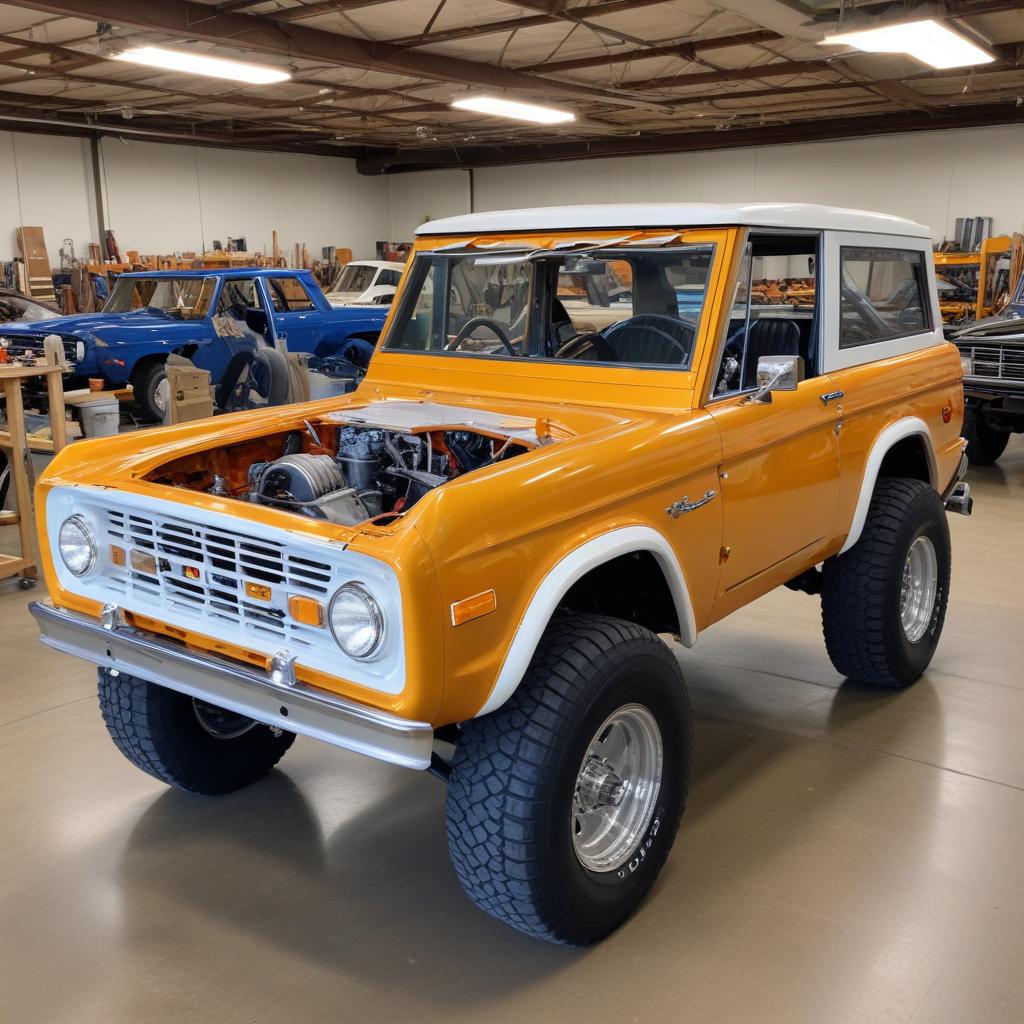
You’ve just pulled the cover off a 1970 Bronco that’s been sitting in a barn since the Reagan administration. The body is straight, the frame is solid, but everything else—engine, axles, interior—is either seized,rusted, or just plain gone. Now comes the million-dollar question: do you hunt down original Ford parts or build something better with aftermarket performance goodies?
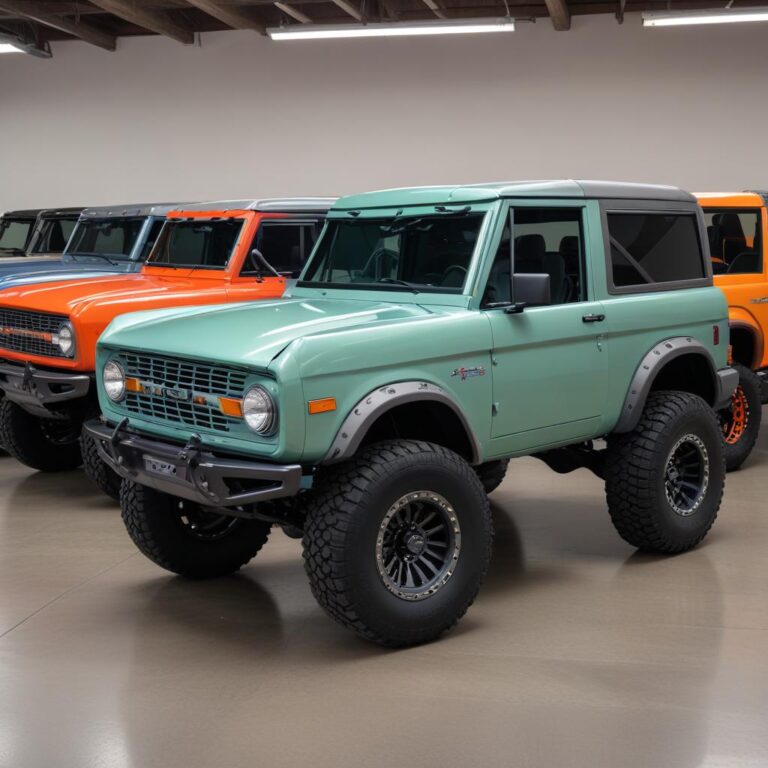
Here’s the beautiful thing about first-generation Broncos: they’ve reached that magical age where the aftermarket support is absolutely phenomenal. You can build a 1970 Bronco to concours-level originality using NOS (New Old Stock) parts, or you can assemble a restomod monster with modern brakes, fuel injection, and suspension that would embarrass a brand-new Raptor. The choice isn’t about right or wrong—it’s about understanding what’s available, what fits, and what your wallet can handle.
TL;DR;
Restoring a 1970 Ford Bronco offers two distinct paths with massive aftermarket support for both. OEM parts hunting relies on suppliers like Green Sales Company (NOS Ford parts), Dennis Carpenter (reproduction parts using original Ford molds), and Detroit Iron (factory parts catalogs) . Aftermarket performance options include everything from James Duff headers and suspension, Edelbrock intake manifolds, MSD ignition systems, to complete body shells from specialized manufacturers . The drivetrain is flexible—the original 302 and 351 Windsor engines have endless performance parts, but modern engine swaps (5.0L Coyote, etc.) are common. Axle upgrades range from Spicer ring and pinion sets to complete Dana 44 conversions with disc brakes . The real decision point: originality or capability?
Key Takeaways
- Know Your Axles: Early Broncos (1966-1970) used Dana 30 front axles; later models upgraded to Dana 44 fronts. Both have Spicer ring and pinion support for gear ratio changes .
- Body Parts Abound: Complete steel body shells are available from manufacturers like Jiangsu Aodun for $7,000–$8,000, while individual panels come from Dennis Carpenter, Autobody Specialties, and others .
- Engine Choices Multiply: The original 302 and 351W have massive performance support (Dart heads, Holley carbs, MSD ignition). Modern swaps are common but require more work .
- Suspension is Well-Sorted: James Duff, Cage, and others offer lift kits and suspension components specifically engineered for first-gen Broncos .
- Documentation Matters: Detroit Iron offers licensed reproductions of the original Ford parts catalogs—essential for identifying correct part numbers .
The OEM Path: Hunting Original and Reproduction Parts
What does it actually take to build a 1970 Bronco that looks like it just rolled off the assembly line—minus 50 years of patina?
The OEM restoration path splits into two subcategories: genuine NOS (New Old Stock) Ford parts and high-quality reproductions made to original specifications.
NOS Parts Sources
Green Sales Company maintains one of the largest inventories of NOS Ford parts in existence . Their warehouse is filled with original Ford service parts—body panels, mechanical components, electrical items—that never got sold back in the day. You can search their inventory by original Ford part number, which means you need that number first.
How do you get the part number? That’s where Detroit Iron comes in. They offer a licensed reproduction of the 1964–1972 Ford Truck Parts Catalog Set —a massive 7,072-page collection that includes exploded diagrams and part numbers for the Bronco . This is the same catalog Ford dealers used to order parts. Having this set is like having the treasure map.
“With the 1964 – 1972 Ford Truck Parts Catalog Set in your toolbox, you have the most comprehensive literature at your fingertips to take on the most challenging repair, service and restoration projects” .
Reproduction Specialists
Dennis Carpenter is legendary in the Ford restoration world. They manufacture many reproduction parts using original Ford molds they’ve acquired over decades . Their catalogs cover 1932–1996 Ford trucks, with extensive Bronco sections including:
- Sheet metal (tailgates, door panels, running boards)
- Weatherstripping and seals
- Interior trim and upholstery
- Chrome and stainless trim pieces
Autobody Specialties and Autokrafters also carry extensive lines of reproduction sheet metal, including floor pans, rocker panels, cab corners, and fenders specifically for 1966–1977 Broncos .
The OEM Reality Check
The OEM path requires patience. You’ll spend hours cross-referencing part numbers, calling suppliers, and waiting for parts to arrive. But the result is a vehicle that could theoretically be judged in concours events. For many owners, that authenticity is worth the effort.
The Aftermarket Performance Path: Building Better Than New
What if you want a Bronco that looks vintage but drives like a modern vehicle?
The aftermarket for first-gen Broncos has exploded. You can essentially build a brand-new Bronco using aftermarket components, with the only original pieces being the VIN tags and maybe the frame.
Chassis and Suspension
James Duff has been building Bronco suspension components since the 1970s. They offer everything from stock replacement parts to serious long-travel suspensions. One 1970 Bronco featured on Hemmings had James Duff headers, dual shocks on all four corners, and 2-inch suspension lift coils .
CAGE offers 5.5-inch suspension lifts, and their components show up frequently in high-end builds .
AGR Steering provides quick-ratio steering boxes that transform the vague steering of original Broncos into modern precision .
Drivetrain: The 351 Windsor Option
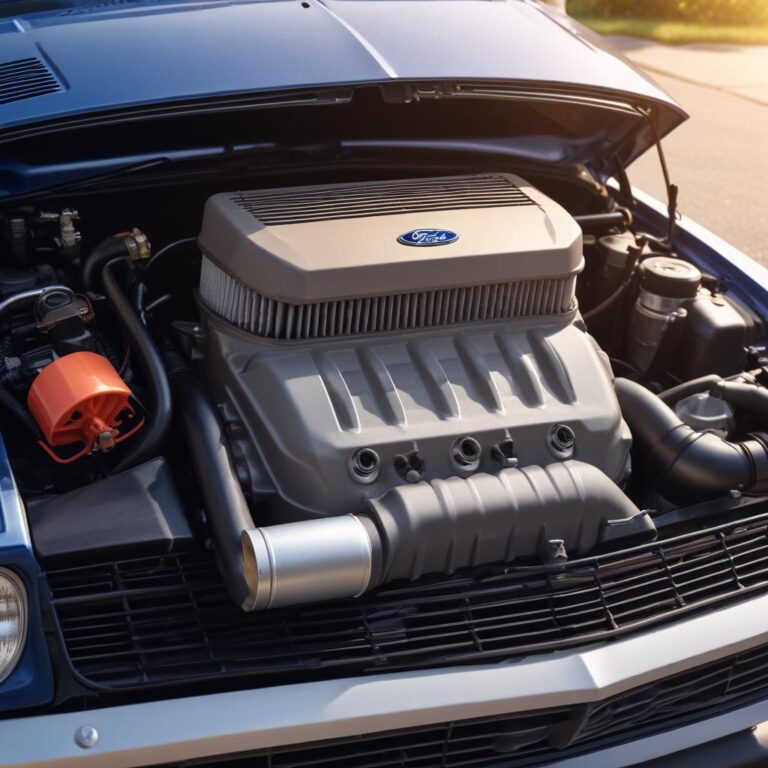
The original 302 is a solid engine, but many builders step up to the 351 Windsor—it shares the same basic architecture but offers more displacement. The 1970 model year 351W is a popular choice because it’s period-correct-ish while providing better torque.
A Bring a Trailer featured build shows what’s possible: a 1970 351W rebuilt with 10.5:1 compression pistons, Dart aluminum heads, a roller cam and rockers, Holley 600cfm carburetor, MSD distributor, and headers feeding a dual 2.5-inch stainless exhaust with Borla mufflers .
The 351W accepts the same aftermarket performance parts as the 302, including:
- Edelbrock Performer intake manifolds
- Holley carburetors (600–750 cfm depending on build)
- MSD ignition components (distributors, coils, ignition boxes)
- Cometic MLS head gaskets available in various bore sizes and thicknesses
Cometic offers MLS (Multi-Layer Steel) head gaskets specifically for Ford small blocks, with 4.080-inch bore diameter and .080-inch thickness options—ideal for performance builds with aluminum heads .
Transmissions: Modern Manuals
The original three-speed column-shift is… charming. But most performance builders swap in something better:
- NV3550 5-speed (as seen in the Bring a Trailer build) provides modern shifting and an overdrive gear
- AOD 4-speed automatic from a late-80s Ford truck offers overdrive and better highway manners
One 1970 Bronco featured on Hemmings used an AOD from an 1987 F-150, paired with the original Dana 20 transfer case .
Axles: From Dana 30 to Dana 44 and Beyond
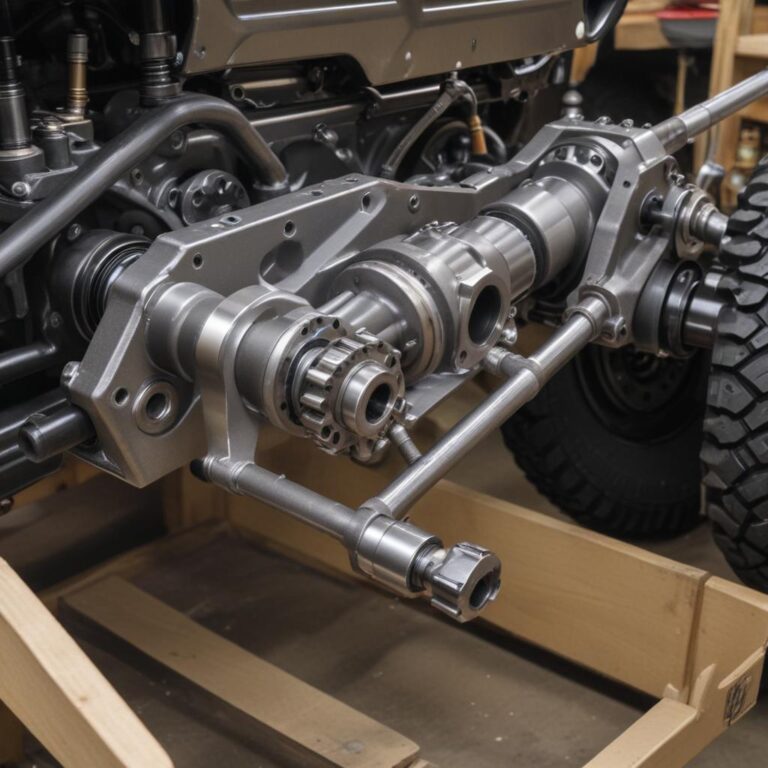
Early Broncos (1966–1970) came with Dana 30 front axles—adequate for stock builds but a weak point for larger tires and V8 torque. Later Broncos (1971–1977) upgraded to Dana 44 fronts.
Many restomod builders swap in a Dana 44 from a later Bronco or even a Ford 9-inch rear from an F-150. The Bring a Trailer build used:
- Shortened Dana 44 high-pinion front axle with disc brakes
- Ford 9-inch rear with ARB air locker
- 4.56 gearing with 31-spline chromoly axle shafts
Spicer (the Dana aftermarket brand) offers ring and pinion gear sets for both Dana 30 and Dana 44 axles used in 1966–1996 Broncos . Available ratios range from 3.07 all the way to 5.89, allowing precise matching to tire size and engine power.
“Spicer ring and pinion gearing for the Bronco delivers precision-machined quality for Dana 30, Dana 35, or Dana 44 axles for a smoother, quieter ride and up to double the life of non-genuine parts” .
Brakes: Disc Conversions
Original Broncos had drum brakes all around—adequate in 1970, terrifying by modern standards. Disc brake conversions are nearly mandatory for any driver-quality build.
Common approaches:
- Front disc conversion using parts from a 1976–1977 Bronco (the first years with factory discs)
- Complete aftermarket kits with modern calipers and rotors
- Rear disc conversions for maximum stopping power
The Hemmings featured Bronco used components from a 1976 Bronco for the disc brake conversion, paired with power brakes from the same donor .
Body and Exterior
For rusted-out Broncos, aftermarket body panels are readily available. But for truly beyond-saving examples, complete body shells exist.
According to a 2025 B2B sourcing guide, manufacturers like Jiangsu Aodun offer complete steel body shells for early Broncos, tested to OEM standards with reinforced frame rails and rust-resistant coatings . Prices range from $7,000–$8,000 for a complete shell.
Malotte (referenced in the Hemmings build) offers fiberglass hoods for engine swaps that need extra clearance—common when swapping in a 351W with aftermarket intake manifolds .
Interior: Modern Comfort, Vintage Look
The original Bronco interior was utilitarian. Modern builders have options:
- Vintage-style seats with modern foam from suppliers like TMI Products
- Painless Performance wiring harnesses that replace the original spaghetti
- Old Air Products air conditioning systems that look period-correct but blow cold
- Aftermarket gauges from Auto Meter or Dakota Digital that fit in the stock dash
The Bring a Trailer build featured new high-back bucket seats, a full roll cage, bedliner interior coating, and a wood-rimmed steering wheel .
The International Dimension: Sourcing from Abroad
For restoration shops or individuals needing significant quantities of parts, international sourcing has become a viable option—particularly from Chinese manufacturers specializing in classic vehicle components.
A 2025 B2B sourcing guide highlights several verified suppliers:
| Supplier | Product Type | Price Range (USD) | MOQ | Key Advantage |
|---|---|---|---|---|
| Jiangsu Aodun | Complete steel body shells | $7,000–8,000 | 1 pc | OE-tested durability |
| Jiangsu Juncheng | Classic Bronco hoods | $500 | 10 pcs | Vintage model specialization |
| Danyang Saivis | Front bumper covers (ABS) | $66–80 | 5 pcs | Custom color/logo |
| Danyang Xiatian | Exterior trim kits | $48–52 | 4 pcs | Low MOQ |
| Guangzhou New Wind | Hood strut systems | $8.90–15 | 2 sets | Budget-friendly |
For restoration shops building multiple vehicles, these suppliers offer cost-effective alternatives to domestic reproduction parts—but quality verification is essential. The guide recommends requesting samples, conducting fitment tests, and reviewing third-party inspection reports .
Visualizing the Restoration Paths
This chart compares the key considerations for OEM versus aftermarket restoration approaches:
1970 Bronco Restoration: OEM vs. Aftermarket Comparison
Relative scores for key restoration priorities (higher is better).
Real-World Build Examples
The Hemmings 1970 Half-Cab
This 2011 featured build represented a thoughtful blend of original and upgraded components :
| System | Original/Stock | Upgraded/Modified |
|---|---|---|
| Engine | 302 block | 351W swap, Edelbrock intake, Holley carb, MSD ignition |
| Transmission | Three-speed column shift | AOD automatic from 1987 F-150 |
| Front Axle | Dana 30 | Dana 44 from 1976 Bronco with disc brakes |
| Rear Axle | Ford 9-inch (original) | Positraction, 4.11 gears |
| Steering | Manual | Power steering from 1976 Bronco |
| Suspension | Stock | James Duff coils, dual shocks |
| Body | Original uncut panels | Malotte fiberglass hood for clearance |
This truck had been owned by the seller since 1989 and represented a considered evolution rather than a complete rebuild.
The Bring a Trailer Restomod
This 2017-completed build went further, with a rotisserie restoration and extensive modifications :
| System | Specification |
|---|---|
| Engine | 351 Windsor, rebuilt with 10.5:1 compression, Dart aluminum heads, roller cam, Holley 600cfm, MSD ignition |
| Transmission | NV3550 5-speed manual |
| Transfer Case | Dana 20 with twin-stick conversion |
| Front Axle | Shortened Dana 44 high-pinion, disc brakes |
| Rear Axle | Ford 9-inch with ARB locker |
| Gearing | 4.56 with 31-spline chromoly shafts |
| Suspension | 5.5″ CAGE lift, 2″ body lift |
| Brakes | Front disc, heavy-duty rear drums |
| Interior | Full roll cage, new seats, bedliner floor, Painless wiring |
| Exterior | Tuxedo Black paint, 35″ tires |
This build sold for $54,000 in 2018—a reflection of the quality and completeness of the work .
Making the Choice: Questions to Ask Yourself
How Original Does It Need to Be?
If you’re aiming for concours judging, OEM correctness matters immensely. You’ll need to research every detail, from correct date codes on parts to the right shade of engine paint. The Detroit Iron parts catalog becomes your bible .
If you just want a cool Bronco to enjoy, authenticity matters less. A 351W with an aluminum intake looks similar to a stock 302 to 95% of observers.
What’s Your Driving Intent?
- Sunday cruises and cars & coffee: A well-done OEM restoration is perfect
- Daily driving and road trips: Modern suspension, brakes, and overdrive transmissions make a huge difference
- Off-road adventures: Aftermarket suspension, lockers, and armor are non-negotiable
- Investment/showpiece: Top-tier concours cars command premium prices, but so do high-end restomods
What’s Your Budget?
Complete rotisserie restorations (either path) easily exceed $50,000–$100,000 when paying for professional work. The Bring a Trailer build sold for $54,000, but that likely didn’t cover the actual build cost.
Component prices give perspective:
- Complete body shell: $7,000–$8,000
- Rebuilt 351W with performance parts: $8,000–$12,000
- NV3550 conversion: $3,000–$5,000
- Suspension lift: $1,500–$3,000
- Axle rebuilds with lockers: $3,000–$6,000 per axle
- Paint and bodywork: $10,000–$20,000
Do You Have Patience for Parts Hunting?
The OEM path means hunting for NOS parts, attending swap meets, and waiting for the right piece to appear. The aftermarket path means ordering from catalogs and having parts delivered to your door.
FAQ Section
1. What were the original axles on a 1970 Ford Bronco?
1970 Broncos used a Dana 30 front axle and a Ford 9-inch rear axle. Later Broncos (1971–1977) upgraded to Dana 44 front axles, which are stronger and have better parts support for disc brake conversions .
2. Where can I find original Ford parts for my 1970 Bronco?
Green Sales Company has one of the largest NOS Ford parts inventories. Dennis Carpenter manufactures reproductions using original Ford molds. You’ll need the original Ford part numbers, which are found in the Detroit Iron reproduction parts catalogs .
3. What’s the best engine swap for a 1970 Bronco?
The 351 Windsor is the most popular choice because it fits the engine bay, accepts all small-block Ford performance parts, and looks period-correct. Modern options include the 5.0L Coyote, but these require more fabrication and electronics work .
4. Can I put disc brakes on my 1970 Bronco?
Absolutely. The most common approach uses parts from 1976–1977 Broncos, which came with factory front discs. Aftermarket kits with modern calipers and rotors are also widely available .
5. How much does it cost to restore a 1970 Bronco?
Professional rotisserie restorations typically range from $50,000 to over $100,000 depending on parts choices and labor rates. DIY builds can be done for less, but parts costs add up quickly .
6. What lift kits fit a 1970 Bronco?
James Duff and CAGE both offer suspension systems specifically for first-generation Broncos. James Duff has been manufacturing Bronco suspension since the 1970s and offers options from mild lifts to long-travel setups .
7. Are reproduction body panels available?
Yes. Dennis Carpenter, Autobody Specialties, and Autokrafters all carry reproduction sheet metal. For complete body shells, international suppliers like Jiangsu Aodun offer steel bodies starting around $7,000 .
8. What’s the difference between a 302 and 351W in a Bronco?
The 351W has taller deck height, so it’s physically larger. It requires a hood with extra clearance (like the Malotte fiberglass hood) if using certain intake manifolds. The 351W produces more torque, making it popular for restomods .
9. Can I use modern transmissions with the original transfer case?
Yes. Adapter kits allow mating modern transmissions like the NV3550 (manual) or 4R70W (automatic) to the original Dana 20 transfer case. The Bring a Trailer build used this approach .
10. Where can I find wiring harnesses for a 1970 Bronco?
Painless Performance offers complete wiring harnesses designed for classic Broncos, with modern circuits and color-coded wires. They’re much safer and more reliable than 50-year-old original wiring .
11. What gear ratios should I run with larger tires?
For 33-inch tires, 4.11 or 4.27 gears work well. For 35-inch tires, 4.56 or 4.88 is recommended. Spicer offers ring and pinion sets from 3.07 to 5.89 for Dana axles .
12. Is it cheaper to buy a restored Bronco or build my own?
Generally, buying someone else’s completed project is cheaper than building from scratch—restoration labor is rarely recouped in sale price. The Bring a Trailer build sold for $54,000, which likely didn’t cover the build cost .
References
- CJ Pony Parts: 1970 Ford Bronco Parts
- Hemmings: 1970 Ford Bronco Half-Cab Feature
- Hemmings: Ford Truck Parts Suppliers Guide
- Bring a Trailer: Modified 1970 Ford Bronco 5-Speed Auction
- Spicer Parts: Ring and Pinion Gearing for Ford Bronco
- Alibaba: Strategic Sourcing of Ford Bronco Parts
- Detroit Iron: 1964-1972 Ford Truck Parts Catalog Set
Call to Action
Planning a 1970 Bronco restoration? What path calls to you—hunting down NOS parts for a concours-winning original, or building a restomod monster with modern everything? Drop your build plans in the comments below, and share photos if you’re already knee-deep in a project!