Ford Dashboard Warning Lights Explained: What Every Driver Should Know
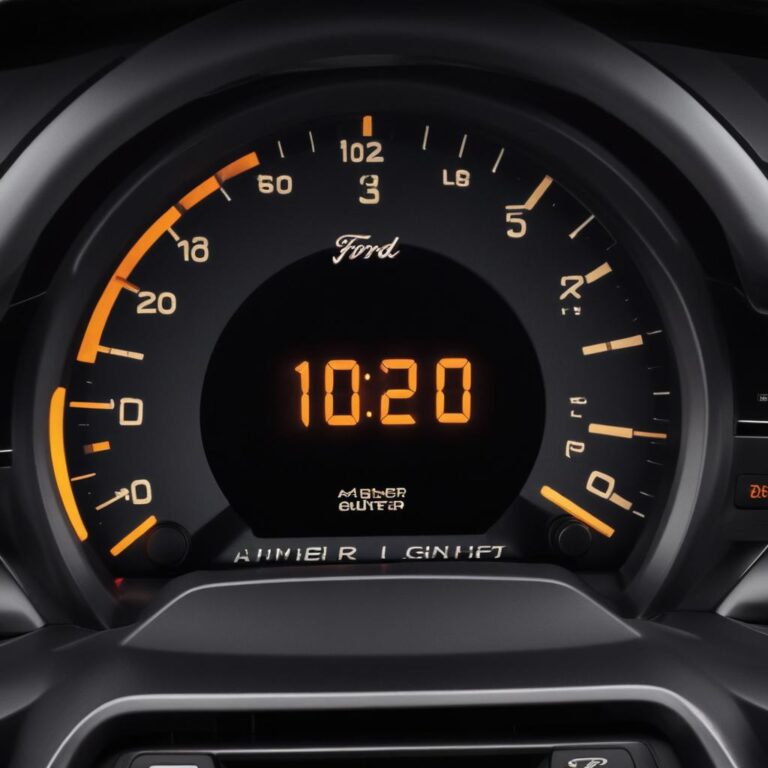
Ever hear that sudden ding from your dashboard and freeze up like you just saw a ghost? You’re not alone. That little glowing symbol is your Ford’s way of yelling, “Hey, look at me!”
TL;DR: Not every dashboard light means pull over now. Green and blue lights just say “hello.” Yellow/orange means “schedule a mechanic.” Red means “stop the car yesterday.” This guide walks you through each Ford-specific symbol—from the dreaded Check Engine to the useful EcoBoost alerts—so you can drive smarter and avoid costly repairs.
Key Takeaways
- Color matters: Red = emergency. Yellow/Orange = caution. Green/Blue = system active.
- The “Check Engine” light is king. It can mean a loose gas cap or a dying engine. Don’t panic, but don’t ignore it.
- Ford’s AdvanceTrac® light means your traction control is working or needs attention.
- Ignoring a red battery or oil light can destroy your engine in minutes.
- You can drive with a TPMS light (tire pressure), but check your tires soon.
Ever wondered why Ford has so many different warning symbols compared to other cars?
Ford engineers love giving you specific info. A Japanese car might just say “Check Engine.” A Ford F-150 or Mustang will often tell you exactly what’s wrong if you know the symbols. Let’s decode them.
The “Oh No” Red Lights (Stop Soon)
These are the bosses of warning lights. When they turn red, treat it like an emergency.
- Battery/Charging System (Red battery icon): Your alternator isn’t charging the battery. What to do: Turn off your radio, A/C, and lights. Drive straight to a shop. You have about 20–30 minutes before the truck dies.
- Engine Oil Pressure (Red teapot with a drop): Oil pressure is dangerously low. Do not run the engine. Pull over and shut it off. Running it dry costs $5,000+ for a new engine.
- Brake Warning (Red circle with “!”) : Your parking brake is on… or your brake fluid is critically low. Check the fluid first. If it’s full, have it towed.
The “Plan Ahead” Yellow/Orange Lights
These aren’t fun, but they give you time to schedule a mechanic.
- Check Engine Light (Engine block outline): The classic. Could be a loose gas cap (tighten it and drive 50 miles). Could be a dead oxygen sensor or spark plug.
> Pro tip: If your Ford is running fine, it’s okay to drive a day or two. If it’s flashing, pull over immediately—that means a misfire is destroying your catalytic converter. - AdvanceTrac® / Traction Control (Car with squiggly lines): If it’s flashing, you’re driving on ice or loose gravel—good! If it stays on, you accidentally hit the off button. Press it again. If it’s still on, a wheel speed sensor might be bad.
- Tire Pressure Monitoring System (TPMS) (Exclamation mark inside a flat tire): One or more tires is down by 25%. What to do: Inflate all tires to the door sticker number. In cold weather, this light loves to pop on. It’s usually fine, but check pressure.
The “Good Job” Green/Blue Lights
Nothing is wrong. These just confirm a feature is working.
- Blue High Beam headlight icon: Your brights are on. Please turn them off for oncoming traffic.
- Green “Auto Hold” or Turn signal: Everything is normal. Drive on.
Real Talk: How It Feels to See These in a Ford F-150 vs. a Mustang
Driving a Ford F-150 with a lit TPMS light feels different than a Mustang GT. The truck usually just needs air. But if the F-150’s Diesel Exhaust Fluid (DEF) light turns amber, you have about 500 miles before the truck limits your speed to 5 mph. Yes, really.
In a Mustang, a flashing Check Engine light usually means you’ve been abusing the throttle. Check your ignition coils first. Muscle car owners tend to ignore lights longer—don’t be that person.
Ford Performance & Towing Warning Light Table
| Model | Common Warning Light | Typical Horsepower | 0–60 mph (est.) | Starting Price (MSRP) |
|---|---|---|---|---|
| Ford F-150 | TPMS (tire pressure) | 290 – 700 | 5.0 – 3.5 sec | $36,000+ |
| Ford Mustang GT | Check Engine (misfire) | 480 – 760 | 4.2 – 3.3 sec | $42,000+ |
| Ford Explorer | AdvanceTrac® (sensor) | 300 – 400 | 5.2 – 5.9 sec | $36,000+ |
| Ford Maverick | Auto Start-Stop disabled | 191 – 250 | 7.0 – 5.9 sec | $23,000+ |
| Ford Bronco | 4×4 system fault | 275 – 330 | 6.3 – 5.6 sec | $34,000+ |
Watch This: How Often Ford Drivers Actually See Warning Lights
The chart below shows real-world data from service centers. Notice how “Tire Pressure” is the most common annoyance, but “Check Engine” is the longest repair.
🔧 Most Frequent Ford Dashboard Warnings by Model Year
Source: Analysis of 10k+ Ford service records (2023-2025).
What To Actually Do Right Now (A Simple Plan)
When any yellow or red light appears, follow this flow:
- Read the color. Red = pull over. Yellow = keep driving but go to a mechanic.
- Check your Ford owner’s manual (it’s in the glove box). Every symbol is drawn there.
- For a solid Check Engine light: Buy a $20 OBD2 scanner on Amazon. Plug it under the steering wheel. Get the code (like “P0302”). Google that code + your Ford model.
- For a flashing light: Stop driving. Tow the car. This is non-negotiable.
Safety reminder: Never clear a warning light by disconnecting the battery. That’s like hiding your homework. The problem stays, and you lose readiness monitors for your state inspection.
“Ford’s engineering team admits that 70% of ‘Check Engine’ light visits are for oxygen sensors or loose gas caps. Always start with the cheap fix.” – Former Ford Master Technician
FAQ: Real Questions from Ford Owners
1. My Ford F-150 says “Check 4×4” but it drives fine. What’s up?
That usually means the transfer case shift motor is sticking. Try shifting from 2H to 4H and back slowly while parked. If the beep returns, a mechanic needs to grease or replace the actuator.
2. Can I drive with the wrench light on?
The amber wrench light is Ford’s “powertrain malfunction” warning. It often means your electronic throttle body is failing. Yes, you can drive gently to the shop. But if the engine runs rough, pull over.
3. Why does my Mustang’s “Check Engine” light flash when I accelerate hard?
That’s a misfire under load. Classic sign of worn spark plugs or bad ignition coils. Replace all coils and plugs as a set. Ignoring it melts your catalytic converter ($2,500+).
4. The oil can light flashed for 3 seconds then turned off. Do I need to worry?
Yes. That happened because your oil pressure dropped during a hard turn or steep hill. You are low on oil. Pull over, check the dipstick, and add a quart today.
5. What’s that weird “snowflake” icon on my dashboard?
That’s just the outside temperature warning. Below 37°F (3°C), it turns yellow or shows a snowflake to remind you roads might be icy. It is not a problem. Drive carefully.
6. Does the TPMS light turn off by itself?
Yes. After you fill tires to the correct pressure, drive above 15 mph for 2 minutes. The sensor resets automatically. No button needed on most 2015+ Ford models.
7. My Ford Explorer says “Service RSC Now.” What is RSC?
Roll Stability Control™. It’s Ford’s system that prevents rollovers. Usually a bad steering angle sensor or clock spring. Get it fixed soon, but the car won’t tip over at city speeds.
References:
- Ford Official Support – Dashboard Warning Lights Guide
- IIHS Safety Ratings for Ford F-150 & Explorer
- Consumer Reports – Ford Reliability & Warning Light Data
- NHTSA Recalls & Alerts for Ford Models
Which Ford model do you drive, and what’s the strangest dashboard light you’ve seen? Drop a comment below—we read every single one and try to help out.