Ford Idle Problems: Rough Idling Causes and Easy Fixes
You’re sitting at a stoplight. Foot on the brake. Engine running. Then you feel it – a shudder. The whole truck shakes. The RPM needle bounces up and down. For a second, you think the engine might die. Then it smooths out. Then it shudders again. Everyone in the car looks at you like “what’s wrong with your truck?”
Yeah, that’s embarrassing. And annoying. And a little scary. Rough idle is one of the most common Ford problems – from F-150s to Mustangs to Explorers. The good news? Most causes are cheap and easy to fix. You don’t need a new engine. You probably don’t even need a mechanic.
The short version: Rough idle usually means your engine isn’t getting the right mix of air and fuel at low speeds. Dirty throttle body is the #1 cause – clean it with $7 spray. Bad spark plugs, dirty mass airflow sensor, or a vacuum leak are next. Start with cleaning the throttle body. That fixes 50% of rough idle problems on Fords. Dealer wants $200 to diagnose. You can clean your throttle body in 15 minutes for the price of a sandwich.
Key Takeaways (Smooth Out That Shake)
- Dirty throttle body = #1 cause. Carbon buildup blocks air at idle. Easy clean fix.
- RPM bouncing up and down = idle air control valve or vacuum leak.
- Rough idle only when cold = dirty MAF sensor or bad spark plugs.
- Rough idle only when warm = vacuum leak or failing coil.
- Check engine light on? Get codes read for free. That’s your roadmap.
- Engine almost dies at stoplights = idle air control valve failing or throttle body dirty.
- Most fixes cost under $50 and take less than an hour.
The Real Reason Your Ford Idles Rough
Ever notice how the rough idle is worse in some situations than others? Worse with the A/C on? Worse when the engine is cold? That’s actually a clue.
Here’s what’s happening inside your Ford: When you’re driving, your foot is on the gas. The throttle plate is open. Air rushes in. Small problems don’t matter because there’s plenty of air and fuel moving through.
But when you’re idling, the throttle plate is almost closed. The engine is trying to suck in just enough air to stay running. It’s like breathing through a coffee straw. Any little blockage, any tiny leak, any weak spark – suddenly the engine gasps and stumbles.
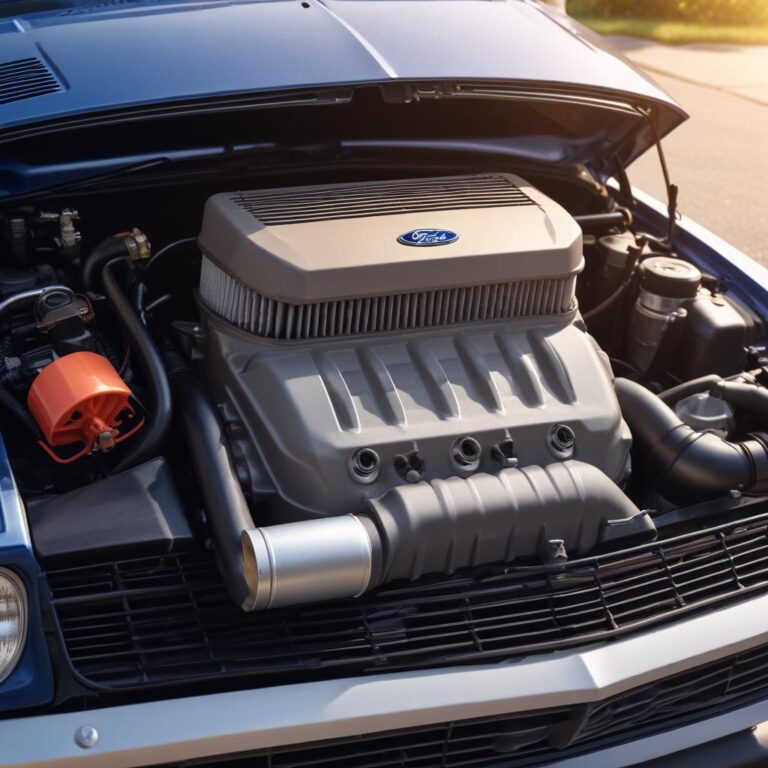
On Ford F-150s with the 5.0L V8, carbon builds up on the throttle plate over time. It looks like black tar. That carbon blocks the tiny gap that lets air through at idle. The engine chokes. You feel the shudder.
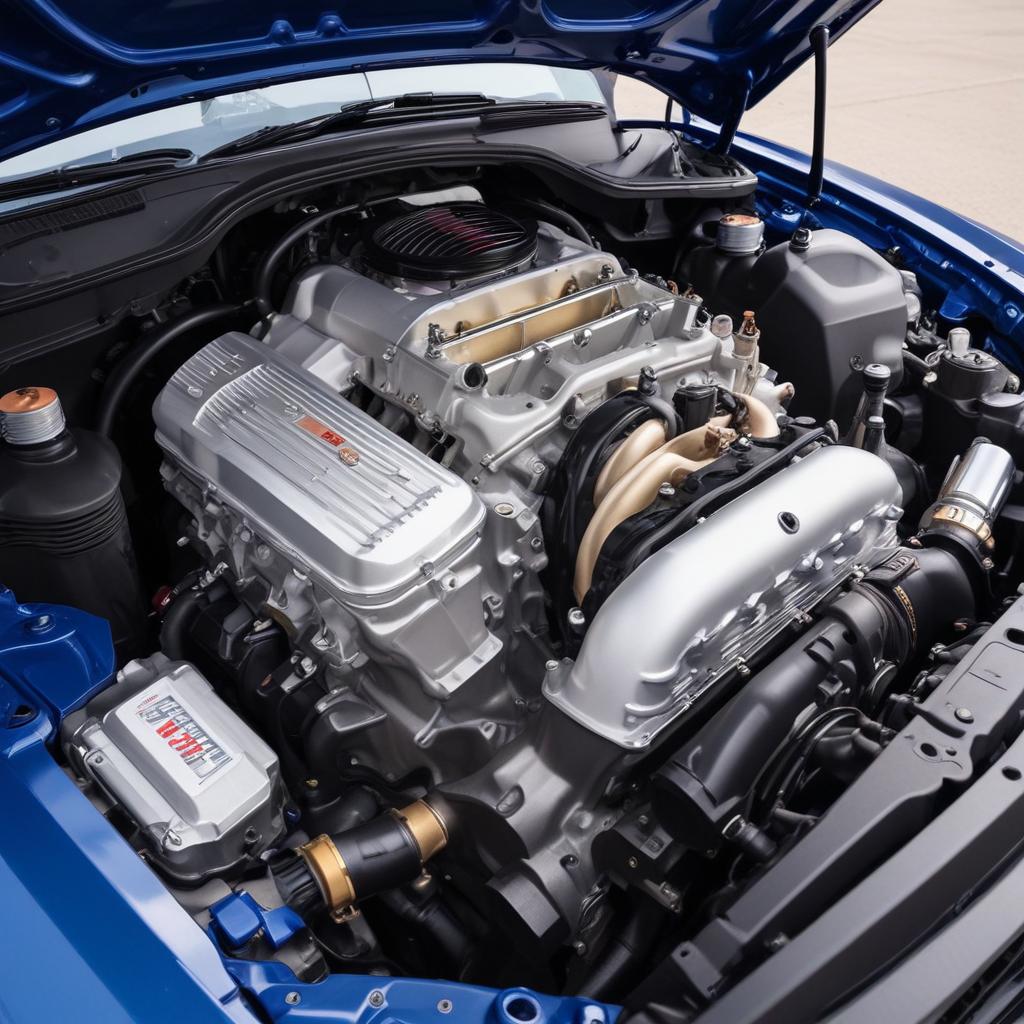
On EcoBoost engines (2.7L, 3.5L), the mass airflow sensor gets oily from the turbo system. That sensor tells the computer how much air is coming in. When it’s dirty, it lies. The computer guesses wrong. The idle gets rough.
On Ford Mustangs, rough idle is often bad spark plugs or ignition coils. The V8 fires eight cylinders in sequence. If one cylinder misfires at idle, you feel it as a rhythmic shake.
On Ford Explorers and Edges, a vacuum leak is common. A small rubber hose cracks. Extra air gets sucked in. The engine runs lean (too much air, not enough fuel). The idle hunts up and down.
“A rough idle is your Ford’s way of saying ‘something’s off.’ Most of the time, it’s something simple that got dirty or old. A throttle body cleaning, new spark plugs, or a $5 vacuum hose – that’s the difference between a smooth idle and a shaky mess.”
Quick Diagnosis: What Does Your Rough Idle Feel Like?
| Symptom | What’s Likely Wrong | Fix Time |
|---|---|---|
| RPM bounces up and down at stoplight | Vacuum leak or dirty throttle body | 15–30 minutes |
| Engine almost dies when A/C is on | Idle air control valve or throttle body | 15 minutes |
| Rough idle only when cold, smooth when warm | Dirty MAF sensor or spark plugs | 20–60 minutes |
| Rough idle only when warm, fine when cold | Vacuum leak or failing ignition coil | 30–60 minutes |
| Check engine light flashing at idle | Misfire – bad plugs or coil | 1 hour |
| Rough idle + poor fuel economy | Dirty oxygen sensors or MAF | 20 minutes (MAF) |
| Rough idle + whistling sound | Vacuum leak – rubber hose cracked | 10–30 minutes |
⚠️ Safety reminder: A flashing check engine light at idle means unburned fuel is damaging your catalytic converter. That’s a $2,000 part. Get it fixed within 20 miles.
The Throttle Body Cleaning (Fixes 50% of Rough Idles)
This is the single best thing you can do for a rough idling Ford. It’s cheap, easy, and works shockingly well.
What you need: Throttle body cleaner ($7–10), a rag, a screwdriver or socket set, 15 minutes.
What is the throttle body? It’s the metal housing between your air intake tube and the engine. Inside is a round metal plate (the throttle plate) that opens when you press the gas.
Why it gets dirty: The engine PCV system sends oily vapor back into the intake. That vapor sticks to the throttle plate and the inside of the housing. It bakes on from engine heat. Over time, it becomes black, sticky carbon.
How carbon causes rough idle: When you take your foot off the gas, the throttle plate closes almost all the way. A tiny gap lets air through for idle. But carbon buildup fills that gap. Not enough air gets through. The engine stumbles.
Step-by-step cleaning:
Step 1: Locate the throttle body. Follow the big rubber or plastic tube from your air filter box. It ends at the throttle body.
Step 2: Remove the tube. One or two clamps. Set it aside.
Step 3: Look inside the throttle body. You’ll see a round metal plate. Shine a flashlight. See black gunk around the edge? That’s your problem.
Step 4: Spray throttle body cleaner onto a rag – not directly into the throttle body. Wipe the black gunk off the plate and the inside walls.
Step 5: Open the throttle plate by hand (push it open – it’s spring-loaded). Clean the back side and the edge where the plate touches the housing.
Step 6: Let it dry for 2 minutes. Reinstall the tube.
Step 7: Start the engine. It might idle high for a minute while the computer relearns. That’s normal.
Important: Some Ford throttle bodies are electronic and sensitive. Never force the plate open if it resists. Never spray cleaner directly into an electronic throttle body – it can ruin the electronics. Spray the rag, then wipe.
A dirty throttle body causes nearly half of all rough idle problems on Fords. Clean yours before you do anything else. You’ll be amazed at the difference.
The MAF Sensor Cleaning (Another Cheap Fix)
The Mass Airflow Sensor measures how much air is coming into the engine. When it gets dirty, it sends wrong data. The computer adds too much or too little fuel. The idle gets rough.
Symptoms: Rough idle, hesitation when accelerating, poor fuel economy.
What you need: MAF cleaner ($10 – do not use anything else), 10 minutes.
Step 1: Locate the MAF sensor. It’s between the air filter box and the throttle body. It has an electrical plug.
Step 2: Unplug the sensor. Remove the two screws holding it in.
Step 3: Look inside. You’ll see one or two tiny wires or a small circuit board.
Step 4: Spray MAF cleaner directly onto the wires. Do not touch them – they’re fragile.
Step 5: Let it dry completely (5 minutes). Reinstall.
That’s it. This fixed rough idle on my own F-150 after nothing else worked. Try it.
The Spark Plug Problem (V8s and EcoBoosts)
Spark plugs fire thousands of times per minute. The gap between the electrodes widens over time. The spark gets weaker. At idle, when the engine is running slow, a weak spark can’t ignite the fuel reliably. You get a misfire. The engine shakes.
Ford’s recommended spark plug intervals:
- 5.0L V8: 60,000 miles
- 3.5L EcoBoost: 60,000 miles
- 2.7L EcoBoost: 60,000 miles
- Mustang GT: 60,000 miles
Symptoms of bad plugs:
- Rough idle that you feel in the steering wheel
- Engine stumbles when accelerating from a stop
- Check engine light flashing (bad – pull over)
- Poor fuel economy
What to do: If you’re over 60k miles and have never changed your plugs, just do it. A set of Motorcraft plugs costs $40–60. Takes about an hour on a V8, two hours on an EcoBoost (the back ones are tight).
Pro tip: On 5.0L V8 engines, change the spark plug boots too. They get hard and brittle. Old boots cause misfires even with new plugs. Boots cost $20 for a set.
Which Ford Model Has Your Problem?
| Ford Model | Most Common Idle Problem | DIY Fix Cost | Dealer Cost |
|---|---|---|---|
| F-150 5.0L V8 | Dirty throttle body | $7 | $200 |
| F-150 3.5L EcoBoost | Dirty MAF sensor + carbon on valves | $10 + $400 (carbon cleaning) | $800–1200 |
| Mustang GT | Bad spark plugs (60k miles) | $40–60 | $300–400 |
| Mustang EcoBoost | Bad ignition coil | $50 each | $250 per coil |
| Explorer 3.5L | Vacuum leak + dirty throttle body | $7 + $5 hose | $300 |
| Edge 2.0L | Dirty throttle body | $7 | $200 |
| Escape 1.5L | Bad purge valve (common failure) | $40 | $350 |
| Focus 2.0L | Bad motor mounts (vibration, not engine) | $60 each | $400 |
| Super Duty 6.2L | Dirty throttle body | $7 | $200 |
The 2015–2017 F-150 3.5L EcoBoost has a known issue with carbon buildup on the intake valves. Direct injection engines don’t spray fuel over the valves to clean them. A walnut blasting cleaning costs $400–600 at a shop.
The Vacuum Leak (Hissing Sound)
A vacuum leak is when extra air gets sucked into the engine after the MAF sensor. The computer doesn’t know about this air, so it doesn’t add enough fuel. The engine runs lean (too much air). The idle hunts up and down.
Symptoms:
- RPM bounces at idle – up to 1500, down to 500
- Hissing or whistling sound from under the hood
- Rough idle that gets better when you drive
- Check engine light with lean codes (P0171, P0174)
Where to look for leaks:
- Rubber hoses around the intake manifold (they crack with age)
- The PCV hose (passenger side of engine)
- Brake booster hose (large hose near the firewall)
- Intake manifold gaskets (less common)
How to find a vacuum leak: With the engine running, spray brake cleaner or carb cleaner around hoses and gaskets. If the engine idle changes when you spray, you found the leak. The cleaner gets sucked in and temporarily seals the leak.
Fix: Replace the cracked hose. Most cost $5–15. Takes 10 minutes.
The “Idle Relearn” Procedure (Free, Works Often)
Your Ford’s computer learns how to idle over time. When you clean the throttle body or disconnect the battery, it forgets. You need to teach it again.
Step 1: Start the engine. Don’t touch the gas.
Step 2: Let it idle for 5 minutes. Don’t touch anything. No AC, no radio, no lights.
Step 3: Turn on the AC. Let it idle for 2 more minutes.
Step 4: Turn the steering wheel all the way left and right a few times (this loads the power steering).
Step 5: Drive normally for 10–15 miles. The computer will relearn the idle.
If your idle is still rough after this, you have a mechanical problem, not a computer problem.
The Motor Mount Problem (Not the Engine)
Sometimes your engine idles perfectly fine – but you feel vibration anyway. That’s usually bad motor mounts.
What motor mounts do: They hold the engine to the frame. They have rubber inside to absorb vibration.
When they fail: The rubber gets hard or cracks. Metal touches metal. You feel every little engine movement in the cabin.
How to tell:
- Vibration at idle, especially in gear
- Vibration goes away when you put the car in neutral or park
- You might hear a clunk when you accelerate or brake
- The engine visibly moves when you rev it (have someone watch)
Fix: Replace the motor mounts. This is a harder DIY job (2–4 hours). A shop charges $400–600.
If your rough idle is vibration but the engine runs smooth, check the mounts first.
What NOT to Do (Mistakes That Make It Worse)
| Mistake | Why It’s Bad |
|---|---|
| Using carb cleaner on throttle body | Too harsh. Can damage coatings. Use throttle body cleaner. |
| Touching MAF sensor wires | They’re fragile. Spray only. Never touch. |
| Replacing parts without diagnosis | You’ll spend $200 before finding the $7 fix. |
| Ignoring a flashing check engine light | Destroys catalytic converter. $2,000 mistake. |
| Letting it idle rough for months | Can foul oxygen sensors and clog cats. |
| Using cheap spark plugs | Non-Motorcraft plugs cause misfires on Fords. |
When to Call a Pro
Most rough idle problems are DIY-friendly. But some need a shop:
| Problem | DIY? | Why |
|---|---|---|
| Carbon buildup on EcoBoost valves | No | Need specialized walnut blasting equipment |
| Bad fuel injector | Maybe | Requires removing intake manifold on some engines |
| Internal vacuum leak (intake gasket) | Maybe | Requires removing intake manifold |
| Failing PCM (computer) | No | Needs dealer programming |
| Low compression (worn engine) | No | Engine rebuild or replacement |
If you’ve cleaned the throttle body, cleaned the MAF, changed the spark plugs, and checked for vacuum leaks – and it still idles rough – take it to a shop.
FAQ (Real Questions from Ford Owners)
1. Why does my Ford idle rough when the AC is on but fine otherwise?
The AC compressor puts extra load on the engine. Your idle air control valve or throttle body should compensate by letting in more air. If they’re dirty, they can’t. Clean the throttle body first.
2. Can bad gas cause rough idle?
Yes. Water or dirt in the gas can cause misfires at idle. Try a bottle of fuel system cleaner (Techron or Seafoam). Fill up at a different station next time.
3. Why does my Ford idle rough in drive but smooth in park?
In drive, the engine is under load from the transmission. A small problem becomes noticeable. In park, there’s no load. The engine feels smoother. This is usually a dirty throttle body or vacuum leak.
4. How do I clean carbon off my EcoBoost valves?
You can’t without special equipment. Direct injection engines never spray fuel on the valves. Carbon builds up. The DIY method is spraying Seafoam into the intake – but it only helps a little. The real fix is walnut blasting at a shop ($400–600).
5. Will a tune-up fix my rough idle?
Depends what you call a tune-up. New spark plugs? Yes. New plug wires? Sometimes. New air filter? Maybe. Clean the throttle body and MAF first – that’s more effective than most tune-ups.
6. Why does my Ford idle rough only in the morning?
Cold start roughness is usually a dirty MAF sensor or bad spark plugs. The engine is in “open loop” mode when cold – it doesn’t use the oxygen sensors. Once it warms up, it switches to “closed loop” and smooths out. The MAF sensor is the main input during open loop.
7. Can a bad battery cause rough idle?
Indirectly, yes. Low voltage can make the throttle body act weird. If your battery is old, have it tested. A weak battery causes all sorts of electrical gremlins.
The Bottom Line (Smooth Idle by Tomorrow)
Here’s your game plan based on your symptoms:
- RPM bounces up and down → vacuum leak or dirty throttle body. Clean throttle body first ($7).
- Shudder at stoplights, smooth otherwise → dirty throttle body. Clean it.
- Rough idle only when cold → dirty MAF sensor ($10 cleaner) or spark plugs ($40–60).
- Rough idle only when warm → vacuum leak. Spray test for cracked hoses.
- Vibration that goes away in park → bad motor mounts, not engine problem.
- Flashing check engine light → misfire. Change spark plugs immediately.
Here’s the honest truth: Most Ford rough idle problems are caused by things that got dirty. Your throttle body. Your MAF sensor. Your idle passages. A $7 can of cleaner and 15 minutes of your time fixes what a dealer would charge $200 to diagnose.
Don’t let a rough idle ruin your driving experience. It’s almost never a sign of a dying engine. It’s almost always a sign of a dirty part that needs a wipe-down.
Clean the throttle body. Clean the MAF. Change the spark plugs if they’re old. Check for cracked vacuum hoses. Ninety percent of the time, that’s the whole story.
Has your Ford ever idled so rough you thought it was going to die? What finally fixed it? Share your story in the comments – someone else is dealing with the same shake right now.
References: