Security First: How to Properly Lock and Alarm Your Ford Ranger Canopy
You wake to the sound of a truck door slamming in the night, and your first thought isn’t for the vehicle—it’s for the thousands of dollars in tools and gear locked in the canopy. The sinking feeling confirms it’s been breached.
For tradies, overlanders, and daily drivers alike, a Ford Ranger canopy is a high-value target. Standard locks are often a flimsy first line of defense. Securing it properly isn’t just about a padlock; it’s about building a layered security system that deters, delays, and detects. Here’s how to fortify your mobile vault.
TL;DR: Proper canopy security requires a defense-in-depth strategy. Start by upgrading the physical locks on all access points (rear door, gullwings) to high-security tubular or deadbolt locks. Then, add an audible deterrent with a dedicated, vibration-sensing canopy alarm. Finally, integrate a tracking device like an Apple AirTag for recovery. Combine this with physical barriers like locking bars and good practices (parking strategically, marking gear) to create a system that frustrates thieves at every step.
Key Takeaways:
- Layers Beat Any Single Lock: A thief who defeats one layer should immediately face another.
- Upgrade the Locks First: Factory cam locks are notoriously weak and should be your first replacement.
- An Alarm is a Non-Negotiable Deterrent: The sound of a siren is often enough to make a thief abandon the attempt.
- Visibility Matters: Well-lit parking and visible security stickers can persuade a thief to choose an easier target.
- Recovery is the Last Line: A hidden GPS tracker can help police recover your stolen canopy and gear.
Layer 1: Hardening the Physical Locks
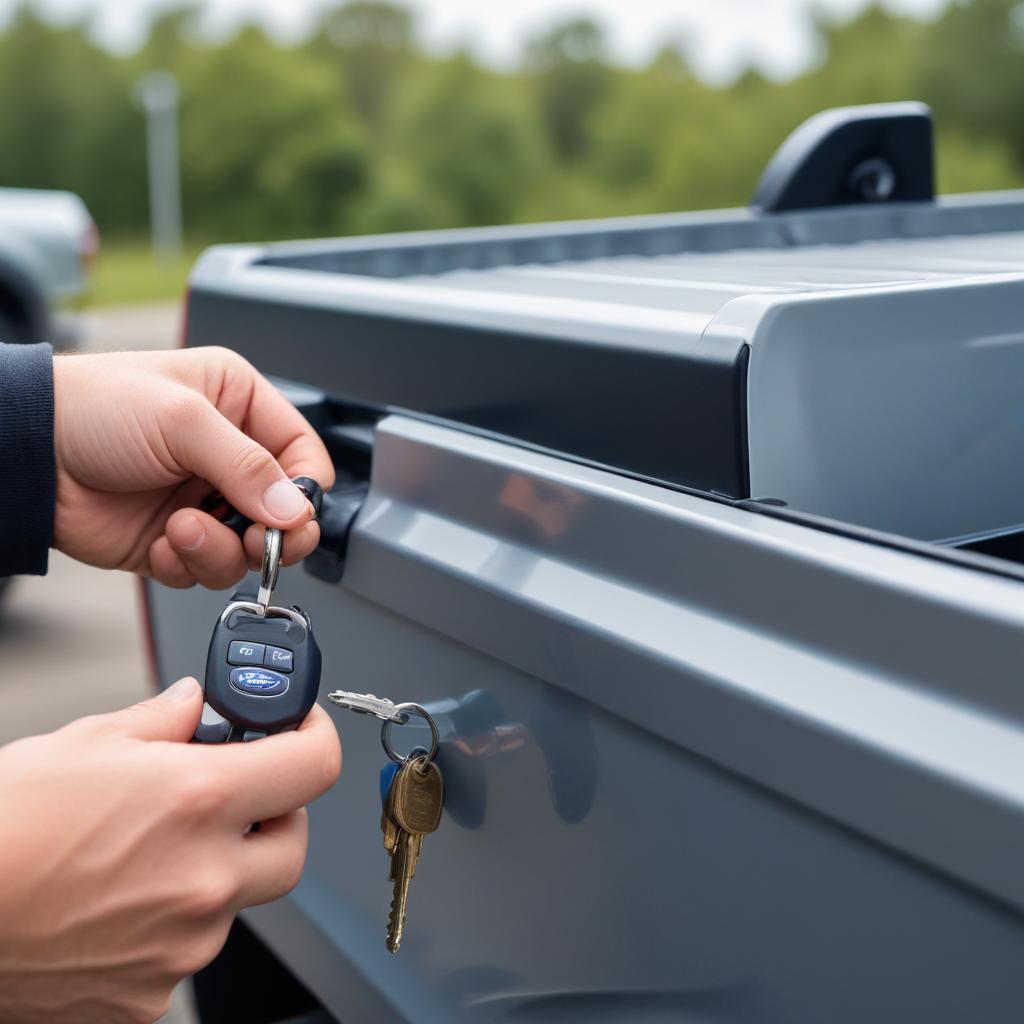
The factory-installed locks on most canopies are simple cam locks or wafer locks that can be picked or snapped with basic tools in seconds. Your first investment should be in replacing every single one.
The Lock Upgrade Guide:
| Access Point | Weak Factory Lock | Strong Upgrade Solution | Why It’s Better |
|---|---|---|---|
| Rear Tailgate Door | Simple cam lock | High-Security Deadbolt (e.g., Mul-T-Lock) | Resists picking, drilling, and physical attack. Locks the door into the frame. |
| Gullwing/Side Doors | Basic cam lock | Tubular Keyed Alike Lock | Much harder to pick than wafer locks. “Keyed alike” means one key fits all locks. |
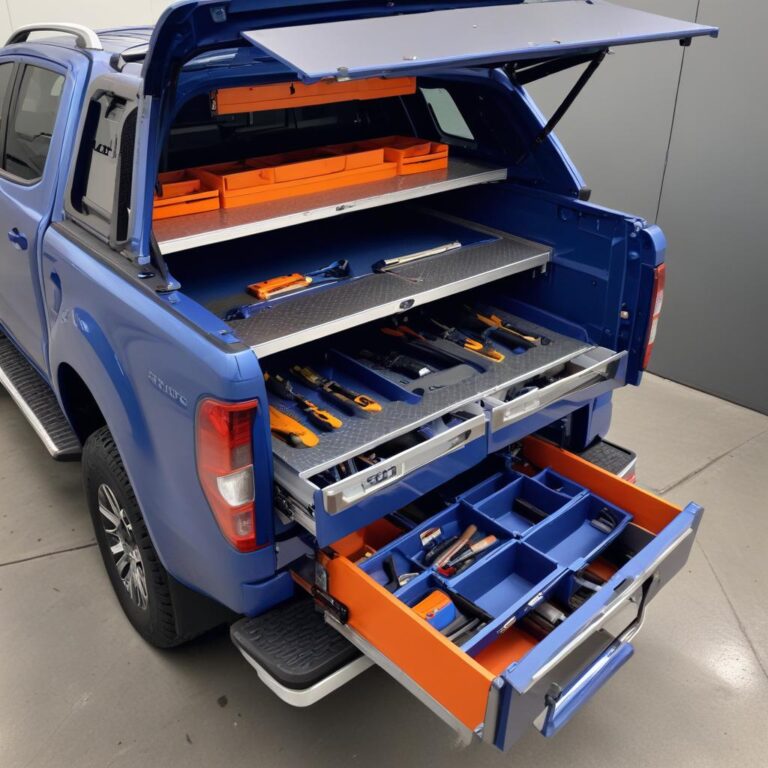
| Drawer Systems | Often a simple pin or low-quality lock | Integrated Drawer Lock with Hardened Shackle | Prevents the drawer from being pulled open when locked, even if the canopy is breached. |
Pro Tip: When shopping for locks, look for those rated ANSI Grade 1 (commercial/industrial security) and made from hardened steel to resist drilling and cutting. A tailgate deadbolt is particularly effective, as it physically bolts the door to the chassis, making prying attempts extremely difficult.
“A thief’s greatest asset is time. Your goal is to make breaching your canopy so loud, difficult, and time-consuming that they give up and move to an easier target down the street.”
Layer 2: Adding an Audible and Visible Deterrent (The Alarm)
If a thief manages to bypass or break your physical locks, the next layer must create a scene. A dedicated canopy alarm is essential.
How a Canopy Alarm Works:
Most are standalone systems with a control unit, a piercing siren (110+ dB), and a vibration/shock sensor. The sensor detects impacts or attempts to force doors open, triggering the siren. Some advanced models include:
- Tilt Sensors: Trigger if someone tries to jack up the vehicle to steal wheels or the entire canopy.
- Door Trigger Sensors: Magnetic sensors that alert if a door is opened while armed.
- Two-Way Remotes: Let you arm/disarm from a distance and will alert you if the alarm is triggered.
Installation & Placement: The control unit and siren should be installed inside the canopy, hidden from view but not buried. The siren should be mounted high and toward the front of the bed, making it harder to locate and disable quickly.
Layer 3: Recovery & Tracking (The Last Resort)
If a determined thief manages to steal the entire canopy or the truck itself, a tracking device is your only hope for recovery.
Tracking Options:
- Dedicated GPS Trackers: Hardwired into the vehicle’s 12V system (with a backup battery). They provide real-time location, geofencing, and movement alerts. (e.g., offerings from manufacturers like Rhino).
- Bluetooth/Wi-Fi Tags: Devices like Apple AirTags or Samsung SmartTags are inexpensive and effective for tracking a stolen canopy. Hide one in a sealed compartment or within the canopy’s structure. They rely on nearby Apple/Samsung devices to ping their location.
- Vehicle Integrated Systems: Ford’s own SecuriCode keyless entry and factory alarms add a layer, but are often insufficient alone for aftermarket canopy contents.
The Complete Security Checklist: A Layered Approach
Use this checklist to build your system from the perimeter inward.
Perimeter & Deterrence:
- [ ] Park in Well-Lit, High-Visibility Areas whenever possible.
- [ ] Apply “Protected by Alarm” Decals on canopy windows.
- [ ] Use a Steering Wheel Lock (a visible deterrent for the whole vehicle).
Physical Hardening (Layer 1):
- [ ] Replace all factory cam locks with high-security deadbolts or tubular locks.
- [ ] Install a tailgate deadbolt lock for the rear door.
- [ ] Ensure drawer systems have integrated, keyed locks.
- [ ] Consider a Locking Security Bar across the inside of the rear door for added physical bracing.
Active Deterrence & Detection (Layer 2):
- [ ] Install a dedicated vibration-sensing canopy alarm.
- [ ] Ensure the alarm siren is loud (110+ dB) and hidden but not easily accessible.
- [ ] Test the alarm system monthly.
Recovery & Monitoring (Layer 3):
- [ ] Hide a Bluetooth tracker (AirTag/SmartTag) inside the canopy structure.
- [ ] For high-value setups, invest in a hardwired GPS tracker.
- [ ] Photograph and record serial numbers of all high-value tools and gear stored inside.
FAQ: Your Canopy Security Questions, Answered
1. Are the locks that come with my brand-new canopy any good?
Generally, no. Most canopies, even from premium brands, come with basic cam locks as a cost-saving measure. They provide only the illusion of security and should be your #1 upgrade priority.
2. Can I integrate my canopy alarm with my Ford Ranger’s factory alarm?
It’s technically possible but complex, often requiring professional installation and potential warranty concerns. A dedicated, standalone canopy alarm is usually simpler, more reliable, and allows you to arm the canopy separately from the vehicle (e.g., when you’re loading gear with the cab doors unlocked).
3. What’s the best way to secure the items inside the canopy?
Beyond locking the canopy itself, use locking drawer systems (like those from ARB or Goose Gear) for your most valuable tools. For loose items, consider cable locks threaded through gear and anchored to the canopy’s internal tie-down points.
4. I have a soft-shell canopy (like a Softopper). How do I secure it?
Soft canopies are inherently less secure. Focus on securing the contents inside the truck bed with a locked storage chest or heavy-duty cable locks anchored to the bed. You can also add a cable lock through the Softopper’s zippers to slow down an opportunistic thief.
5. Is it worth paying for professional installation of locks and an alarm?
For the alarm, yes, if you’re not confident with wiring. Proper sensor placement and hidden wiring are key. For mechanical locks, if you’re handy, you can often install them yourself with basic tools. If not, a good locksmith or 4×4 accessory shop can handle it.
6. How do I protect against the entire canopy being stolen off the truck?
This is rare but possible. Using security-head bolts (like Torx Plus or Spanner) instead of standard hex bolts for the canopy clamps can deter casual theft. For ultimate security, some opt to have the canopy welded or permanently bonded to the bed, but this eliminates removability.
7. Do visible security cameras or dash cams help?
Yes, as a deterrent. A dash cam with parking mode that records if it detects impact can provide evidence. A fake camera can deter some, but a savvy thief will know the difference. The best approach is a combination of visible and hidden systems.
Securing your Ford Ranger canopy is an ongoing process of assessing vulnerabilities and adding appropriate layers of defense. Start by swapping out those flimsy factory locks today—it’s the single most effective upgrade you can make. Then, build outward with sound, sensors, and tracking. Your peace of mind, and your gear, are worth the investment.
What’s your biggest canopy security concern, and which layer—better locks, an alarm, or a tracker—are you adding next to your Ranger? Share your strategy or ask questions in the comments below.
References: