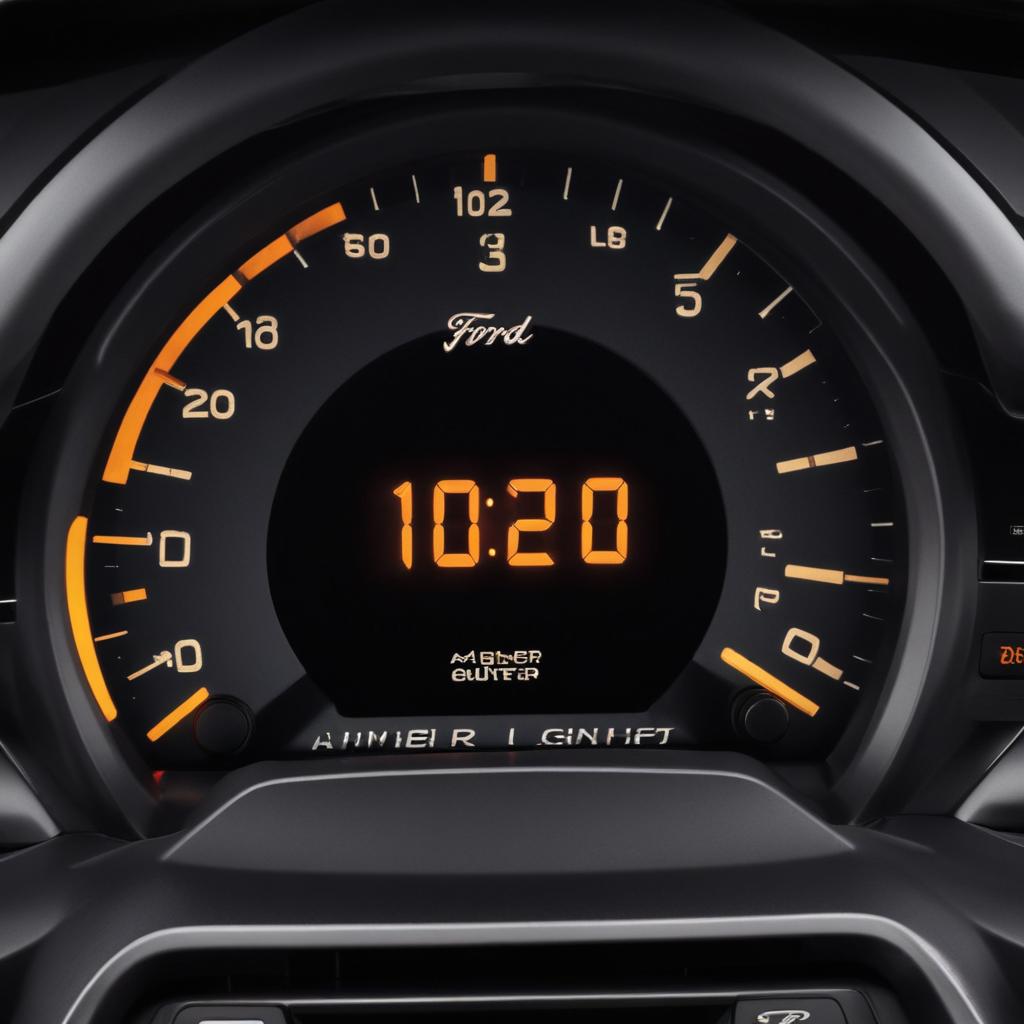
Ford Engine Warning Messages Explained: What They Really Mean (Don’t Panic, Read This First)
You’re cruising down the highway, music playing, windows down. Then suddenly – DING. A yellow light pops up on your dash. Your heart skips. Your mind goes straight to “This is going to cost a thousand dollars.” You start looking for a place to pull over.
Relax. I’ve been there. Most Ford warning messages aren’t emergencies. They’re your truck or car trying to tell you something simple – like “hey, your gas cap is loose” or “it’s time for an oil change.” The red lights? Those mean stop now. But the yellow ones usually mean “fix this sometime this week.”
Yellow wrench = maintenance reminder (oil change, spark plugs). Yellow engine outline = emissions issue (loose gas cap, bad sensor). Red battery = charging system failed (you’re running on battery only). Red temperature gauge = stop immediately (engine overheating). Don’t ignore red lights. Yellow lights can wait a day or two.
Key Takeaways (Decode Your Dash in Seconds)
- Yellow engine light (check engine) = emissions problem. Most common: loose gas cap. Tighten it.
- Yellow wrench (powertrain warning) = maintenance needed. Usually oil change or transmission service.
- Red temperature light = STOP NOW. Engine overheating. Pull over safely.
- Red battery light = alternator not charging. You have 10–30 minutes of driving left.
- Red oil can = no oil pressure. Stop immediately. This kills engines fast.
- Yellow “i” in a circle = informational message. Read it on your screen.
- Most warning lights are sensors lying to you. Don’t panic. Check the simple stuff first.
The Real Truth About Ford Warning Lights
Ever notice how that yellow engine light always comes on at the worst time? Friday night. Road trip. Middle of nowhere.
Here’s what’s actually happening: Your Ford has about 20 different computers watching everything from your oxygen levels to your transmission temperature. When something goes slightly outside normal range, they light up a warning. But “slightly outside normal” doesn’t mean “your engine is exploding.”
On a Ford F-150, the most common check engine light trigger is a loose gas cap (or on newer trucks, a loose fuel filler inlet). The system detects a tiny vacuum leak – like a pinhole – and pops the light. Tighten the cap, drive for a day, and the light turns itself off.
On a Ford Mustang, the yellow wrench light usually means oil change required. That’s it. Nothing scary.
And on Ford Explorers, a red temperature light might mean your coolant is low – not that your engine is melting. Check the reservoir first.
“Most Ford warning lights are like a smoke alarm. Sometimes there’s a real fire. But most of the time, you just burned toast. Learn the difference between ‘check engine’ and ‘stop engine.’ It’ll save you thousands in unnecessary towing bills.”
The Color Code: What Each Color Actually Means
| Color | Meaning | Your Action |
|---|---|---|
| Green or Blue | System is working normally | Ignore – it’s just information |
| Yellow / Amber | Something needs attention soon | Fix this week. Keep driving. |
| Red | Stop what you’re doing | Pull over safely. Shut off engine. |
| Flashing Red | Catastrophic failure | Stop immediately. Tow truck time. |
⚠️ Safety reminder: A flashing check engine light means “catalytic converter damage happening right now.” You can still drive, but gently. Get to a shop within 20 miles. A solid light? You’ve got time.
The Ultimate Ford Warning Light Guide
Yellow Engine Outline (Check Engine Light)
What it looks like: An engine shape, usually yellow. Sometimes says “CHECK ENGINE.”
What it means: Your emissions system detected a problem. The engine still runs fine.
Most common causes on Ford:
- Loose or cracked gas cap (80% of cases)
- Bad oxygen sensor ($50 part, easy fix)
- Dirty mass airflow sensor (clean it with spray)
- Loose vacuum hose (free fix – push it back on)
What to do: Tighten your gas cap first. Drive for a day. Light goes off by itself 70% of the time. If it stays on, get the code read for free at AutoZone or O’Reilly. Don’t pay a dealer $200 to “diagnose” a loose gas cap.
Yellow Wrench (Powertrain or Maintenance Light)
What it looks like: A yellow wrench outline. May say “ENGINE MALFUNCTION” or “SERVICE VEHICLE SOON.”
What it means: Something in your drivetrain needs attention. Usually routine maintenance.
Most common causes on Ford:
- Oil change due (reset it yourself – YouTube it)
- Transmission service reminder
- Throttle body needs cleaning
- Electronic throttle control glitch (turn car off/on)
What to do: Check your oil life percentage in the menu. If it’s below 15%, get an oil change. If the oil is fine, try restarting the engine. Many wrench lights reset themselves after a key cycle.
Red Temperature Gauge or “TEMP” Light
What it looks like: A red thermometer in liquid. Or a red gauge pegged at H.
What it means: Your engine is too hot. This is serious.
Most common causes on Ford:
- Low coolant level (most common)
- Radiator fan not working
- Thermostat stuck closed
- Water pump failed (common on 3.5L EcoBoost)
What to do: Pull over NOW. Turn off engine. Wait 20 minutes. Check coolant reservoir (under hood, near radiator). If it’s empty, add water or coolant. If it’s full, call a tow truck. Driving with an overheating engine destroys it in minutes.
Red Battery Light
What it looks like: A red battery symbol with + and – signs.
What it means: Your alternator isn’t charging the battery. You’re running on battery power only.
Most common causes on Ford:
- Broken alternator belt
- Failed alternator (common at 80k–120k miles)
- Loose battery cable
What to do: Turn off AC, radio, headlights (if daytime). Drive directly to a shop. You have about 10–30 minutes before the battery dies and the car shuts off. If you’re far from help, call a tow truck.
Red Oil Can Light
What it looks like: A red oil can with a dripping drop.
What it means: No oil pressure. Your engine is not getting oil.
Most common causes on Ford:
- Extremely low oil (you haven’t checked in months)
- Failed oil pump (rare but serious)
- Massive oil leak
What to do: STOP THE ENGINE IMMEDIATELY. Pull over, shut it off. Check oil level with dipstick. If it’s low, add oil. If it’s full, don’t restart – call a tow truck. Driving without oil pressure destroys bearings in seconds.
| Warning Light | Color | Urgency | Typical DIY Fix Cost |
|---|---|---|---|
| Check Engine | Yellow | Low | $0 (tighten gas cap) |
| Wrench | Yellow | Low | $0 (reset reminder) |
| Temperature | Red | HIGH | $20 (add coolant) |
| Battery | Red | Medium | $200 (alternator) |
| Oil Can | Red | CRITICAL | $10 (add oil) |
| Airbag | Yellow | Medium | $0 (loose connector) |
| ABS | Yellow | Low | $0 (wheel speed sensor dirty) |
The “Gas Cap Trick” (Fixes 80% of Check Engine Lights)
This sounds too simple. But it works.
Step 1: Pull over safely. Turn off engine.
Step 2: Get out and open your gas cap door. Remove the gas cap completely.
Step 3: Look at the rubber gasket inside the cap. Is it cracked, dry, or missing? If yes, buy a new cap ($10–15).
Step 4: Screw the cap back on. Turn it until you hear THREE clicks. Not one. Not two. Three.
Step 5: Drive normally for a day. The check engine light will turn itself off after about 50 miles of normal driving.
On newer Fords without a gas cap (capless system), the problem is usually a stuck fuel filler flap. Spray a little WD-40 on the little metal door inside the filler neck. Works like magic.
How to Read Ford Warning Codes for Free
You don’t need a dealer to tell you what’s wrong. Here’s how:
Step 1: Drive to any AutoZone, O’Reilly, or Advance Auto Parts.
Step 2: Ask them to “read my check engine code.” It’s free.
Step 3: They’ll plug a small scanner into the port under your steering wheel.
Step 4: They’ll give you a code like P0455 or P0301.
Step 5: Google that code + your Ford model. Example: “P0455 Ford F-150”
You’ll find real answers from real Ford owners. Not dealer scare tactics.
Common Ford codes you’ll see:
| Code | What It Means | Typical Fix |
|---|---|---|
| P0455 | Large evap leak (gas cap) | Tighten or replace gas cap |
| P0301 | Cylinder 1 misfire | New spark plugs or coil |
| P0420 | Catalytic converter efficiency | Bad oxygen sensor or converter |
| P0171 | System too lean (bank 1) | Dirty MAF sensor or vacuum leak |
| P1000 | Monitors not ready | Just keep driving – it’ll clear |
A loose gas cap causes more check engine lights than everything else combined. Always check that first.
What Each Warning Sound Means
Ford uses different chimes for different warnings. Learn them:
- Single soft ding – Low fuel, door ajar, or informational message. Not urgent.
- Double ding – Check engine light or wrench light just came on. Read the message.
- Continuous fast dinging – Seatbelt reminder. Buckle up.
- Loud, repeating chime – Red warning (temperature, oil, battery). Pull over.
- Five rapid dings – Airbag system problem. Get it checked this week.
No sound at all but a light is on? Your door chime speaker might be dead. Common on older F-150s. Not urgent.
Which Ford Models Have Unique Warning Lights?
| Ford Model | Unique Warning | What It Means |
|---|---|---|
| F-150 (2021+) | “See Manual” on screen | Too many possibilities – actually read the manual |
| Mustang (2015+) | “Hill Start Assist Not Available” | Low battery or ABS issue – not urgent |
| Explorer | “Rear Axle Over Temperature” | Towing too heavy. Let it cool down. |
| Focus / Fiesta | “Transmission Too Hot” | Dual-clutch transmission issue. Pull over. |
| Edge | “Check Rear Seat Reminder” | Just a reminder – not a problem. |
Pro tip: Newer Fords (2020+) have a digital owner’s manual built into the touchscreen. When a warning appears, touch the “?” icon and it explains what it means. No more guessing.
The “Turn It Off and On Again” Trick (Works More Than It Should)
Seriously. This fixes about 30% of warning lights.
Step 1: Find a safe place to pull over.
Step 2: Turn off the engine completely.
Step 3: Open the driver’s door for 30 seconds (this resets some modules).
Step 4: Close the door and restart.
Step 5: Did the light go away? It was a computer glitch. Drive normally.
Step 6: Light still there? Now you actually have a problem.
This works because Ford’s computers sometimes get confused by voltage spikes, quick restarts, or sensor noise. A full power cycle clears the garbage data.
When You Can Keep Driving vs When to Tow
| Warning Light | Keep Driving? | Tow? |
|---|---|---|
| Yellow check engine (solid) | Yes – drive gently for days or weeks | No |
| Yellow check engine (flashing) | Yes – but only 20 miles max | No, but drive straight to shop |
| Yellow wrench | Yes – drive normally | No |
| Red temperature | NO – pull over NOW | Yes – unless you can add coolant |
| Red battery | Yes – but only 10–30 minutes | If you’re far from help, yes |
| Red oil can | NO – do not restart | Yes – always tow |
| Red brake | Yes – but brake feel will be bad | No – but drive carefully to shop |
| Red airbag | Yes – but airbags won’t deploy in crash | No – but fix soon |
⚠️ Safety reminder: If you see a red warning light you don’t recognize, stop and read the owner’s manual. The one in your glove box. It exists for exactly this moment.
FAQ (Real Questions from Ford Owners)
1. Why does my check engine light come on and then go off by itself?
Intermittent problem. Loose gas cap, dirty sensor, or moisture. If it goes off and stays off, forget about it. If it keeps coming back, get the code read.
2. Can I drive my Ford with the check engine light on?
Yes, if it’s solid yellow. No, if it’s flashing. Solid = emissions issue. Flashing = catalytic converter damage happening. Also no if the engine sounds wrong or runs badly.
3. How do I reset my Ford oil change light (wrench)?
Turn key to ON (don’t start). Press gas and brake pedals together for 20 seconds. Message will flash then reset. Google your specific year – some Fords use touchscreen menus.
4. Why does my Ford say “Engine Fault Service Now” but runs fine?
Usually a bad sensor or software glitch. Get codes read. Often it’s the throttle position sensor – $40 part. Don’t panic.
5. My temperature light came on but coolant is full. What now?
Could be a bad thermostat (stuck closed) or failed water pump. On 3.5L EcoBoost engines, water pump failure is common at 80k–100k miles. Get it towed to a shop.
6. Can a bad battery cause warning lights?
YES. Low voltage makes Ford computers go crazy. You’ll see ABS, airbag, check engine, and wrench lights all at once. Fix the battery first – the other lights might disappear.
7. How do I clear a check engine light after fixing the problem?**
Drive normally for 50–100 miles. The light turns off by itself. Or disconnect the negative battery terminal for 10 minutes. That clears it immediately.
The Bottom Line (Don’t Let Warning Lights Ruin Your Day)
Here’s the honest truth: Most Ford warning lights are overly sensitive babysitters. They light up for tiny issues that won’t hurt your engine. That yellow engine light? Probably your gas cap. That wrench? Probably just an oil change reminder.
But the red lights? Respect those. They’re the difference between a $20 fix and a $5,000 engine replacement.
Here’s your simple rule:
- Yellow = make an appointment this week
- Red = pull over now
And always remember: AutoZone reads codes for free. Google the code before you call a mechanic. Half the time, the fix is tightening something or buying a $15 part on Amazon.
What’s the weirdest warning light your Ford has thrown? Did you figure it out yourself or get gouged by a dealer? Drop your story in the comments – we learn from each other.
References: