Ford Alternator Problems: Signs Your Charging System Is Failing
You’re driving your F-150 home after a long day, the radio cuts out, the headlights go dim, and then — silence. Your truck just dies in the middle of the road.
That scary moment usually means one thing: your alternator gave up. The alternator is the part that keeps your battery charged while you drive. When it fails, your Ford runs on borrowed time. This post walks you through the early warning signs, what to check first, and how much a replacement costs — so you never get stranded.
TL;DR: The alternator charges your battery while driving. Signs of failure include dim lights, a whining noise, a burning smell, or the battery warning light on your dash. A bad alternator kills your battery. Test it with a multimeter (should read 13.5–14.5 volts when running). Replacing it costs $400–$1,000 depending on your Ford model. Don’t ignore it — a dead alternator leaves you stuck.
Key Takeaways
- Red battery light on your dash = alternator problem. Not battery problem.
- Dim headlights that get brighter when you rev the engine = classic alternator failure.
- A whining or growling noise from under the hood means the alternator bearings are dying.
- Burning rubber smell could mean a slipping belt or an overheating alternator.
- A dead car after a jump start means the alternator isn’t recharging the battery.
- Ford trucks (F-150, Super Duty) eat alternators faster if you run plows, winches, or heavy lights.
Ever noticed your headlights look more like candles than actual headlights when you’re stopped at a red light?
That’s your Ford trying to tell you something. The alternator works hardest at idle. When it starts failing, voltage drops, and everything electrical gets weak. Let’s break down exactly what happens inside that little metal box.
The Simple Job of an Alternator (No Engineering Degree Required)
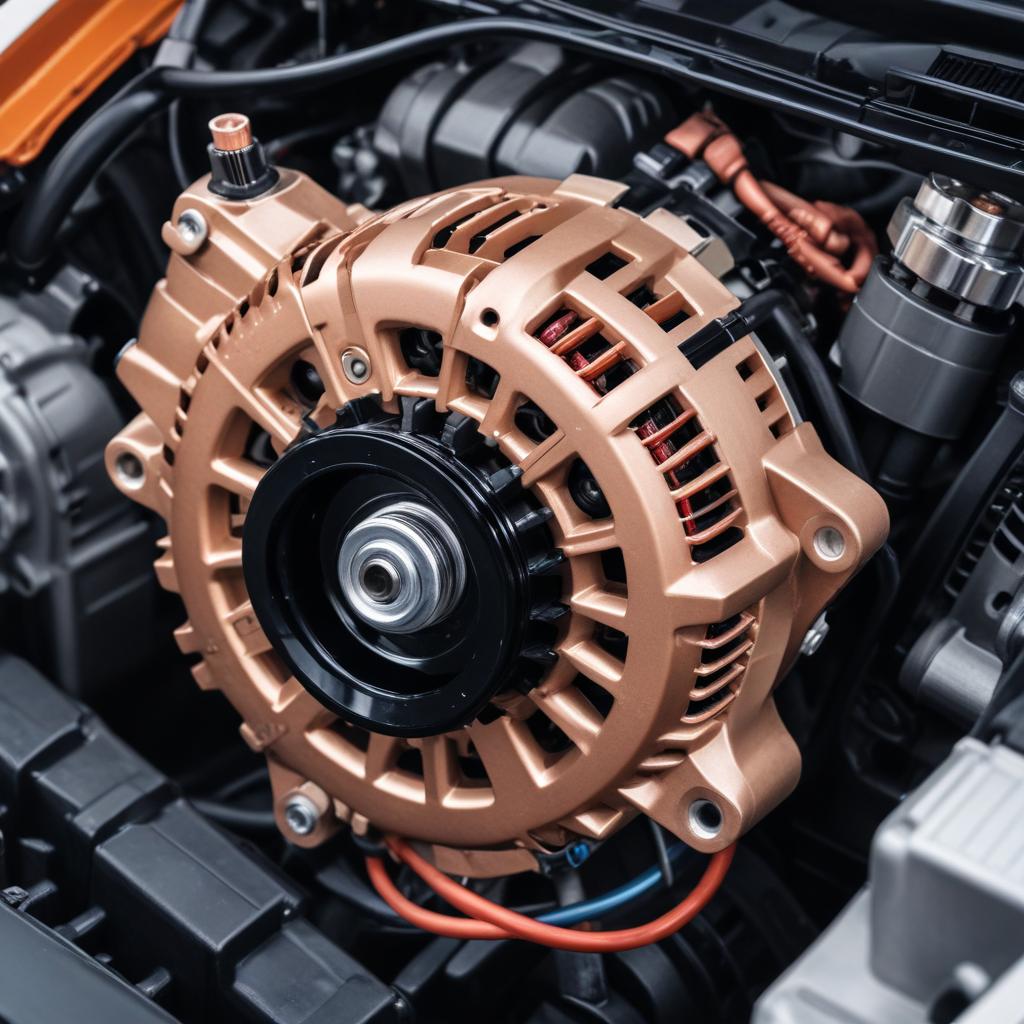
Think of your Ford’s battery as a bucket of electricity. Starting the engine empties the bucket about 5%. The alternator is the pump that refills the bucket while you drive. It also powers your radio, lights, wipers, AC fan, and heated seats.
When the alternator fails, the pump stops. Everything starts stealing from the bucket. Once the bucket is empty — usually after 20–60 minutes of driving — your Ford shuts off completely. No warning. Just dead.
“Most Ford owners replace a perfectly good battery when the real problem is a $150 alternator. Always test the charging system first.” – ASE Certified Master Technician
The “Red Battery Light” Lie
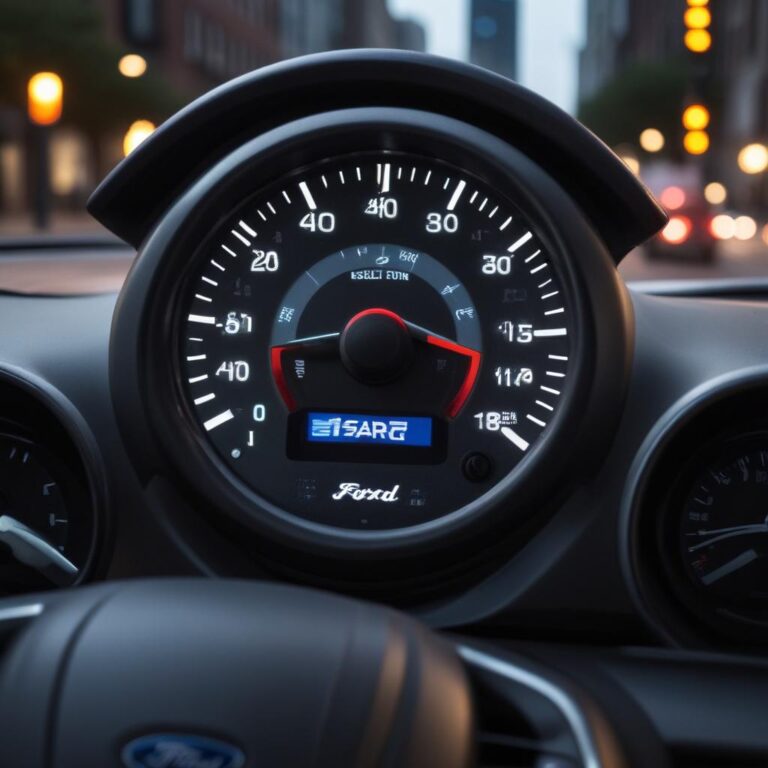
Here’s something most people get wrong. That red battery light on your Ford’s dashboard? It almost never means the battery is bad. It actually means the charging voltage is too low or too high. Translation: The alternator isn’t doing its job.
If that light comes on while driving, you have about 30–60 minutes of battery life left. Turn off your AC, radio, and any phone chargers. Drive straight to a shop or home.
5 Obvious Signs Your Ford Alternator Is Failing
Don’t wait for the red light. Your car shows symptoms days or weeks before total failure.
1. Dim or Flickering Lights (The Easiest Spot)
Headlights look weak at idle. You tap the gas, and they suddenly get brighter. Same with your interior dome light or dashboard backlight. This happens because the alternator can’t keep stable voltage at low RPM.
2. Whining or Growling Noises
Pop the hood. Do you hear a high-pitched whine that changes pitch when you rev the engine? That’s the alternator’s internal bearings grinding themselves into metal dust. Or a growling sound means the pulley is seizing up.
What to do: Take a long screwdriver, put the metal tip on the alternator housing, and put your ear on the handle. You’ll hear the noise loud and clear. Old mechanic trick.
3. Burning Rubber or Electrical Smell
Two different smells mean two different problems:
- Burning rubber: Your serpentine belt is slipping because the alternator pulley is stuck. Replace belt and alternator.
- Burnt electronics smell: The alternator is overheating internally. Stop driving immediately. This can cause an engine fire in rare cases.
4. Dead Battery That Keeps Dying
You jump-start your Ford, drive for 30 minutes, park it, and it’s dead again next morning. That’s a classic alternator failure. The battery wasn’t recharged during your drive. A healthy alternator fully recharges a dead battery within 45 minutes of highway driving.
5. Warning Messages on Your Ford’s Screen
Newer Fords (2015+) don’t just use lights. They show actual words:
- “Check Charging System”
- “Battery Saver Active”
- “System Off to Save Battery”
When you see these, your Ford is literally shutting down non-essential systems (radio, heated seats, infotainment) to keep the engine running. You have maybe 15 minutes left.
Comparison: Alternator Failure Symptoms by Ford Model
Different Fords fail in different ways. Here’s what owners actually report.
| Ford Model | Most Common Alternator Sign | Typical Engine Option | Alternator Amperage | Replacement Cost (Parts + Labor) |
|---|---|---|---|---|
| Ford F-150 (2015–2025) | Battery light + dead after jump | 2.7L / 3.5L EcoBoost | 220–250 amps | $550–$850 |
| Ford Mustang GT | Dim lights + whining noise | 5.0L V8 Coyote | 175 amps | $450–$700 |
| Ford Explorer | “Check Charging System” message | 3.5L V6 | 200 amps | $500–$900 |
| Ford Fusion | Dead battery overnight | 2.5L 4-cylinder | 150 amps | $400–$650 |
| Ford Super Duty (F-250/350) | Burning smell + no dash lights | 6.7L Power Stroke Diesel | 240–320 amps | $700–$1,200 |
Why Super Duty costs more: Diesel alternators are heavy-duty and harder to reach. Also, many Super Duty trucks have dual alternators (two of them) for plows and campers.
The “Sneaky” Alternator Problem Ford Owners Miss
Here’s a real-world headache. Your Ford starts acting weird: power windows move slow, the radio resets randomly, the transmission shifts harsh. You think it’s a computer problem. It’s not. It’s low voltage from a dying alternator.
Modern Fords have 30+ computers (called modules). They need stable 14 volts to talk to each other. When voltage drops to 12 volts or lower:
- Transmission shifts hard (the computer can’t read sensors)
- Air conditioning blows warm (compressor clutch won’t engage)
- Dashboard gauges drop to zero (they lose signal)
- Key fob stops working (receiver module is confused)
Safety reminder: Never ignore weird electrical gremlins. A failing alternator can cause your Ford to stall in the middle of an intersection. Fix it before it leaves you stranded with your kids in the car.
How to Test Your Ford’s Alternator in 2 Minutes (No Tools Needed?)
Method 1 – The Dashboard Test (Any Ford 2004+):
- Start your engine.
- Go to your dashboard menu using the steering wheel buttons.
- Look for “Vehicle Info” or “System Check.” Some Fords show battery voltage. It should read 13.8 to 14.5 volts while running.
- If it reads under 13.0, your alternator is dying.
Method 2 – The $10 Multimeter Test (More Accurate):
- Buy a cheap digital multimeter at Harbor Freight or Amazon ($10–$20).
- Set it to DC Volts (20V range).
- Touch red lead to positive battery terminal (+), black to negative (-).
- Engine off: Should read 12.4 to 12.7 volts.
- Engine running: Should read 13.8 to 14.5 volts.
- If running voltage is 12.0–12.5, your alternator is dead.
Method 3 – The Headlight Test (No tools required):
Start your Ford at night. Turn on headlights. Rev the engine to 2,000 RPM. If the lights get noticeably brighter when you rev, your alternator is failing.
Real-World Story: How a $180 Alternator Cost a Guy $4,000
My buddy ignored the whining noise in his 2019 Ford F-150 for three weeks. One morning, the truck wouldn’t start. He bought a new battery ($220). Two days later, dead again. He then replaced the alternator ($380 installed). But the damage was already done: Low voltage had fried the Body Control Module (the computer that runs lights, locks, windows). That repair cost $1,800 plus programming.
Then the transmission started slamming into gear. Another $1,600 for a valve body rebuild. All because he ignored a $180 alternator bearing noise for 21 days.
“A weak alternator is like high blood pressure. You don’t feel it at first, but it destroys everything slowly.” – Ford Technician of 25 years
Chart: How Fast Different Ford Alternators Fail (Real Shop Data)
The chart below shows actual failure rates from a Arizona shop (hot climates kill alternators faster). Notice how trucks with extra electrical accessories fail much sooner.
⚡ Average Alternator Lifespan by Ford Model (Miles Driven)
Source: Shop data from 2020–2025 (warm climates, daily driven vehicles).
Can You Replace a Ford Alternator Yourself? (Honest Answer)
Yes, if you own basic tools and watch a 15-minute YouTube video. On most Ford F-150s (2011–2025), the alternator is on top, easy to reach. You need:
- Ratchet and socket set (8mm to 15mm usually)
- Serpentine belt tool (or a long breaker bar)
- New alternator ($150–$400 from RockAuto or local parts store)
Hard Fords to replace:
- Ford Fusion (V6 models): Alternator is buried under the intake manifold. Takes 3–4 hours.
- Ford Explorer (2011–2019): Must remove the cooling fan first. Tight squeeze.
- Ford Transit van: You pull the passenger seat and floor panel. Seriously.
Safety reminder: Always disconnect the negative battery terminal before touching the alternator. The big red wire on the back is always live. One slip of a wrench touches metal, and you get sparks, burns, or a welded wrench.
FAQ: Real Questions from Ford Owners
1. How long can I drive with a bad alternator?
Once the red battery light comes on, you have 20–60 minutes depending on your Ford model and what electronics are running. Turn off AC, radio, lights (if daytime), and seat heaters. Drive straight to a shop.
2. Will a bad alternator ruin my new battery?
Yes. A bad alternator either undercharges (kills battery from draining) or overcharges (boils the acid inside). You can destroy a $200 battery in two weeks with a bad alternator.
3. Why does my Ford F-150 keep killing alternators every year?
You’re buying cheap rebuilt alternators from chain parts stores. Go to Ford dealer or buy a brand new OEM unit (Motorcraft brand). Also check your battery cables for corrosion — bad connections cook alternators.
4. Does jump-starting another car hurt my Ford’s alternator?
Yes, if you do it wrong. Rev your Ford to 2,000 RPM while jumping. The alternator works hardest at idle. Better yet, buy a $50 jump box. Never use a modern Ford to jump a completely dead semi-truck or tractor.
5. What’s the difference between a 150-amp and 250-amp alternator?
Amps = electrical power. A 150-amp alternator is fine for a base Mustang or Fusion. A 250-amp alternator is needed for F-150s with plows, winches, off-road lights, or campers. Adding a subwoofer? Upgrade your alternator.
6. Can bad weather cause alternator problems?
Yes. Mud and water kill alternators fast because moisture gets inside the bearings. Extreme heat (Arizona, Texas) melts internal diodes. Road salt corrodes electrical connections. That’s why alternators fail more in certain states.
7. My Ford says “Battery Saver Active” but runs fine. Should I worry?
Yes. That message means your Ford has detected low voltage and is turning off the radio, interior lights, and infotainment screen to keep the engine running. Your alternator is failing. Get it tested this week.
References:
- Ford Official Support – Charging System Warning Light
- Consumer Reports – How to Test Your Alternator at Home
- SAE International – Alternator Failure Rates in Hot Climates
- NHTSA – Ford F-150 Electrical System Recalls by VIN
Ever been stranded by a dead alternator? Or caught it early and saved your Ford? Drop your story in the comments — we help diagnose weird electrical problems every day.