Ford Check Engine Light On? Top Reasons Explained Simply | No Mechanic? No Problem.
You’re driving to work, coffee in hand, minding your own business. Then it happens. That little yellow engine-shaped light pops up on your dashboard like an uninvited guest. Your stomach drops. Did you just break something expensive?
Take a breath. Put the coffee down. The check engine light is scary, but it’s not the end of the world. In fact, on most Fords, it’s something small and stupid — a loose gas cap, a dirty sensor, or old spark plugs. This guide walks you through the top reasons that light comes on, from the “$0 fix” to the “start saving now” fix. No mechanic speak. No panic. Just straight answers.
TL;DR: Your Ford’s check engine light means the computer detected a problem. It’s usually not an emergency unless the light is flashing. Solid yellow? You can keep driving. Flashing? Pull over and tow it. Top causes: loose gas cap (free fix), bad oxygen sensor ($200–400), failing catalytic converter ($1,500–2,500), dirty mass airflow sensor ($10 fix), bad spark plugs ($100–300), or a failing ignition coil ($150–400). Buy a $20 OBD2 scanner on Amazon. Plug it in. Read the code. Google the code + your Ford model. You’ll know exactly what’s wrong before any mechanic touches it.
Key Takeaways
- Solid yellow light = schedule a mechanic this week. Safe to drive.
- Flashing light = pull over now. Tow truck time. Engine damage happening.
- Loose gas cap causes 10–15% of all check engine lights. Tighten it until it clicks 3 times.
- Any auto parts store (AutoZone, O’Reilly, Advance) reads codes for free. No purchase needed.
- A $20 OBD2 scanner pays for itself the first time you use it. Buy one. Keep it in your glove box.
- Don’t clear the code and hope it goes away. That’s like deleting a bill from your inbox. The problem is still there.
- Most common Ford codes: P0420 (catalytic converter), P0171 (too lean), P0300 (random misfire), P0455 (loose gas cap).
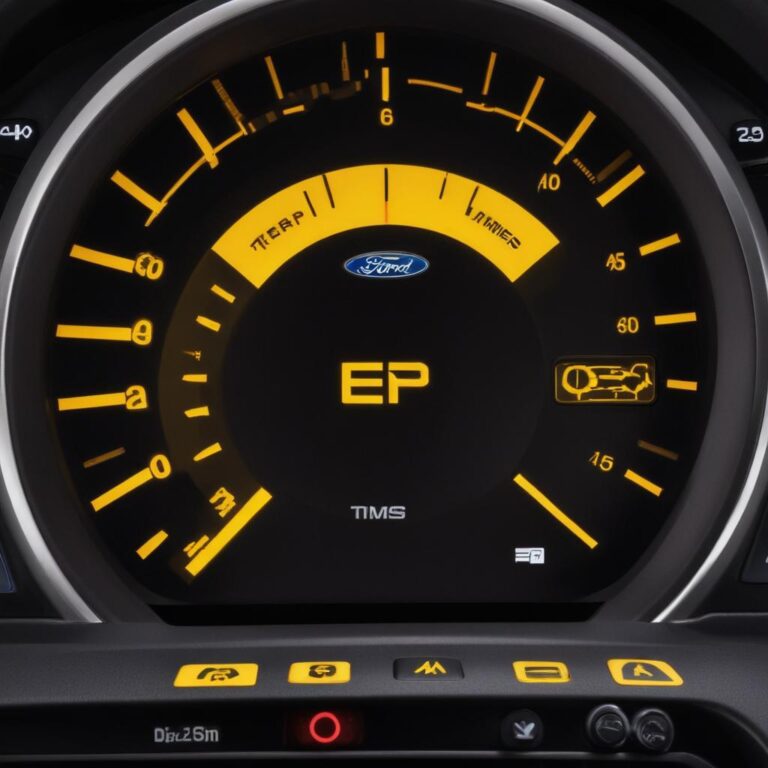
Ever wonder why that little engine light looks like a check engine? It’s shaped like a tiny engine block. Ford engineers have a sense of humor, I guess.
Your check engine light isn’t trying to ruin your day. It’s trying to save your engine. That light is connected to the Powertrain Control Module (PCM) — the main computer that runs your Ford’s engine and transmission. This computer watches dozens of sensors: oxygen levels, engine temperature, air flow, fuel pressure, spark timing, and more. When one of those sensors reads something outside the normal range, the computer turns on the light and saves a “trouble code” (like P0302 or P0420) in its memory.
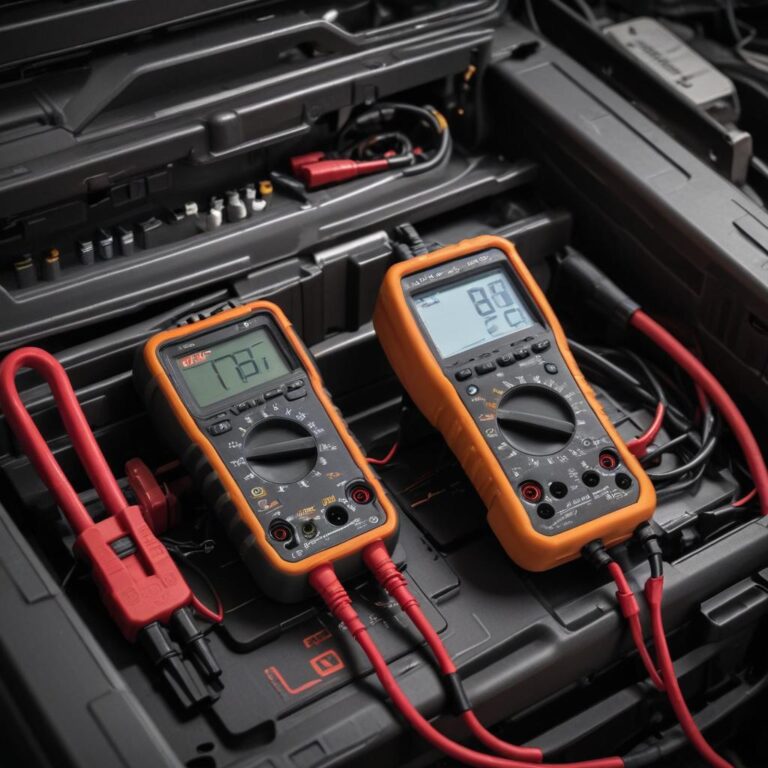
That code tells you exactly which sensor freaked out. You just need a cheap scanner to read it.
“I tell every Ford owner who walks into my shop: buy a $20 code reader. Bring me the code, not the car. Half the time, I can tell you what’s wrong over the phone and save you a $150 diagnostic fee.” – Independent Ford Mechanic, 30 years
The 8 Most Common Reasons Your Ford Check Engine Light Is On
From cheapest fix to most expensive. Start at the top.
1. Loose or Faulty Gas Cap (The Free Fix)
This is the king of check engine lights. Your Ford’s fuel system is sealed. When the gas cap isn’t tight, fuel vapors escape. The computer sees a leak and throws code P0455 or P0457. The light comes on. Your engine runs perfectly fine.
How to spot it: Did you just get gas? Did you forget to tighten the cap? Does the cap feel loose or cross-threaded? This is almost always your problem.
What to do: Pull over. Walk to the back. Open the fuel door. Unscrew the gas cap completely. Screw it back on until you hear 2–3 loud clicks. Drive for 2–3 days. The light should turn off on its own after 50–100 miles. If it doesn’t, the cap itself might be cracked or the seal worn out. A new gas cap costs $10–20 at any auto parts store.
Safety reminder: If the check engine light was caused by a loose gas cap, your Ford is safe to drive. Zero engine damage. Just tighten it and move on with your life.
2. Bad Oxygen Sensor (O2 Sensor) — Code P0135, P0141, P0155, etc.
The oxygen sensor (there are usually 2–4 of them) lives in your exhaust pipe. It measures how much unburned oxygen is leaving your engine. The computer uses that data to adjust the fuel mixture. When an O2 sensor fails, the computer goes blind and turns on the light.
How to spot it: Your gas mileage drops noticeably. Your Ford might feel sluggish. Sometimes there are no driving symptoms at all — just the light.
What to do: Replace the faulty sensor. Part costs $60–150 depending on your Ford model. Labor is 30–60 minutes if you DIY. A shop charges $200–400 total. Not an emergency, but replace it within a month. Bad O2 sensors can damage your catalytic converter over time (much more expensive).
DIY tip: On most Fords, the upstream O2 sensors (before the catalytic converter) are accessible from under the hood. You need an O2 sensor socket ($10) and penetrating oil. Spray the old sensor with PB Blaster, let it sit for 10 minutes, then unscrew it.
3. Bad Spark Plugs or Ignition Coils (The Misfire Trio) — Code P0300, P0301–P0308
This is a whole family of check engine lights. P0300 means random misfire. P0302 means cylinder #2 misfire. P0304 is cylinder #4, and so on. Misfires happen when the spark plug doesn’t fire correctly, the ignition coil (the little box on top of the plug) fails, or the fuel injector clogs.
How to spot it: Your Ford runs rough. It shakes at idle. You feel a hesitation when accelerating. The engine might sound like it’s skipping a beat. Fuel economy drops.
What to do: First, check your spark plug maintenance history. Most Fords need new plugs every 60,000–100,000 miles. If you’re overdue, replace all spark plugs and the bad ignition coil. Parts: $50–120 for plugs (set of 4, 6, or 8), $40–80 per coil. Labor: 1–3 hours. Shop cost: $300–600 for plugs and one coil.
Important: If the check engine light is flashing, that means the misfire is happening right now and raw fuel is flooding into your catalytic converter. That can melt the converter ($2,000+ repair). Pull over and tow it.
4. Bad Catalytic Converter (The Expensive One) — Code P0420, P0430
The catalytic converter is a honeycomb-shaped filter inside your exhaust that turns harmful gases into less harmful ones. It’s expensive because it contains precious metals — platinum, palladium, and rhodium. When it fails, code P0420 (bank 1) or P0430 (bank 2) appears.
How to spot it: Your Ford runs fine, but the check engine light stays on. You might smell rotten eggs (sulfur) from the exhaust. You might fail an emissions test. Your gas mileage may drop slightly.
What to do: First, rule out other problems. Bad oxygen sensors, misfires, and oil leaks can kill a catalytic converter. Fix those first, then clear the code. If the code comes back, the converter is dead. Replacement costs $1,500–2,500 on most Fords. On some models (Super Duty, Expedition), it can hit $3,500–4,000.
The honest truth: If your Ford is 15+ years old with 200k+ miles, a catalytic converter replacement might cost more than the car is worth. Some owners live with the light (won’t pass inspection). Others sell the car. Don’t try to hollow out the converter — it’s illegal, louder than hell, and smells like a chemical plant.
Safety reminder: A clogged catalytic converter can overheat and start a fire. If you smell strong sulfur, see red glowing exhaust pipes, or hear rattling from under the car, park immediately.
5. Dirty or Bad Mass Airflow Sensor (MAF) — Code P0101, P0102, P0103
The mass airflow sensor is a small device in your intake tube (between the air filter and the engine). It measures how much air is coming into the engine so the computer can add the right amount of fuel. When it gets dirty (dust, oil residue), it sends wrong readings.
How to spot it: Hesitation when accelerating. Rough idle. Poor gas mileage. Sometimes the engine stalls at stoplights.
What to do: Clean the MAF sensor. It’s a $10 fix and takes 15 minutes. Buy a can of MAF sensor cleaner (not brake cleaner, not carb cleaner — it will destroy the sensor). Unplug the sensor. Remove it from the intake tube. Spray the tiny wires inside generously. Let it air dry for 10 minutes. Reinstall. Clear the code. Drive.
If cleaning doesn’t work, replace the sensor ($80–150). Very easy DIY.
Pro tip: A dirty MAF sensor often comes from a dirty air filter. Check your air filter every oil change. Replace it if it’s gray instead of white or pink.
6. Evaporative Emission System Leak — Code P0442, P0455, P0456
The EVAP system captures fuel vapors from your gas tank so they don’t escape into the atmosphere. It’s a sealed system with hoses, valves, and a charcoal canister. A small crack in a hose or a stuck valve triggers the light.
How to spot it: No driving symptoms at all. Your Ford runs perfectly. The light just stays on. You might smell gas fumes near the car.
What to do: Start with the gas cap (#1 on this list). That’s the most common EVAP leak. If the cap is tight, look for cracked hoses near the charcoal canister (usually located near the gas tank, under the rear of the car). A shop can perform a “smoke test” — they pump colored smoke into the system, and the leak location shows up like a pinhole in a balloon. Typical shop repair: $150–400 for a hose or valve replacement.
The honest truth: Many Ford owners drive for years with an EVAP code. It won’t hurt your engine. You’ll fail emissions testing in most states. But if emissions testing isn’t a concern, you can ignore it. Not recommended, but possible.
7. Throttle Position Sensor (TPS) or Accelerator Pedal Sensor — Code P0120–P0124
Your gas pedal isn’t connected to the engine by a cable anymore (on most Fords built after 2005). It’s “drive by wire” — a sensor on the pedal sends an electronic signal to a motor on the throttle body. When that sensor fails, the computer gets confused.
How to spot it: Your Ford accelerates slowly, or surges on its own, or feels like it’s stuck at a certain speed. The check engine light comes on. Sometimes the light flashes.
What to do: This is not a DIY fix for most people. The sensor is inside the pedal assembly or on the throttle body. Replacement cost: $200–500 parts and labor at a shop. If the light is flashing, tow it. A stuck throttle can be dangerous.
Safety reminder: If your Ford suddenly accelerates on its own (uncommanded acceleration), put the transmission in Neutral and brake to a stop. Turn off the engine. Tow it. Do not drive it.
8. Low Transmission Fluid or Transmission Problem — Code P0700–P0800
The check engine light isn’t just for engine problems. Ford’s computer also monitors the transmission. If it sees slipping, wrong gear ratios, or pressure problems, it turns on the check engine light (and sometimes a separate transmission light).
How to spot it: Hard shifts. Delayed engagement when you put it in Drive or Reverse. Strange noises. Slipping (engine revs but car doesn’t accelerate).
What to do: Check your transmission fluid level (if your Ford has a dipstick). Low fluid causes slipping. If the fluid is dark brown or smells burnt, change it (drain and fill, not flush). If the problem continues, take it to a transmission shop. Rebuild costs $2,500–4,500. See the transmission slipping blog post earlier in this series for full details.
Comparison: Check Engine Light Codes by Ford Model and Engine
Not all codes mean the same thing on every Ford. Here’s what to expect.
| Ford Model / Engine | Most Common Code | What It Usually Means | Typical Fix Cost |
|---|---|---|---|
| F-150 3.5L EcoBoost (2011–2016) | P0420 / P0430 | Bad catalytic converter (often from misfires) | $1,800–2,500 |
| F-150 5.0L V8 (2015–2020) | P0300–P0308 | Spark plugs or ignition coils (oil fouls plugs) | $300–600 |
| Mustang 5.0L V8 (2018–2024) | P0135 | Oxygen sensor (bank 1, sensor 1) | $250–400 |
| Mustang EcoBoost 2.3L | P0455 | Loose gas cap or EVAP leak | $0–200 |
| Explorer 3.5L V6 | P0012 / P0022 | Camshaft position timing (oil pressure issue) | $800–1,500 |
| Escape 1.5L / 2.0L EcoBoost | P0299 | Turbo underboost (wastegate or boost leak) | $500–1,200 |
| Focus 2.0L | P0420 | Catalytic converter (common failure on 2012–2016) | $1,500–2,000 |
| Super Duty 6.7L Diesel | P20E8 | DEF quality or dosing issue | $300–1,000 |
| Edge 3.5L | P0442 | Small EVAP leak (gas cap or purge valve) | $50–300 |
Real Story: How a Loose Gas Cap Cost a Guy $1,500 (Because He Panicked)
My coworker’s 2019 Ford Escape check engine light came on. He panicked. Drove straight to the dealer. The dealer said “We need to run diagnostics — $180.” He said yes. They called him three hours later: “It’s a P0455 code. Loose gas cap. We tightened it. Cleared the code. Total $258 including diagnostics.”
He paid $258 for someone to tighten his gas cap. He was too embarrassed to tell me. I found out when he asked to borrow a code reader.
Two weeks later, his wife’s Ford Explorer check engine light came on — same code. He borrowed my $20 code reader. Read the code himself. Saw it was P0455. Tightened the gas cap. Cleared the code. Drove for two days. Light stayed off.
He bought his own code reader the next day.
“The check engine light is the most misunderstood warning in your car. People see it and think ‘thousands of dollars.’ The reality is, it’s usually a $20 part or a free fix. But you won’t know until you read the code.” – ASE Master Technician
How to Read Your Ford’s Check Engine Light (No Scanner Required? Kinda.)
Some older Fords (1996–2004) have a trick: you can flash the codes using the ignition key. Turn the key ON-OFF-ON-OFF-ON within 5 seconds. The check engine light will flash a sequence. Count the flashes. For example: flash, pause, flash flash = code 12. This doesn’t work on most 2005+ Fords. Just buy a scanner.
On newer Fords (2017+ with digital dash):
Some models show the code on the screen. Go to Settings > Vehicle > Diagnostics > View DTCs. Not all Fords have this. Check your owner’s manual.
What to Do Right Now (Step-by-Step)
Step 1 — Don’t panic. Seriously. A solid yellow check engine light on a Ford that’s running fine is rarely an emergency.
Step 2 — Check how the car drives. Does it shake? Make weird noises? Smell like rotten eggs or gas? Overheat? If yes, pull over and call a tow truck.
Step 3 — Check the gas cap. Tighten it until it clicks. This fixes 10% of all check engine lights.
Step 4 — Drive to an auto parts store. AutoZone, O’Reilly, Advance Auto Parts, and NAPA all read codes for free. They’ll hand you a printout with the code and a guess at the problem. Write down the actual code (like P0420, not “catalytic converter problem”).
Step 5 — Buy a $20 OBD2 scanner on Amazon. It’s the best car tool you’ll ever own. Keep it in your glove box.
Step 6 — Google the code + your Ford model + year. Example: “P0171 Ford F-150 2016.” You’ll find forum threads, YouTube videos, and exact repair guides.
Step 7 — Decide if it’s a DIY fix. Loose gas cap? Tighten it. Dirty MAF sensor? Clean it. Bad spark plug? Replace it. Bad catalytic converter? Call a shop.
Step 8 — If you take it to a shop, give them the code. Don’t let them charge $150 to read a code you already know. Ask for the specific repair cost for that code.
Chart: Check Engine Light Repair Costs (Lowest to Highest)
This chart shows the range of what you’ll actually pay to fix common Ford code causes.
💰 Average Cost to Fix Ford Check Engine Light (DIY vs. Shop)
Source: RepairPal, 2024–2025 Ford service data (national averages).
Can You Drive With the Check Engine Light On?
Solid yellow light: Yes, usually. Drive normally for a few days or a week. But schedule a repair. The problem won’t fix itself. It might get worse. A bad oxygen sensor today becomes a dead catalytic converter in six months ($300 fix becomes $2,000 fix).
Flashing light: No. Pull over as soon as it’s safe. Tow the car. A flashing light means a misfire is happening right now, and raw fuel is destroying your catalytic converter. Every mile you drive with a flashing light costs you $50–100 in future repair bills.
Light is on but car runs fine: Probably a gas cap, EVAP leak, or oxygen sensor. Safe to drive. Get it checked within a month.
Light is on and car runs rough: Misfire, vacuum leak, or fuel problem. Drive directly to a shop or home. Not an emergency, but don’t put it off.
Safety reminder: The check engine light does NOT mean your engine is about to explode. It means your engine’s computer found something outside normal range. Most things are small. But don’t ignore it for years. Small problems become big problems.
The “Check Engine Light” vs. “Maintenance Required” Light
Some Fords have a separate light that says “Maintenance Required” or “Oil Change Required.” That’s not a check engine light. That’s a timer based on miles driven. It means change your oil and rotate your tires. Your engine is fine.
The check engine light is always yellow or red and shaped like an engine. The maintenance light is usually a wrench or says “MAINT” in text.
FAQ: Real Questions from Ford Owners
1. Will the check engine light turn off by itself?
Sometimes. If the problem goes away (like a loose gas cap that you tightened), the computer will turn off the light after 3–5 drive cycles where the problem doesn’t return. A drive cycle is starting the car, driving until it reaches operating temperature, and turning it off. Usually 50–100 miles. If the problem is still there, the light stays on.
2. Can I just disconnect the battery to clear the check engine light?
Yes, but don’t. Disconnecting the battery clears the code and turns off the light — but it also resets all your car’s computers. Your Ford will run rough for 50–100 miles while it “relearns” idle, shift points, and fuel trims. More importantly, you lose the diagnostic code. You won’t know what was wrong. If the problem is still there, the light will come back in a few days, and you’ll be back where you started without any information.
3. How much does a dealer charge to diagnose a check engine light?
$150–250 just to read the code and give you a guess. Many auto parts stores do it for free. Use them. Then take the code to an independent mechanic, not a dealer. Independent shops charge $100–150 for diagnostic if you need deeper testing (smoke test, pressure test, etc.).
4. Can a bad battery cause a check engine light?
Yes. Low voltage (under 11.5 volts) confuses the computer. It might throw random codes like P0600 (computer communication error) or P0562 (low voltage). If your battery is 4+ years old and you have weird random codes, replace the battery first. Then clear codes. Problem often disappears.
5. My Ford check engine light came on after I got gas. Is that normal?
Yes, and it’s almost always a loose gas cap. You either forgot to tighten it, or the cap is old and the seal cracked. Tighten it. If the light doesn’t go off after 2 days, replace the cap ($10–20).
6. Can I pass emissions with the check engine light on?
No. In most states, a check engine light is an automatic fail on the emissions test. The light must be off and the computer’s “readiness monitors” must be complete. If you just cleared the code, you need to drive 50–100 miles to reset the monitors before testing.
7. What does a flashing check engine light mean on a Ford?
Immediate misfire. Pull over. Tow the car. Do not drive it. You are destroying your catalytic converter with raw fuel. I’ll say it again: flashing light = tow truck time.
8. How long can I drive with a solid check engine light?
Weeks or months, depending on the problem. A loose gas cap? Forever. A bad oxygen sensor? 3–6 months before it damages the catalytic converter. A slow coolant leak? Pull over immediately. The real answer: get the code read within a week. Fix the problem within a month unless the code is serious (P0300 misfire, P0217 overheating, etc.).
9. Why does my Ford check engine light come on and then turn off by itself?
Intermittent problem. Something is failing intermittently — a loose connection, a sensor on its last legs, or a wire that’s rubbed through and touches ground sometimes. The light turns on when the computer sees the problem. If the problem goes away, the light turns off after 3 drive cycles. But the code stays stored in memory. Read the code anyway. It will tell you which system is failing.
10. What’s the most expensive check engine light code on a Ford?
P0420 / P0430 (catalytic converter) is usually $1,500–2,500. P0012 / P0022 (camshaft timing issues) can be $1,000–2,000 if it requires timing chain replacement. P0217 (engine overheating) can mean a blown head gasket — $2,500–4,500. But remember: 80% of check engine lights cost under $500 to fix.
References:
- Ford Official Support – Check Engine Light & Diagnostic Codes
- Consumer Reports – Complete Guide to Check Engine Lights
- OBD-Codes.com – Complete List of Ford Trouble Codes & Fixes
- F-150 Forum – Real Check Engine Light Fixes from Owners
What code is your Ford throwing? Drop it in the comments — include your year and model. We’ve seen thousands of codes and can tell you what’s likely wrong, how urgent it is, and what it should cost to fix.