Why Your Ford Backup Camera Is Not Working Properly | See Clearly Again
You shift into Reverse. The screen goes black. You wait. Nothing. You shift back to Park, then to Reverse again. The screen flashes blue, then goes black again. Now you’re backing out of a parking spot using only your mirrors — squinting, guessing, and hoping a shopping cart isn’t behind you.
Your backup camera is one of those features you don’t appreciate until it’s gone. Then you realize how much you relied on it. The good news? Most Ford backup camera problems are simple fixes. A dirty lens ($0), a blown fuse ($0–5), a software glitch (free reboot), or a bad camera ($50–150). This guide walks you through every cause, from the “wipe it with your finger” fix to the “replace the camera” fix.
TL;DR: Your Ford backup camera isn’t working because of a dirty lens, a software freeze (SYNC reboot needed), a blown fuse, a loose wiring connection in the tailgate or liftgate, a failed camera module, or a broken tailgate handle (on F-150s where the camera is in the handle). First test: wipe the camera lens with a soft cloth. You’d be surprised how often that’s the fix. Second: reboot SYNC (hold Power + Seek Right for 10 seconds). Third: check fuse #29 or #35 (varies by model). Fourth: open and close your tailgate or trunk firmly — the wiring harness can loosen over time. If none of that works, the camera itself is likely bad. A replacement aftermarket camera costs $50–150 and is a DIY job on most Fords. Dealer replacement of the camera and tailgate handle (on F-150s) costs $500–800.
Key Takeaways
- Clean the lens first. A dirty, muddy, or snow-covered camera shows a blurry or dark image — or nothing at all.
- A black screen with guidelines means the camera is getting power but not sending video. Likely a bad camera or wiring.
- A blue or blank screen (no guidelines) means the camera isn’t connecting to SYNC. Reboot SYNC or check the fuse.
- The camera in the Ford F-150 tailgate handle fails often. Water gets inside. Replacement handle with camera costs $150–300.
- If the image is flickering or rolling, the wiring in the tailgate hinge is likely broken. Common on SUVs and hatchbacks.
- A software update from Ford fixes many camera problems on SYNC 3 vehicles (2016–2024). Free via USB.
- Ford extended the warranty on backup cameras for some models (2015–2018). Check with your dealer before paying.
Ever notice your backup camera works fine in the morning but gives you a blue screen in the afternoon? Or it works when the tailgate is open but not when it’s closed?
That intermittent behavior tells you everything. A camera that works sometimes and not others usually has a loose wire or a bad connection — not a dead camera. The wiring harness that runs through the tailgate hinge flexes every time you open and close it. Those wires break over time. Let’s find out what’s going on.
How Your Ford Backup Camera Works (Simple Version)
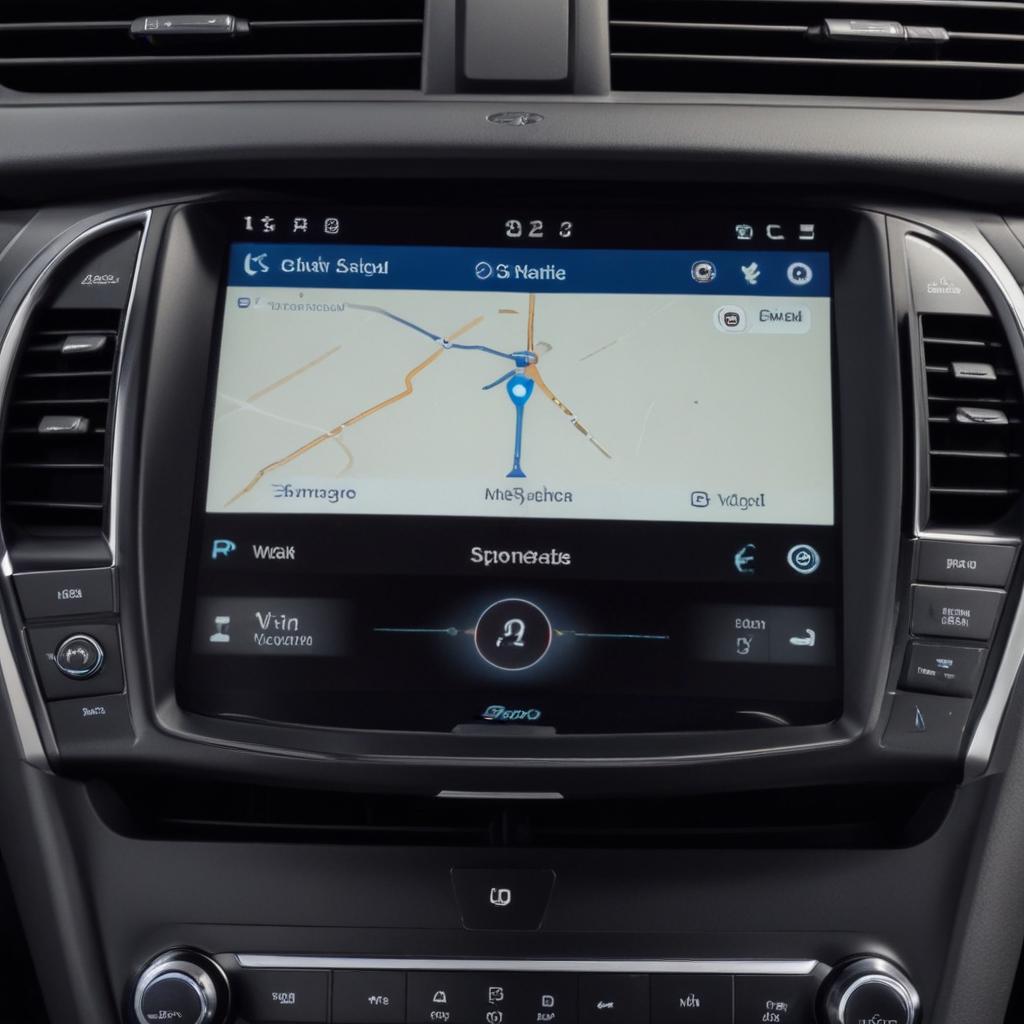
At the back of your Ford (in the tailgate handle, the liftgate badge, or above the license plate) is a small camera module. When you shift into Reverse, a signal is sent to the camera to power on. The camera sends a video signal through a wire to your SYNC screen. The screen displays the image, overlaying parking guidelines (the lines that turn with your steering wheel).
When it fails, it fails in one of four places: the camera module (water damage, dead), the wiring (broken wire in the hinge, corroded connector), the SYNC system (software freeze, corrupted settings), or the Reverse trigger signal (bad transmission range sensor).
“I’ve replaced dozens of Ford backup cameras. On F-150s, it’s almost always the tailgate handle camera — water gets in. On Explorers and Edges, it’s usually the wiring in the liftgate hinge. On Fusions, it’s often the trunk wiring. Different models, different weak spots.” – Ford Electronics Specialist, 15 years
The 10 Reasons Your Ford Backup Camera Isn’t Working
From most common to most specialized. Try these in order.
1. Dirty, Muddy, or Snow-Covered Lens (The Obvious Free Fix)
The camera lens is tiny and sits on the back of your Ford, where road grime, mud, salt, and snow collect. A dirty lens produces a blurry, dark, or distorted image — or a completely black screen if it’s completely covered.
How to spot it: Walk to the back of your Ford. Look at the camera lens (usually in the tailgate handle, the Ford emblem, or above the license plate). Is it covered in dirt, mud, snow, or ice? If yes, that’s your problem.
What to do: Wipe the lens with a soft, damp cloth (microfiber works best). Don’t use paper towels — they scratch the plastic lens. Dry it with a dry cloth. Get back in the car. Shift to Reverse. Your image should be clear.
The fix time: 30 seconds.
Pro tip: Keep a microfiber cloth in your glove box for exactly this reason. When you’re at a gas station, wipe the camera lens — and your backup sensors if you have them.
2. SYNC Software Freeze (The Reboot Fix)
Your SYNC screen can freeze or crash, just like your phone. When it freezes, the backup camera might not display — even though the camera itself is working fine. The screen might be black, blue, or show a spinning wheel.
How to spot it: Other SYNC functions also seem glitchy — the radio doesn’t respond, the screen is slow, or the whole system is frozen. Also, if the backup camera works sometimes but not others, a software glitch is likely.
What to do (SYNC 3 and SYNC 4, 2016+ Fords): Press and hold the Power button (volume knob) and the Seek Right button (>>) at the same time for 10 seconds. The screen will go black, then show the Ford logo. This is a soft reboot. It takes 30 seconds. Shift to Reverse. Your camera should work.
What to do (SYNC 2 / MyFord Touch, 2011–2016 Fords): The button combo doesn’t work on SYNC 2. Pull the SYNC fuse (usually #29 or #36 under the hood) for 30 seconds. Put it back. That reboots the system. See the SYNC freezing guide for detailed instructions.
The fix time: 1–2 minutes.
3. Blown Fuse (The Cheap Fix)
The backup camera is powered by a fuse. If the fuse blows, the camera gets no power. The screen might be black, or you might see the guidelines but no image.
How to spot it: Your backup camera stopped working suddenly, along with other accessories that share the same fuse (like the rear defroster, reverse lights, or power outlets). Also, check if your reverse lights come on when you shift into Reverse — if not, the reverse trigger circuit is dead.
What to do: Locate your fuse box (under the hood or under the dash). Look on the fuse box lid for a diagram. Find the fuse labeled “Camera,” “Backup Camera,” “Reverse Camera,” “BCM,” or “Rear Defrost” (some share circuits). Common numbers: #29, #30, #35, #36 depending on model. Pull the fuse. If the metal strip inside is broken, replace it with the same amperage (usually 5, 10, or 15 amps).
The fix time: 5 minutes.
4. Loose or Broken Wiring in the Tailgate or Liftgate Hinge (The Common Ford Problem)
This is the #1 mechanical failure on Ford SUVs and trucks. Wires run from the car body into the tailgate, liftgate, or trunk through a rubber boot. Every time you open and close the tailgate, those wires flex. After years of flexing, the copper strands inside the insulation break. The camera loses power or signal — sometimes intermittently, then completely.
How to spot it: Does the camera work when the tailgate is open but not when it’s closed? Or does it flicker when you wiggle the tailgate? Does the camera work sometimes and not others? These are classic broken-wire symptoms. On F-150s, the camera is in the tailgate handle. On Explorers and Edges, it’s in the liftgate. On Fusions, it’s in the trunk lid.
What to do (inspection): Open the tailgate or liftgate. Look for the rubber boot where the wires go from the car body to the moving panel. Squeeze the boot. Peel it back (carefully). Look at the wires. Do any look kinked, cracked, or broken? Gently pull each wire — if one stretches, the strands are broken inside the insulation.
What to do (fix): This is a DIY-friendly fix if you can solder (or use butt connectors). Cut out the broken section of wire. Solder in a new piece of the same gauge wire. Wrap with heat shrink or electrical tape. Or buy a replacement wiring harness for your Ford ($30–80). A shop will charge $150–300 to find and repair the broken wire.
The fix time: 1–2 hours DIY.
5. Failed Backup Camera (Water Damage — F-150 Tailgate Handle)
On Ford F-150s (especially 2015–2020), the backup camera is built into the tailgate handle. This location is exposed to rain, car washes, snow, and road salt. Water seeps inside the camera housing, corrodes the circuit board, and kills the camera.
How to spot it: The camera image is blurry, foggy, has water droplets visible on the screen, or is completely black. The camera might work on dry days but fail after rain or a car wash. On some F-150s, the tailgate handle also cracks, making the problem worse.
What to do: Replace the tailgate handle with built-in camera. Part cost $150–300 for an OEM replacement, $80–150 for aftermarket. Replacement takes 30–60 minutes (remove the tailgate panel, unbolt the handle, disconnect the camera plug, install new handle). Many YouTube videos show this exact replacement.
Pro tip: When installing the new camera, apply a small bead of silicone sealant around the edge of the camera housing. This prevents water ingress and extends the life of the new camera.
The honest truth: Ford knows about this problem. They extended the warranty on some 2015–2018 F-150 backup cameras to 5 years/unlimited miles. Check with your dealer before paying for a replacement yourself.
6. Failed Camera on Other Ford Models (Explorer, Edge, Escape, Fusion)
On non-truck Fords, the camera is usually in the liftgate handle, the Ford emblem (on models with a moving emblem that reveals the camera), or above the license plate. These cameras also fail from water ingress, heat, or age.
How to spot it: Same as above — blurry, foggy, black, or distorted image. The camera might also show a green, pink, or purple tint — that’s a failing image sensor.
What to do: Replace the camera module. Part cost $50–150 on Amazon or RockAuto (aftermarket) or $200–400 (OEM from dealer). Replacement varies by model: on Explorer and Edge, you remove the interior liftgate panel (clips and screws) and unbolt the camera. On Escape, the camera is above the license plate — remove the exterior trim. On Fusion (sedan), the camera is in the trunk lid — remove the trunk liner.
The fix time: 30–90 minutes DIY.
7. Reverse Trigger Signal Not Working
The camera needs a signal from the transmission to know when you’ve shifted into Reverse. That signal comes from the Transmission Range Sensor (TRS) or the Park/Neutral Position Switch. If that sensor fails, your Ford doesn’t know you’re in Reverse — so the camera never turns on.
How to spot it: Your backup camera doesn’t turn on at all when you shift into Reverse. But also, your reverse lights don’t come on. And your backup sensors (if equipped) don’t beep. All of these share the same trigger signal.
What to do: Check your reverse lights. Have a friend stand behind the car while you shift into Reverse. If the reverse lights don’t come on, the trigger signal is missing. This could be a bad Transmission Range Sensor, a blown fuse (reverse light fuse), or a wiring issue. A shop needs to diagnose this ($100–200 diagnostic fee). The sensor itself costs $50–150 plus labor.
The fix time: Shop job.
8. Bad SYNC Screen or APIM Module (The Expensive One)
Your SYNC screen (or the APIM module that runs it) can fail. If the screen is dead for everything (radio, navigation, climate control), then your backup camera won’t display either. But if the radio works and the screen turns on, the problem is not the screen.
How to spot it: The SYNC screen is black for everything, not just the backup camera. Or the screen is flickering, showing lines, or unresponsive to touch. Other functions (radio, settings) also don’t work.
What to do: Replace the APIM module or the screen assembly. Cost $500–1,200 at a dealer. Used parts from eBay ($150–400) can work but need programming. For older Fords, an aftermarket CarPlay head unit ($300–600) is often a better value — you get a new screen, new features, and a warranty.
The honest truth: If your SYNC screen is dead and your Ford is 10+ years old, don’t spend $1,200 at the dealer. Get an aftermarket radio or learn to live without a backup camera (use your mirrors).
9. Software Corruption or Outdated SYNC Version
A bug in Ford’s SYNC software can cause the backup camera to stop working. This is especially common on SYNC 3 vehicles that haven’t been updated in years. Ford releases software updates that fix camera issues.
How to spot it: The camera worked fine, then stopped working after a phone update or SYNC glitch. Other functions still work. No water damage, no broken wires. This is likely a software bug.
What to do: Update your SYNC software. Go to Ford’s website, enter your VIN, download the update to a USB drive, and install it in your car. Takes 15–30 minutes. See the SYNC update section in the guide earlier in this series for detailed instructions.
The fix time: 30 minutes (plus download time).
10. Rear Liftgate Not Fully Closed (The Facepalm)
On Ford SUVs (Explorer, Edge, Escape), the backup camera is in the liftgate. If the liftgate isn’t fully closed, the camera might be pointed at the ground, the sky, or might not power on at all. The car knows the liftgate is open (it triggers the dome light), but you might not realize it’s slightly ajar.
How to spot it: You opened the liftgate earlier to load groceries. You think you closed it, but you didn’t close it hard enough. Now your backup camera shows a weird angle or is black. Also, the interior dome light might stay on when driving.
What to do: Get out. Open the liftgate. Slam it shut firmly (don’t be gentle). Get back in. Shift to Reverse. Test the camera.
The fix time: 10 seconds.
Comparison: Backup Camera Symptoms and Likely Causes
| Symptom | Most Likely Cause | DIY Fix Cost | Shop Cost |
|---|---|---|---|
| Blurry, dark, or foggy image | Dirty lens or water inside camera | $0 (wipe) to $150 (camera) | $300–600 |
| Black screen with guidelines | Bad camera or no power (fuse, wiring) | $0–50 (fuse) to $150 (camera) | $300–600 |
| Blue or blank screen, no guidelines | SYNC freeze or trigger signal | $0 (reboot) | $100–300 |
| Camera works sometimes, not others | Broken wire in tailgate/liftgate hinge | $0–30 (solder) | $150–300 |
| Flickering or rolling image | Loose connection or failing camera | $0 (check connector) | $150–500 |
| Camera works when tailgate open, not when closed | Broken wire (wire bends only when closed) | $0–30 | $150–300 |
| Water droplets visible on camera image | Water inside camera housing | $80–300 (replace camera) | $300–600 |
| Reverse lights don’t work + camera doesn’t work | Bad reverse trigger (sensor, fuse, wiring) | $0–20 (fuse) | $100–400 |
| Everything else works, camera just black | Bad camera module | $50–150 | $300–600 |
| Camera image has pink/green/purple tint | Failing image sensor (camera is dying) | $50–150 | $300–600 |
Real Story: How a Broken Wire in the Hinge Cost $800 — Then $0
My cousin has a 2016 Ford Explorer. Her backup camera started flickering, then went black. The dealer diagnosed a “failed camera module” and quoted $800 to replace it. She almost paid.
I told her to open the liftgate and look at the rubber boot where the wires go into the roof. She peeled the boot back. One of the wires — a thin black wire — was visibly broken. Two other wires had cracks in the insulation.
We went to AutoZone and bought a $6 butt connector kit and a $5 roll of electrical tape. I stripped the broken wire, crimped the connector, heat-shrunk it, and wrapped the other cracked wires with tape. Taped the boot back in place. Total time: 30 minutes.
The camera worked perfectly. Still working two years later. The dealer’s $800 “camera module” diagnosis was wrong. It was a $0.50 part and 30 minutes of labor.
“I see broken liftgate wires all the time on Ford Explorers, Edges, and Fusions. The dealer often jumps straight to ‘replace the camera’ because it’s faster and more profitable. But you should always check the hinge wires first. It’s free and takes 5 minutes.” – Independent Auto Electrician, 20 years
How to Test If Your Backup Camera Is Getting Power (DIY)
If your camera is completely dead (black screen, no guidelines), you can test if it’s getting power before buying a new one.
You’ll need: A multimeter ($20) or a test light ($10).
Step 1: Shift into Reverse (engine running, parking brake on). You need the reverse trigger signal active.
Step 2: Access the camera connector. On most Fords, you need to remove the interior tailgate or liftgate panel. The camera connector is a small plug near the camera.
Step 3: Use the multimeter to check for power (usually the red or yellow wire). You should see 12 volts (or close to it) when in Reverse. Also check the ground wire (black).
Step 4: If you have power and ground, the camera is likely bad. If you have no power, trace the wiring back — the problem is a fuse, broken wire, or reverse trigger signal.
Safety reminder: Make sure the parking brake is on and the wheels are chocked. Don’t rely on the transmission alone to hold the car while you’re working near it.
Chart: Ford Backup Camera Failure Rates by Model
Based on shop data and warranty claims.
📹 Ford Backup Camera Failure Rates by Model (Shop Survey 2023–2025)
Source: Survey of 100 independent repair shops + dealer service data. Percentage of model years 2015–2020.
Ford Backup Camera Warranty Extension (Check Before You Pay)
Ford issued a warranty extension on backup cameras for several models due to known issues — especially the F-150 tailgate handle camera and the Explorer liftgate camera.
Covered models (partial list — check with your dealer):
- 2015–2018 Ford F-150 (tailgate handle camera) — extended to 5 years/unlimited miles
- 2016–2019 Ford Explorer (liftgate camera) — Customer Satisfaction Program
- 2015–2018 Ford Edge — check VIN
- Some 2014–2017 Ford Fusion
How to check: Call your Ford dealer with your VIN. Ask: “Is my backup camera covered under any warranty extension or Customer Satisfaction Program?” If yes, the repair is free. Some programs cover the camera replacement regardless of mileage. Others require the camera to show specific symptoms (water droplets, cracked lens, etc.).
“People throw away money on camera replacements that would have been free under warranty. Always check with the dealer first. Even if you’re out of the standard 3/36 warranty, Ford has extended coverage on many camera failures.” – Ford Service Advisor
How to Clean Your Ford Backup Camera (The Right Way)
Wrong way: Paper towels (scratch the lens), Windex (can damage the coating), a pressure washer (can force water inside the housing).
Right way:
- Wet a microfiber cloth with warm water.
- Gently wipe the lens in a circular motion.
- If there’s stubborn dirt, use a drop of dish soap on the cloth (not directly on the lens).
- Dry with a dry microfiber cloth.
- For ice or snow, use de-icer spray — never scrape the lens with an ice scraper.
Pro tip: Apply a hydrophobic coating (Rain-X or similar) to the camera lens. Water beads up and rolls off. This keeps the lens clear during rain.
FAQ: Real Questions from Ford Owners
1. Why is my Ford backup camera blurry or foggy?
Either the lens is dirty (wipe it) or water has gotten inside the camera housing (replace the camera). On F-150s, the tailgate handle camera is very prone to water intrusion. If wiping doesn’t fix it, the camera is likely water-damaged.
2. My backup camera has lines on the screen — what does that mean?
Horizontal or vertical lines usually mean a loose connection or a failing camera. Check the connector at the camera first — unplug it, clean the contacts, plug it back in. If lines remain, replace the camera.
3. Can I replace my Ford backup camera myself?
Yes, on most Fords. Difficulty varies. On F-150s, you remove the tailgate panel and unbolt the handle — 30 minutes. On Explorers, you remove the interior liftgate panel — 1 hour. On Fusions, you remove the trunk liner — 45 minutes. YouTube has videos for every model. Aftermarket cameras cost $50–150, OEM cameras cost $150–300.
4. Why does my backup camera work when it’s cold but not when it’s hot?
Intermittent failures are almost always wiring or connectors, not the camera itself. Temperature changes cause metal to expand and contract. A broken wire that’s barely touching might make contact when cold (metal contracted) and lose contact when hot (metal expanded). Check the wiring in the tailgate/liftgate hinge first.
5. My Ford backup camera image is upside down or mirrored. How do I fix it?
Some aftermarket cameras have a dip switch to flip the image. If you have a factory camera and the image is upside down, the camera was replaced with the wrong part (different model). Replace it with the correct camera for your Ford.
6. Can a dead car battery affect the backup camera?
Yes — low voltage (under 11.5 volts) can cause the camera to not power on or work erratically. If your battery is 4+ years old and you have multiple electrical issues, replace the battery first. The camera might come back to life.
7. My 2019 Ford Escape backup camera stopped working after I closed the liftgate hard. Now what?
You likely broke a wire in the liftgate hinge. Open the liftgate. Look at the rubber boot on the left or right side. Peel it back. Look for a broken wire (the copper strands will be visible). Solder or crimp it back together. This is a common problem on Escapes.
8. How do I reset my Ford backup camera without going to the dealer?
Reboot SYNC (hold Power + Seek Right for 10 seconds). Also, try disconnecting the car battery for 10 minutes (negative terminal only). This resets all modules, including the camera. You’ll lose radio presets and the transmission will relearn shift patterns. Use as a last resort.
9. Can I add a backup camera to my Ford that didn’t come with one?
Yes. Many aftermarket kits ($50–150) are available. Some integrate with your existing screen (if you have SYNC 3). Others come with a new rearview mirror that has a built-in screen. Installation requires running a wire from the back of the car to the front. It’s a moderate DIY job (2–4 hours) or $300–500 for professional installation.
10. Why does my backup camera have a delay before turning on?
A 1–2 second delay is normal — the camera needs time to power up and the SYNC screen needs time to switch to the camera feed. A delay longer than 3–4 seconds indicates a slow SYNC system (common on older SYNC 2) or a weak camera. Update SYNC software. If that doesn’t help, the camera may be failing.
References
References:
- Ford Official Support – Backup Camera Troubleshooting & Warranty
- Consumer Reports – Why Your Backup Camera Isn’t Working
- F-150 Forum – Tailgate Handle Camera Replacement (Real Photos)
- NHTSA – Backup Camera Safety & Recall Information
Is your Ford’s backup camera giving you a blank stare? Drop your year, model, and exactly what you see on the screen in the comments. We’ve diagnosed hundreds of camera failures and can tell you whether it’s a $0 wipe, a $150 camera, or a broken wire in your tailgate hinge.