Charging at Home: The Best Setup for Your Ford EV
Picture this: You pull into your garage after a long day, plug in your F-150 Lightning like you’re charging your phone, and wake up the next morning to a full battery — no gas station stops, no detours, just pure convenience. That’s the EV life, but only if you’ve got the right charging setup at home.
Building Your Home Charging Station
Setting up home charging isn’t rocket science, but there’s definitely a right way and a wrong way to do it. Ford EVs can charge on regular household outlets, but that’s like filling a swimming pool with a garden hose — technically possible, just painfully slow. Let’s talk about what actually works for real-world driving.
Understanding Your Charging Options
You’ve got three basic charging levels to choose from, and each serves a different purpose. Level 1 charging uses your standard 120-volt wall outlet. It’s the slowest option, adding only 3-5 miles of range per hour. That might work if you barely drive, but for most people, it’s just not practical.
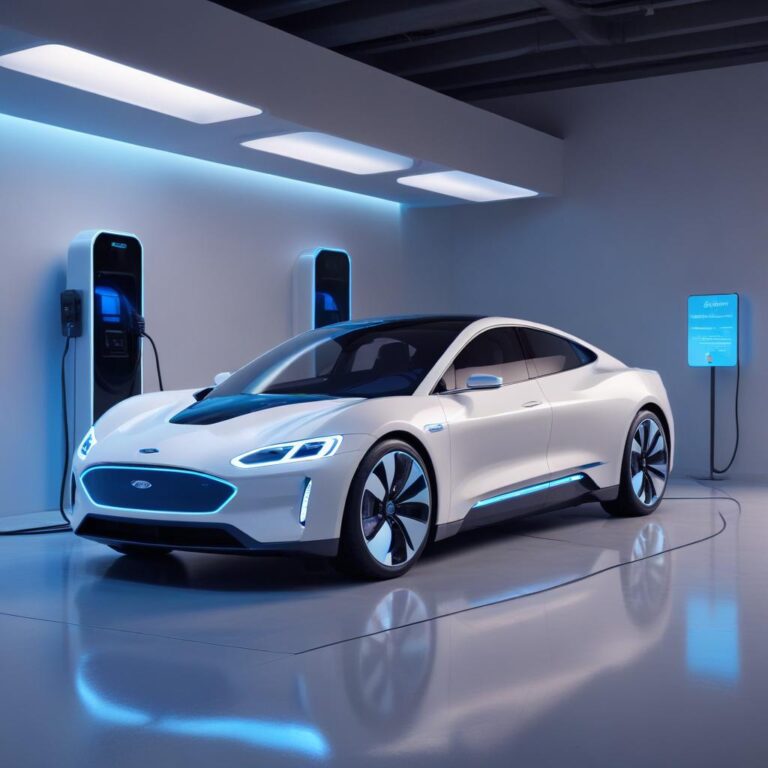
Level 2 charging is where the magic happens. These 240-volt setups are the same voltage as your electric dryer or oven. They add 15-30 miles of range per hour depending on the charger’s power output. This means a completely dead Mustang Mach-E can fully charge overnight while you sleep. It’s the sweet spot for home charging.
DC Fast Charging (Level 3) is what you find at public charging stations along highways. These monsters can add 50-100 miles in just 10 minutes, but they’re expensive to install at home and most residential electrical systems can’t even support them. Unless you’re running a commercial fleet, forget about DC fast charging at home.
“The best charging setup is the one you’ll actually use every day. Simple, reliable, and fast enough to match your driving routine.”
Picking the Right Charger for Your Ford
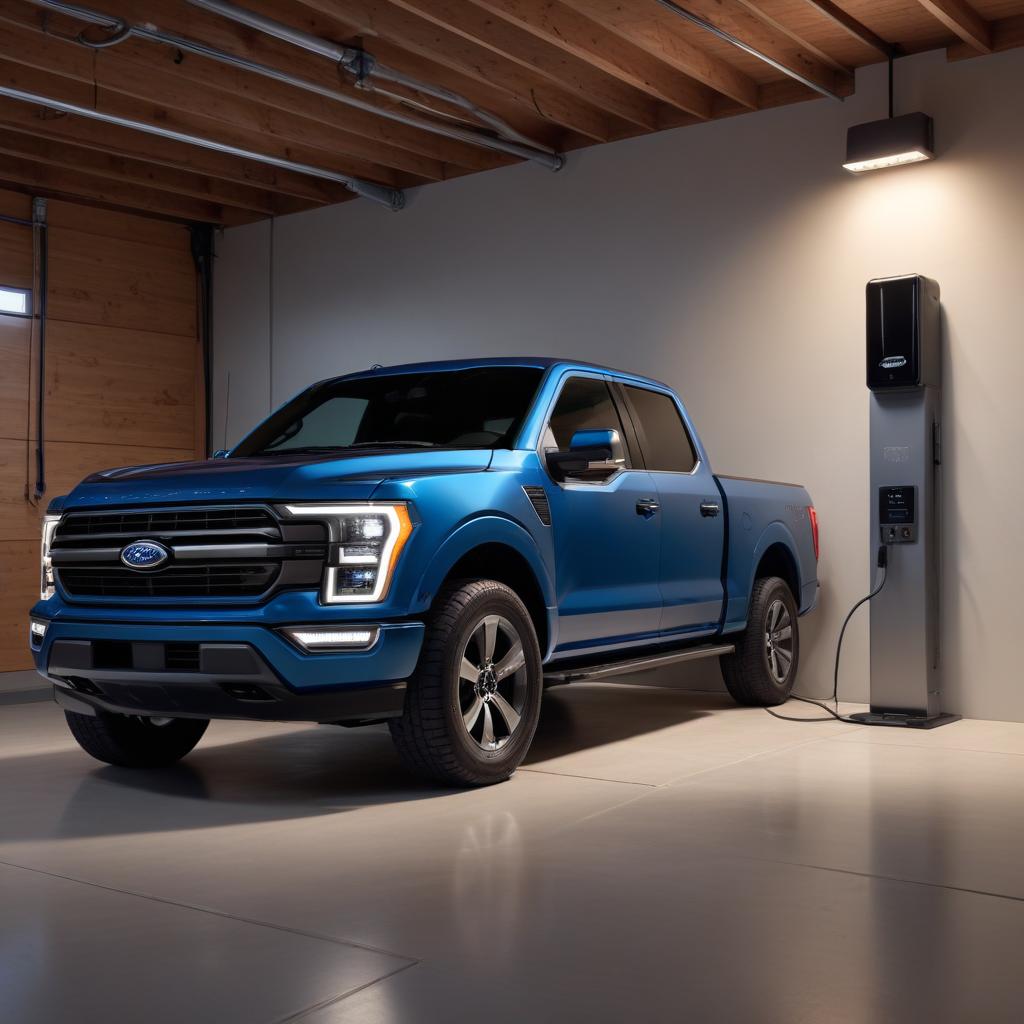
Ford makes this decision easier with the Ford Charge Station Pro. It’s specifically designed for Ford EVs and pumps out 80 amps of power — the maximum the F-150 Lightning can accept. That translates to about 30 miles of range per hour. Your truck goes from empty to full in roughly 8 hours.
For Mustang Mach-E or Escape Plug-In Hybrid owners, you don’t need quite that much power. A 48-amp charger handles these vehicles perfectly, adding about 25 miles per hour. Popular options include the ChargePoint Home Flex, Grizzl-E, and JuiceBox 48. They’re all reliable, weather-resistant, and work with Ford’s FordPass app for monitoring.
Here’s something most people don’t know: All Ford EVs come with a Ford Mobile Charger that works on both 120V and 240V outlets. If you’ve already got a 240V outlet in your garage (maybe for a welder or air compressor), you might not need to buy anything extra. Just plug in and charge at about 17 miles per hour.
Comparing Home Charging Solutions for Ford EVs
<div style=”overflow-x: auto;”>
| Charger Model | Power Output | Charge Speed (Mach-E) | Charge Speed (F-150) | Smart Features | Price Range |
|---|---|---|---|---|---|
| Ford Charge Station Pro | 80 amps / 19.2 kW | 28 mph | 30 mph | WiFi, Intelligent Backup Power | $1,310 |
| ChargePoint Home Flex | 50 amps / 12 kW | 23 mph | 25 mph | WiFi, App control, Scheduling | $699 |
| Grizzl-E Classic | 40 amps / 9.6 kW | 20 mph | 22 mph | Hardwired, Heavy-duty | $419 |
| JuiceBox 48 | 48 amps / 11.5 kW | 22 mph | 24 mph | WiFi, Voice control, Solar integration | $629 |
| Ford Mobile Charger | 32 amps / 7.7 kW | 17 mph | 18 mph | Dual voltage 120V/240V | Included with vehicle |
</div>
mph = miles of range added per hour of charging
The table reveals something important — even “slower” Level 2 chargers are plenty fast for overnight charging. If you drive 40 miles daily, a 20 mph charger refills your battery in just 2 hours. You’ve got all night.
Electrical Requirements: What Your Home Needs
Before buying any charger, you need to check your electrical panel. Most homes have either 100-amp or 200-amp service. You can find this number on the main breaker in your electrical panel. A 200-amp panel easily handles any home charger. A 100-amp panel might need an upgrade, especially if you’re installing an 80-amp charger.
Each charger needs its own dedicated circuit on a breaker that’s 25% larger than the charger’s rating. So an 80-amp charger requires a 100-amp breaker. A 48-amp charger needs a 60-amp breaker. This is basic electrical code stuff — your electrician will know all this.
The distance from your panel to your garage matters too. Longer wire runs cost more and might require thicker gauge wire. If your panel is on the opposite side of the house from your garage, expect to pay extra. Always hire a licensed electrician for installation — this isn’t a DIY project unless you’re already a certified electrician.
Installation Costs Across Different Home Setups
Smart Charging Features Worth Having
Modern chargers aren’t just fancy extension cords — they’re connected devices with features that actually save you money. Scheduled charging lets you set your charger to only work during off-peak hours when electricity is cheapest. In some areas, that’s 30-50% savings right there.
Load management is another game-changer. If your electrical panel is maxed out, some chargers can automatically reduce power when your home is using lots of electricity (like when the AC and dryer are running), then ramp back up when demand drops. No breaker trips, no problems.
The Ford Charge Station Pro has a killer feature called Intelligent Backup Power. When paired with an F-150 Lightning equipped with the extended range battery, your truck becomes a whole-house backup generator during power outages. It automatically switches over and can power your entire home for 3-10 days depending on your usage. That’s not just convenient — it’s potentially life-saving during emergencies.
Real-World Installation Stories
Let’s talk about what actually happens when you install a charger. Most installations take 2-4 hours. The electrician mounts the charger on your garage wall (ideally near where you park), runs the wire back to your electrical panel, installs the breaker, and tests everything.
Tom in Michigan installed a ChargePoint Home Flex for his Mach-E. His panel was in the garage already, so the wire run was only 15 feet. Total cost: $1,150 including the charger and installation. Pretty straightforward.
Sarah in Florida had a trickier situation. Her panel was on the far side of her house, requiring a 75-foot wire run through her attic. She also needed a panel upgrade to 200 amps. Her total: $3,400. Ouch. But her utility offered a $500 rebate, bringing it down to $2,900.
The lesson here? Get quotes from at least three licensed electricians. Prices vary wildly based on experience and how busy they are. And always ask about permits — most jurisdictions require them for this kind of work.
Finding Rebates and Incentives
Here’s where it gets interesting. You’re not paying full price if you’re smart about it. The federal tax credit covers 30% of both equipment and installation costs up to $1,000. So if your total is $2,500, you get $750 back when you file taxes.
Many states and utilities pile on additional incentives. California offers up to $800. Colorado gives $1,300. Massachusetts goes up to $1,500. These stack with the federal credit. Check the Database of State Incentives for Renewables & Efficiency (DSIRE) website for your specific location.
Some utility companies also offer special EV electricity rates. They’ll install a separate meter for your charger and charge you way less per kilowatt-hour during off-peak times. In some states, this cuts your charging costs in half. Programs like DTE Energy’s EV rate in Michigan or PG&E’s EV2-A plan in California are worth investigating.
Apartment and Condo Charging Solutions
Don’t have a garage? You’re not out of luck, but it’s more complicated. If you rent, talk to your landlord about installing a charger in your parking spot. Some states have “right to charge” laws requiring landlords to allow EV charger installation (you usually pay for it).
For condos, you’ll need approval from your homeowners association. Present it as adding value to the property — buildings with EV charging attract better tenants and higher property values. Offer to handle all costs and permits yourself.
If that doesn’t work, look into portable Level 2 chargers that plug into existing 240V outlets. Some parking garages already have these for RVs or power tools. Not ideal, but better than nothing.
Frequently Asked Questions
Q: Can I just use public charging instead of installing a home charger?
Technically yes, but it’s way less convenient and usually more expensive. Public DC fast charging costs $0.40-0.60 per kWh versus $0.10-0.15 per kWh at home. For an F-150 Lightning with a 131 kWh battery, that’s $52 to fully charge publicly versus $13-20 at home. Plus, you’re spending 30-45 minutes at charging stations instead of just plugging in at home.
Q: How much does charging at home increase my electric bill?
For most drivers covering 12,000 miles annually, expect an extra $40-60 per month. That’s still way cheaper than gas. A gas F-150 getting 20 mpg would cost $200-300 monthly in fuel at $4/gallon. You’re saving $150-250 every single month. The charger installation pays for itself in under a year for most people.
Q: Should I hardwire my charger or use a plug?
Both work fine. Hardwired installations are slightly cleaner looking and can’t be unplugged accidentally. Plug-in chargers (using a NEMA 14-50 outlet) are easier to replace if they break and can be unplugged if you’re doing garage work. Hardwired is often required by code for chargers over 50 amps. Your electrician will advise what makes sense.
Q: What if my HOA won’t approve a charger installation?
Check if your state has right-to-charge laws. At least 13 states have laws limiting HOA ability to restrict EV charger installation. Document everything in writing and cite the specific laws. If they still refuse, you might need to get legal advice. Some EV owners have successfully argued that HOA restrictions violate accessibility or environmental laws.
Q: Can I charge in the rain or snow?
Absolutely. All Level 2 chargers are weatherproof with NEMA 3R or 4 ratings for outdoor use. The charging port on Ford EVs is sealed. You can safely charge in any weather. Just make sure the charger itself is properly installed with the cable management that keeps the connector off the ground when not in use. Never use damaged charging cables or connectors.
Q: Do I need WiFi-enabled chargers or are basic ones fine?
Basic chargers work great if you just want to plug in and charge. Smart chargers with WiFi let you schedule charging, monitor energy usage, get notifications when charging completes, and sometimes qualify for additional utility rebates. The FordPass app already tracks your charging, so a smart charger adds convenience but isn’t essential. Depends on your budget.
Q: How often do home chargers break or need maintenance?
Rarely. Most chargers have zero moving parts and are built to last 10+ years. Keep the connector clean and dry when stored. Occasionally check for frayed cables. That’s it. Many manufacturers offer 3-year warranties. The ChargePoint Home Flex even has a cable management system that protects the connector from garage door accidents.
Q: Can I install a charger if I have solar panels?
Yes, and it’s an awesome combination. Your solar panels generate electricity during the day, and you can schedule your Ford to charge when the sun’s shining, effectively driving on sunshine. Some chargers like the JuiceBox specifically integrate with solar systems to maximize use of your own generated power. This takes your fuel cost to essentially zero.
The Bottom Line
Installing a home charger is the single best investment you can make as an EV owner. The convenience alone is worth it — never visiting a gas station again feels surprisingly liberating. Add in the cost savings, rebates, and potential backup power capabilities, and it’s a no-brainer.
Start by checking your electrical panel capacity and measuring the distance to where you park. Get quotes from three electricians. Research your local rebates. Then pick a charger that matches your Ford’s capabilities and your daily driving needs.
Most people go with a 48-amp Level 2 charger and are perfectly happy. F-150 Lightning owners who want the fastest possible charging and backup power should seriously consider the Ford Charge Station Pro. Either way, you’ll be plugging in at night and waking up to a full battery every morning.
The EV charging infrastructure is only getting better. But your home charger will always be the foundation of your charging routine — convenient, cheap, and always available.
What’s your home charging situation like? Already installed, or still planning? Share your experience or questions in the comments below!
References
- Ford EV Charging Guide: www.ford.com/support/how-tos/electric-vehicles/charging
- Database of State Incentives for Renewables & Efficiency: www.dsireusa.org
- U.S. Department of Energy Alternative Fuels Data Center: afdc.energy.gov
- National Electric Code Requirements: www.nfpa.org