F-150 Lightning Review: Real-World Range and Charging Costs
Ever pull up to a gas station and think, “What if I never had to do this again?” That’s the promise Ford’s making with the F-150 Lightning — an electric truck that looks like your neighbor’s work horse but runs on batteries instead of gasoline. Let’s dig into what it’s really like to own one, from highway range to what you’ll actually spend on electricity.
The F-150 Lightning: America’s Truck Goes Electric
Ford didn’t reinvent the wheel here, and that’s exactly the point. The Lightning keeps the F-150’s body-on-frame design, the same capable bed, and that familiar truck feel. But under the hood? That’s where things get interesting.
Dual Motors and Instant Torque: What Makes It Move
The Lightning packs dual electric motors — one for each axle — delivering power that’ll surprise even die-hard V8 fans. The standard battery gives you 452 horsepower, while the extended-range battery bumps that to 580 hp. But here’s what really matters: you get 775 lb-ft of torque instantly. No waiting for the engine to spool up. You press the pedal, and the truck just goes.
Zero to sixty happens in around 4.0 seconds with the extended battery — faster than most sports cars from a decade ago.
Real-World Range: The Numbers That Actually Matter
Ford says the extended-range battery gets 320 miles on a full charge. In real life? It depends on how you drive and what you’re hauling.
Highway driving at 70 mph eats battery faster — expect around 230-250 miles. The truck’s shape isn’t exactly aerodynamic, and wind resistance matters more with EVs. City driving is where the Lightning shines, though. Regenerative braking helps you recover energy, and you might even beat the EPA estimate in stop-and-go traffic.
Towing drops that range significantly. Hook up a 5,000-pound trailer, and you’re looking at roughly 150-180 miles. That’s still enough for most weekend trips, but cross-country towing isn’t this truck’s strength yet.
“The F-150 Lightning proves you don’t need to sacrifice capability for sustainability — just plan your charging stops like you’d plan gas stops with a heavy load.”
Charging Costs: What You’ll Really Spend
This is where electric trucks get interesting for your wallet. Electricity costs way less than gasoline, but the math changes based on where and how you charge.
Home Charging: The Cheapest Option
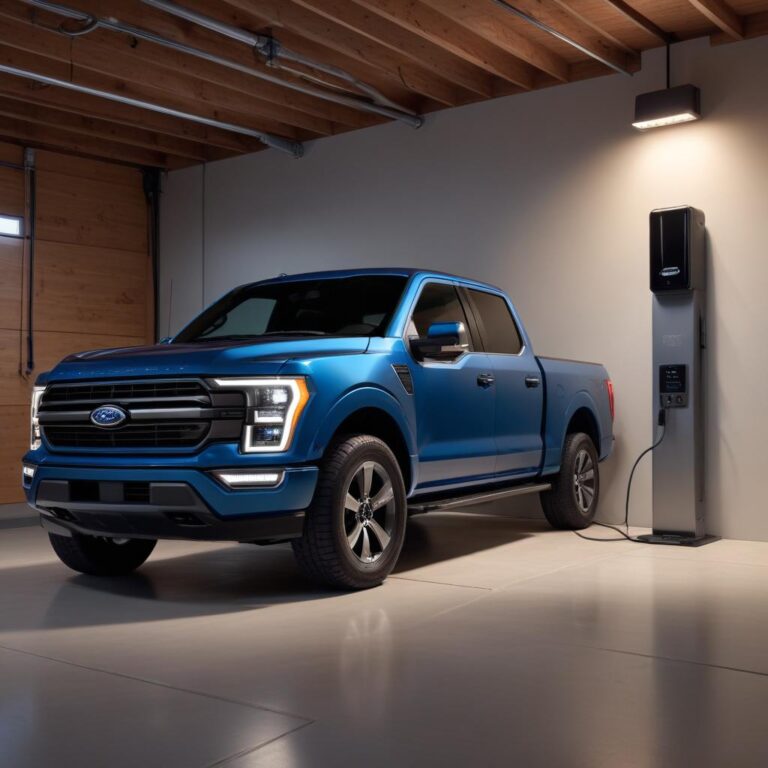
Most Lightning owners charge at home overnight. With a 240-volt Level 2 charger, you can go from 15% to 100% in about 8-10 hours with the extended battery.
The national average for electricity is around $0.16 per kWh. The extended battery holds 131 kWh, so a full charge costs roughly $21. That same range in a gas F-150 getting 20 mpg would cost about $64 with gas at $4 per gallon. You’re saving about two-thirds on fuel costs.
Some states like California charge more for electricity (around $0.30/kWh), while places like Louisiana might only charge $0.10/kWh.
Public Fast Charging: Convenient but Pricier
When you’re on the road, DC fast charging can add 54 miles of range in just 10 minutes. But it costs more — usually $0.40 to $0.60 per kWh at commercial stations. A full charge might run you $50-$70, which starts looking similar to gas prices.
Ford includes access to the Tesla Supercharger network with an adapter, which opens up thousands more charging spots. Those rates vary but typically fall around $0.35-$0.45/kWh.
Always check your route for charging stations before long trips, especially in rural areas.
The Hidden Savings
Beyond fuel costs, the Lightning saves money on maintenance. No oil changes, no transmission fluid, no spark plugs. Brake pads last longer thanks to regenerative braking. Ford estimates you’ll save about $1,000 per year compared to maintaining a gas F-150.
How the Lightning Compares to Other Electric Trucks
| Model | Range (EPA) | Horsepower | 0-60 mph | Towing Capacity | Starting Price |
|---|---|---|---|---|---|
| Ford F-150 Lightning | 240-320 miles | 452-580 hp | 4.0 sec | 10,000 lbs | $62,995 |
| Rivian R1T | 270-410 miles | 533-835 hp | 3.0 sec | 11,000 lbs | $73,000 |
| Chevrolet Silverado EV | 400+ miles | 510-754 hp | 4.5 sec | 10,000 lbs | $57,095 |
| GMC Hummer EV | 329 miles | 830 hp | 3.3 sec | 7,500 lbs | $98,845 |
| Tesla Cybertruck | 250-340 miles | 600-845 hp | 2.6 sec | 11,000 lbs | $79,990 |
The Lightning sits right in the middle for price and performance. It’s not the fastest or longest-range, but it’s the most familiar — and for truck buyers, that matters.
Electric Truck Range Comparison
Living with the Lightning: The Practical Stuff
Pro Power Onboard
Here’s something gas trucks can’t do: the Lightning’s Pro Power Onboard system turns your truck into a mobile generator. The extended battery provides 9.6 kW of exportable power — enough to run your entire house for three days during a blackout. Contractors use it to power tools on job sites without lugging a generator.
Frunk Space
No engine means Ford added a 14.1 cubic foot front trunk (frunk) with drainage plugs. You can literally fill it with ice and use it as a cooler. It’s also where you’ll store charging cables and keep valuables locked away from the open bed.
Software Updates
Like a smartphone, the Lightning gets over-the-air updates that can improve performance, add features, or fix bugs. Ford’s already pushed updates that improved charging speeds and cold-weather range.
Frequently Asked Questions
How long does it take to charge an F-150 Lightning at home?
With a 240-volt Level 2 home charger, the extended-range battery charges from empty to full in about 8-10 hours. Most people plug in at night and wake up to a full charge. A standard 120-volt outlet would take days — you really need the Level 2 setup.
What happens to the range in cold weather?
Cold temperatures reduce battery efficiency. Expect to lose 20-40% of your range when it’s below freezing, especially if you’re using the heater. Pre-conditioning the cabin while plugged in helps, and Ford’s heat pump system (standard on extended battery models) uses less energy than traditional resistance heating.
Can the F-150 Lightning really power my house?
Yes, with the optional Ford Charge Station Pro and home integration system. It provides up to 9.6 kW of backup power, which covers most home needs. Installation requires an electrician and special equipment, adding roughly $3,000-$4,000 to your total cost.
Is the Lightning worth it compared to a gas F-150?
It depends on your driving habits. If you commute daily and have home charging, you’ll save thousands on fuel and maintenance. If you regularly tow long distances or can’t charge at home, a gas F-150 might make more sense right now.
How much does it cost to replace the battery?
Ford warranties the battery for 8 years or 150,000 miles. Replacement costs aren’t widely published yet since few need replacements, but estimates suggest $20,000-$30,000. However, battery prices are dropping fast, and most owners won’t need a replacement during the vehicle’s usable life.
What’s the real towing range with a trailer?
Towing 8,000 pounds typically cuts your range in half — so expect around 140-160 miles with the extended battery. That’s enough for local hauling but requires planning for longer trips. Charging with a trailer is tricky since you often need to unhitch at charging stations.
Can I charge at Tesla Superchargers?
Yes! Ford provides an adapter that lets Lightning owners use Tesla’s Supercharger network. This adds over 15,000 charging locations across North America. Just plug in the adapter, and the truck handles the payment through your FordPass app.
The Bottom Line
The F-150 Lightning isn’t perfect, but it’s the most practical electric truck for most people. Real-world range hovers around 250 miles for highway driving, and charging at home costs about one-third what you’d spend on gas. Towing long distances still requires careful planning, but for daily driving, weekend projects, and power outages, this truck delivers.
Ford took America’s best-selling vehicle and made it electric without making it weird. That’s probably the smartest move they could’ve made.
Which feature of the F-150 Lightning interests you most — the instant torque, the frunk, or using it as a backup power source? Drop your thoughts in the comments below!
References:
- Ford Motor Company Official F-150 Lightning Specifications
- EPA Fuel Economy Guide – Electric Vehicle Ratings
- U.S. Energy Information Administration – Average Electricity Prices by State