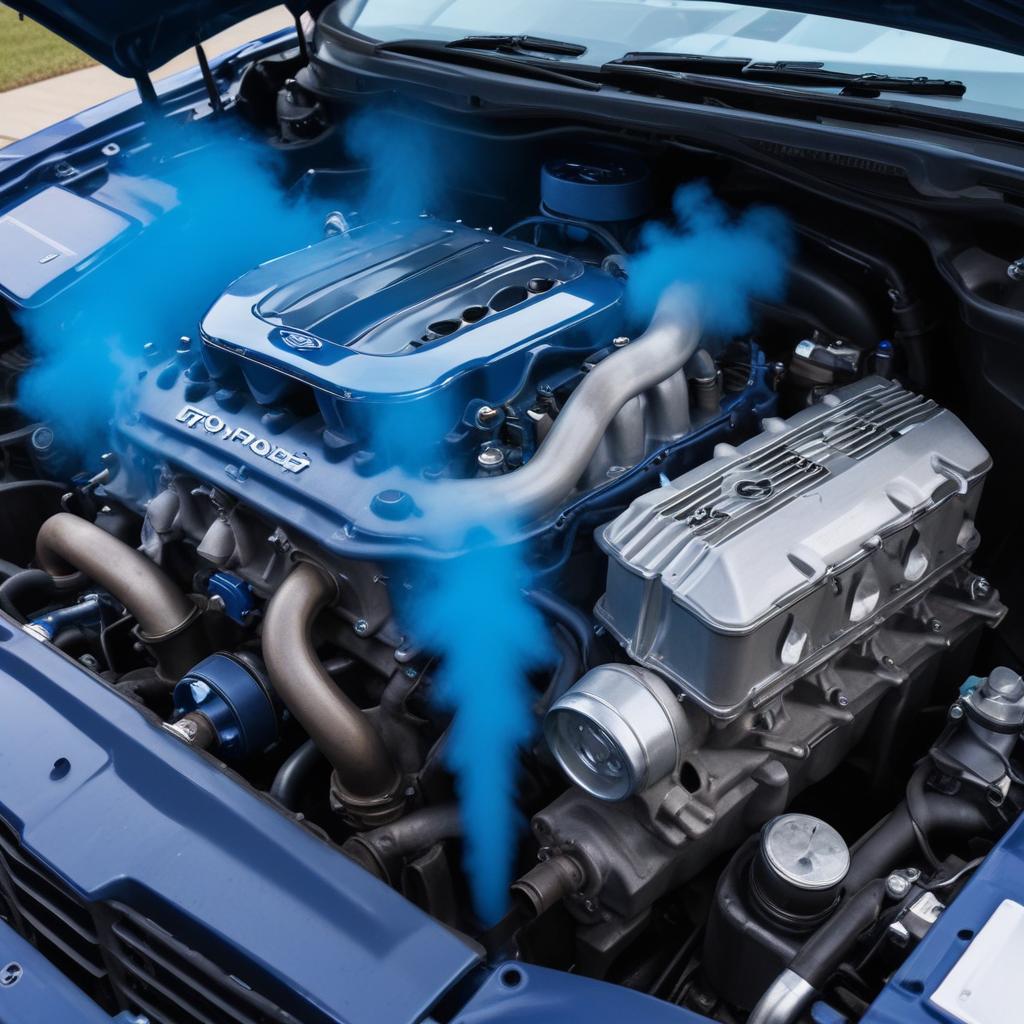
Why Your Ford Smells Like Burning Oil or Coolant (Find the Leak Fast)
You pull up to a stoplight. Roll down the window. That smell hits you – acrid, sharp, chemical. Burning oil. Or maybe it’s sweet, like maple syrup. Burning coolant. You look in the rearview mirror. No smoke. No steam. But the smell is getting stronger. Your family is in the car. You’re worried. Is your Ford about to catch fire? Is the engine overheating? What’s burning?
That burning smell is your Ford’s way of screaming “something is leaking onto something hot.” It’s scary. And honestly, it should be. Fluids burning on hot exhaust manifolds can start fires. But here’s the good news: most burning smells are from small, slow leaks – valve cover gaskets dripping oil onto exhaust, or a pinhole coolant leak spraying onto the engine. They’re fixable, usually for under $200.
The short version: Burning oil smell means oil is leaking onto the exhaust manifold – usually a valve cover gasket on Ford V8s (5.4L, 4.6L) or a leaking turbo oil line on EcoBoost engines. Burning coolant smell (sweet, like maple syrup) means coolant is leaking onto the engine or exhaust – often a cracked plastic thermostat housing on 4.6L/5.4L, or a leaking water pump. Stop driving immediately if you see smoke or the temperature gauge rises. Most leaks are under $200 to fix DIY – not a $2000 engine rebuild.
Key Takeaways
- Burning oil smell = acrid, sharp, chemical – oil dripping on hot exhaust or engine.
- Valve cover gasket – #1 cause on Ford V8s (5.4L, 4.6L). Oil drips onto exhaust manifold.
- Burning coolant smell = sweet, like maple syrup – coolant leaking onto hot engine parts.
- Thermostat housing – plastic housing cracks on 4.6L/5.4L Ford V8s. Common leak.
- Look for smoke – white/blue smoke from hood = oil. White steam = coolant.
- Stop driving if you see smoke – fluid on hot exhaust can catch fire.
- Most burning smell fixes cost under $200 DIY – gaskets, hoses, or housings.
The Real Reason Your Ford Smells Like Something Burning
Ever notice how the smell is worse when you’re stopped at a light? Or after a long drive? Or only when the engine is hot?
Here’s what’s happening: Your Ford’s engine has hot parts – exhaust manifolds (800-1200°F), turbochargers (even hotter), the engine block itself. When any fluid leaks onto these hot surfaces, it burns immediately. The smoke may be invisible, but the smell is strong.
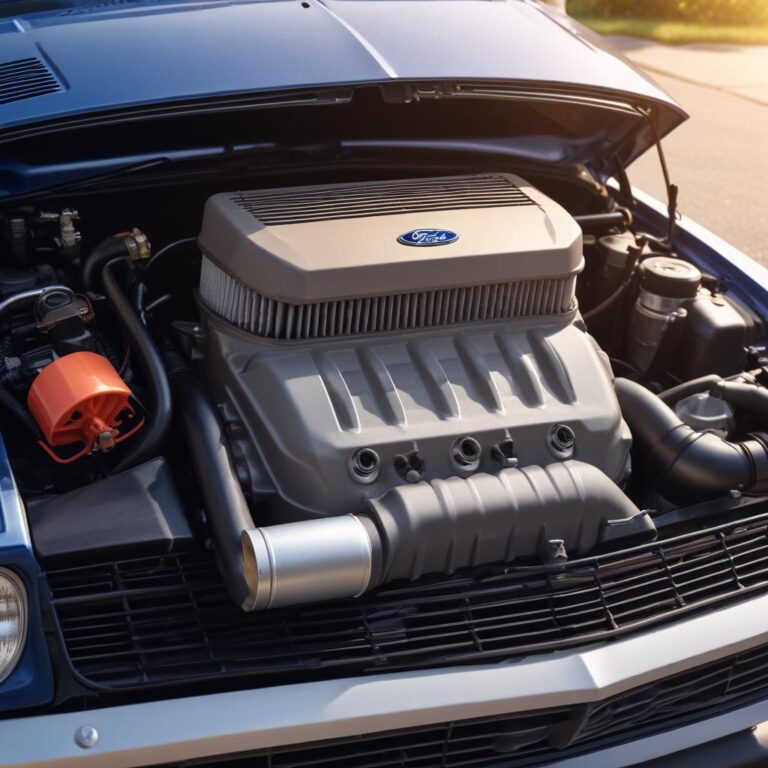
On Ford F-150 with 5.4L or 4.6L V8 (1997-2010) , the most common burning smell is oil from the valve cover gaskets. The gaskets get hard and brittle. Oil seeps out, runs down the side of the engine, and drips onto the hot exhaust manifold. You smell it inside the cab through the vents.
On Ford F-150 with 3.5L EcoBoost (2011-2020) , a burning oil smell often comes from a leaking turbo oil line or valve cover gaskets on the back of the engine (hard to see).
On Ford Mustang with 4.6L or 5.4L , the thermostat housing (plastic) cracks and leaks coolant. Coolant hits the hot engine – sweet smell, white steam.
On Ford Explorer with 3.5L , a burning coolant smell often means the water pump is leaking into the timing cover – an expensive repair.
“Your Ford isn’t supposed to smell like a chemical factory. If you smell oil or coolant burning, something is leaking. Don’t ignore it. Small leaks become big leaks. Big leaks become fires or engine failure.”
Quick Diagnosis: What Does Your Ford Smell Like?
| Smell | What’s Burning | Most Common Cause | Urgency |
|---|---|---|---|
| Acrid, sharp, chemical | Engine oil | Valve cover gasket leaking onto exhaust | Medium |
| Sweet, like maple syrup | Coolant (antifreeze) | Thermostat housing, water pump, heater hose | HIGH if overheating |
| Burnt toast or marshmallows | Transmission fluid | Transmission cooler line or pan gasket | Medium |
| Electrical burning (fishy) | Wires or insulation | Short circuit, bad alternator, melted wire | HIGH – potential fire |
| Rotten eggs | Catalytic converter | Engine running too rich (bad O2 sensor, misfire) | Medium – fix engine |
| Dusty or dirty | Oil burning inside engine (not leaking) | Worn piston rings or valve seals | Low – monitor oil |
| Hot metal | Brakes stuck | Brake caliper not releasing, brake drag | HIGH – can cause fire |
⚠️ Safety reminder: If you see smoke from under the hood, pull over immediately. Turn off the engine. Get out. Call a tow truck. A small fluid fire can become an engine fire in seconds. Do not drive a smoking vehicle.
Valve cover gaskets cause nearly half of all burning oil smells on Ford vehicles. Start there – especially on 4.6L and 5.4L V8 engines.
Burning Oil Smell: Valve Cover Gaskets (Most Common)
This is the #1 cause of burning oil smell on Ford trucks and SUVs. The valve cover sits on top of the cylinder head. The gasket between them seals the oil inside. Over time, the rubber gasket hardens, cracks, and leaks. Oil runs down the side of the engine onto the hot exhaust manifold.
What it smells like: Acrid, sharp, chemical. Oil burning smells different from coolant. It’s harsh.
When you smell it: Usually after the engine is hot – highway driving, long trips. The smell enters the cabin through the vents. Sometimes worse when stopped at lights (fumes rise from the manifold).
Where to look: On V8 engines (5.4L, 4.6L), the exhaust manifolds are on the sides of the engine. Oil leaking from the valve cover will drip directly onto them.
Which Ford models have this problem:
- Ford F-150 5.4L V8 (2004-2010) – very common
- Ford F-150 4.6L V8 (1997-2010) – common
- Ford Mustang 4.6L V8 (2005-2010) – common
- Ford Expedition 5.4L – very common
- Ford Explorer 4.0L V6 (2002-2005) – also common
The fix: Replace the valve cover gaskets. Cost: $30-60 for a set. Time: 2-4 hours depending on the engine.
Step-by-step for Ford 5.4L (passenger side – easier):
Step 1: Remove the air intake tube and coils.
Step 2: Remove the valve cover bolts (8-10 of them).
Step 3: Lift the valve cover. Clean the old gasket material.
Step 4: Install the new gasket. Put a dab of RTV silicone in the corners (where the timing cover meets the head).
Step 5: Reinstall the cover. Torque bolts to spec (not too tight – they snap easily).
On the 5.4L, the driver side valve cover requires removing the intake manifold – a bigger job. If you’re smelling oil, it’s often the passenger side leaking onto the exhaust.
| Ford Model & Engine | Most Common Burning Smell | DIY Fix Cost | Shop Cost |
|---|---|---|---|
| F-150 5.4L / 4.6L (1997-2010) | Valve cover gasket (oil on exhaust) | $40-60 (gaskets) | $500-800 |
| F-150 3.5L EcoBoost (2011-2020) | Turbo oil line or valve cover gasket | $50-100 | $400-700 |
| F-150 4.6L/5.4L (1997-2010) | Thermostat housing (coolant) – plastic cracks | $30-50 (aluminum replacement) | $200-350 |
| Mustang 4.6L (2005-2010) | Thermostat housing or valve cover gasket | $30-60 | $300-600 |
| Explorer 3.5L (2011-2019) | Water pump (coolant) – internal leak | $250-350 (pump) but BIG job | $2000-3000 |
| Edge / Escape (2013-2019) | Heater hose fitting (coolant) – plastic y-pipe | $20-40 (metal replacement) | $200-400 |
| Focus / Fiesta (2012-2018) | Clutch burning smell (manual transmission) | Clutch replacement ($200-400 DIY) | $800-1500 |
Burning Oil Smell: Turbo Oil Leaks (EcoBoost)
On Ford 3.5L and 2.7L EcoBoost engines, the turbos get incredibly hot. A small oil leak from the turbo oil supply or return line can cause a strong burning oil smell.
Symptoms:
- Burning oil smell after hard acceleration
- Oil level dropping slowly
- Sometimes blue smoke from exhaust on startup
The fix: Identify which line is leaking – oil supply line (top) or return line (bottom). Replace the leaking line or gasket. Cost: $50-150. On some engines, the turbo must be removed – bigger job.
If you smell burning oil on an EcoBoost Ford, check the turbo area first. Look for oil residue on the heat shields.
Burning Coolant Smell: Thermostat Housing (4.6L, 5.4L V8)
This is the #1 cause of sweet-smelling burning coolant on older Ford V8s. The thermostat housing is made of plastic. Heat cycles make it brittle. It cracks. Coolant leaks onto the front of the engine and burns on the hot metal.
What it smells like: Sweet, like maple syrup or burnt sugar. Distinct from oil.
When you smell it: After the engine warms up. Sometimes only when driving, sometimes when parked.
Where to look: Front center of the engine, where the upper radiator hose connects to the engine.
The fix: Replace the thermostat housing with an aluminum aftermarket part. Never put another plastic one on.
Cost: $30-50 for aluminum housing. Time: 1-2 hours.
Step-by-step:
Step 1: Drain coolant until level drops below the thermostat.
Step 2: Remove the upper radiator hose from the housing.
Step 3: Remove the two or three bolts holding the housing.
Step 4: Clean the gasket surface. Install the new aluminum housing with a new gasket.
Step 5: Refill coolant. Bleed air.
The aluminum housing from Dorman costs $30-50. It will never crack. Do this once and forget about it.
Burning Coolant Smell: Water Pump Leak
On many Ford engines – especially the 3.5L V6 in Explorers, F-150s, and Edges – the water pump leaks coolant. On the 3.5L Explorer (2011-2019), the water pump is inside the timing cover. Coolant leaks into the oil or out a weep hole. This is expensive.
Symptoms:
- Sweet burning smell
- Coolant level dropping without visible external leak
- On 3.5L Explorer: coolant in oil (milky oil on dipstick) – STOP DRIVING
The fix for external water pump leak (most other engines): Replace the water pump. Cost: $80-150 DIY, $400-700 shop.
The fix for Explorer 3.5L internal water pump: This is a $2000-3000 job. The timing chain has to come off. Do not drive if coolant is in the oil – it will destroy the engine.
If you own an Explorer 3.5L (2011-2019) and smell burning coolant, check your oil dipstick immediately. If it looks like chocolate milkshake, call a tow truck.
Burning Coolant Smell: Heater Hose Fitting (Edge, Escape)
On Ford Edge and Escape (2013-2019), the plastic Y-pipe and heater hose fittings crack. Coolant sprays onto the hot engine or exhaust. Sweet smell.
Symptoms:
- Sweet burning smell
- Small puddle of coolant under the passenger side of the engine
- Coolant level drops slowly
The fix: Replace the plastic fitting with a metal one. Dorman makes an aluminum replacement. Cost: $20-40. Time: 1 hour.
Ford’s plastic cooling system parts are a common failure point. Replace plastic with metal whenever possible.
The “New Car” Burning Smell (Normal)
If you just bought a new Ford or had major engine work done, a burning smell can be normal.
What it is: Protective coatings, oils, and assembly lubricants burning off hot engine parts.
How long it lasts: Usually 50-200 miles.
When to worry: If the smell persists beyond 200 miles, or if you see smoke, or if the smell is very strong – have it checked.
New Ford vehicles often have a “break-in” odor. It’s normal. Give it time.
Electrical Burning Smell (Fishy or Plastic)
This is dangerous. An electrical burning smell – like fish, burning plastic, or ozone – means wires or components are overheating.
Symptoms:
- Fishy or acrid plastic smell
- Might come from under the dash or under the hood
- Sometimes accompanied by flickering lights or blown fuses
Common causes:
- Alternator overheating (bad bearings or internal short)
- Blower motor resistor burning out (smell from dash vents)
- Melted wiring harness (usually from a short)
What to do: Stop driving. Have it towed to a shop. Electrical fires can start without warning.
Don’t ignore a fishy smell. It’s not normal. It’s a fire waiting to happen.
The Rotten Egg Smell (Catalytic Converter)
If your Ford smells like sulfur or rotten eggs, it’s the catalytic converter. Unburned fuel is burning inside the converter, creating hydrogen sulfide – rotten egg smell.
Symptoms:
- Rotten egg smell from exhaust
- Check engine light on
- Poor fuel economy
- Sometimes black smoke or hesitation
Common causes:
- Bad oxygen sensor (cheap fix)
- Engine misfire (fix misfire first)
- Clogged catalytic converter (expensive)
The fix: Fix the underlying problem first – usually an O2 sensor or spark plugs. If the converter is melted, replace it ($800-2000).
If you smell rotten eggs, get the codes read. P0420/P0430 means catalytic converter efficiency low.
The Burnt Clutch Smell (Manual Transmission)
If your Ford has a manual transmission, a burning smell might be the clutch. Riding the clutch, slipping the clutch, or a bad clutch can cause a distinct burning smell – like burning cardboard or brakes.
Symptoms:
- Burning smell after driving in traffic
- Smell gets worse when you use the clutch
- Clutch pedal feels different (low engagement, slipping)
The fix: Replace the clutch. Cost: $200-400 DIY, $800-1500 shop.
If you smell clutch, stop riding the clutch. Rest your foot on the dead pedal. Use the clutch only to shift, not to hold on hills.
What NOT to Do
| Mistake | Why It’s Bad |
|---|---|
| Ignoring a burning smell | Small leak becomes big leak. Big leak becomes fire or engine failure. |
| Driving with visible smoke | Fire risk. Pull over. Call a tow truck. |
| Adding stop-leak to coolant | Clogs heater core and radiator. Creates more problems. |
| Continuing to drive with no oil | Engine seizes. $5000 repair. |
| Using a plastic thermostat housing again | It will crack again. Use aluminum. |
| Topping off coolant without finding the leak | Masking the problem. Find and fix the leak. |
| Putting water in the cooling system | Rust forms. Water freezes in winter. Use proper coolant. |
⚠️ Safety reminder: Never open a hot radiator. Coolant is under pressure. It can spray out and cause severe burns. Wait at least 30 minutes for the engine to cool.
How to Find the Source of the Smell
Step 1: Let the engine cool completely.
Step 2: Pop the hood. Look for wet spots, drips, or stains.
Step 3: Start the engine. Let it idle until it reaches operating temperature.
Step 4: Look and smell. Where is the smoke coming from? Where is the smell strongest?
Step 5: Use a flashlight to inspect the valve covers, thermostat housing, water pump, and turbo area.
Step 6: If you can’t find it, clean the engine with degreaser. Drive for 10 minutes. The first wet spot is the leak.
FAQ
1. Is it safe to drive if I smell burning oil?
Yes, for a short time. But don’t ignore it. A small valve cover leak won’t leave you stranded. But it can get worse. And oil on a hot exhaust can catch fire. Fix it within a few weeks.
2. Why does my Ford smell like burning oil but no leak under the car?
The leak is small. Oil is dripping directly onto the exhaust manifold and burning off. It never hits the ground. The smoke is invisible. Look at the valve covers and exhaust manifolds.
3. Can a burning smell be from old oil spilled during an oil change?
Yes. If a careless oil change spilled oil on the engine, it will burn off. Drive for 10-20 minutes. If the smell goes away, it was just spilled oil. If it continues, you have a leak.
4. How much does it cost to fix a valve cover gasket on a Ford F-150?
DIY: $40-60 for the gaskets. 2-4 hours of your time. Shop: $500-800. Dealer: $800-1000.
5. Why does my Ford smell like maple syrup?
That’s coolant. Antifreeze has a sweet smell. You have a coolant leak. Check the thermostat housing, water pump, and heater hoses.
6. Can a bad water pump cause a burning coolant smell without leaking?
No. If it’s bad but not leaking, you won’t smell it. The smell means coolant is contacting a hot surface. There is a leak.
7. Why does my Ford smell like burning oil only when I accelerate hard?
Oil is being pushed out of a leak under pressure. When you accelerate, oil pressure increases. The leak gets bigger. Common on turbo oil lines and valve covers.
8. Can a bad PCV valve cause a burning oil smell?
Yes. A clogged PCV valve causes crankcase pressure to build. That pressure pushes oil out of gaskets and seals. Replace the PCV valve ($10-15) before doing expensive gasket repairs.
9. Why does my Ford smell like burning plastic?
Electrical problem. Stop driving. Have it towed. Burning wires can cause a fire.
10. How do I know if it’s oil or coolant burning?
Smell it. Oil = acrid, sharp, chemical. Coolant = sweet, like maple syrup or pancake syrup. Also look at the liquid – oil is brown/black, coolant is green, orange, or pink.
The Bottom Line
Here’s your game plan based on what you smell:
- Burning oil smell (acrid) → check valve cover gaskets on V8s. Check turbo oil lines on EcoBoost.
- Burning coolant smell (sweet) → check thermostat housing (4.6L/5.4L), water pump (all engines), heater hoses.
- Fishy/plastic burning smell → electrical problem. Tow to shop immediately.
- Rotten eggs smell → catalytic converter. Get codes read. Fix engine misfire first.
- Burning cardboard smell → clutch (manual transmission). Replace clutch.
Here’s the honest truth: Your Ford isn’t supposed to smell like it’s burning. That smell is a warning. A small leak of oil or coolant is hitting a hot part and turning into smoke and fumes.
Don’t ignore it. Don’t hope it goes away. It won’t. A $40 valve cover gasket left too long can lead to a $5000 engine fire. A $30 thermostat housing can save you from a blown head gasket.
Start with the simple stuff. On a 5.4L V8, check the passenger side valve cover – that’s the most common leak. On a 4.6L, check the thermostat housing. On an EcoBoost, check the turbo area. Clean the engine. Drive it. Look for the first wet spot.
And if you smell electrical burning – fishy or plastic – stop driving. That’s not a leak. That’s a fire waiting to happen.
Has your Ford ever smelled like something burning? What was the leak – valve cover, thermostat housing, or something else? Share your story in the comments – someone else is smelling the same thing right now.
References: