Ford Engine Misfire Symptoms: Causes and Fixes Explained
You’re driving down the road. The engine is running smooth. Then suddenly – a shudder. A hiccup. A loss of power for just a split second. Then it’s fine again. A few seconds later, another shudder. Then another. Your check engine light starts flashing. Your heart sinks. What’s happening to your Ford?
That shudder is a misfire. One or more cylinders aren’t firing properly. The engine is stumbling. And that flashing check engine light? That’s your Ford screaming “fix me now before you destroy the catalytic converter.” Here’s the good news: most misfires are caused by cheap, easy-to-replace parts. Spark plugs. Ignition coils. A dirty fuel injector. Not a blown engine.
The short version: An engine misfire feels like a shudder, hesitation, or loss of power. A flashing check engine light means raw fuel is damaging your catalytic converter – fix it within 20 miles. The #1 cause on Ford vehicles is bad spark plugs (change every 60k-100k miles). Also common: failed ignition coils, dirty fuel injectors, and vacuum leaks. Start with reading the misfire code – it tells you exactly which cylinder is missing. A set of spark plugs costs $40-60. A single ignition coil costs $50-80. Most Ford misfires are fixed for under $200 DIY.
Key Takeaways
- Flashing check engine light = serious. Raw fuel is damaging your catalytic converter. Fix within 20 miles.
- Misfire code (P0301-P0308) – tells you which cylinder is misfiring. Cylinder 1 is at the front of the engine.
- Spark plugs – #1 cause on Ford vehicles. Change every 60k-100k miles. Use Motorcraft plugs only.
- Ignition coils – common failure on 5.4L V8 and EcoBoost engines. Swap coils to confirm which one is bad.
- Fuel injectors – clogged or leaking injector causes misfire. Try fuel system cleaner first ($10).
- Vacuum leak – causes lean misfire. Listen for hissing under the hood. Replace cracked hoses ($5-20).
- Do not drive with a flashing light – you’ll destroy the catalytic converter ($2000+ repair).
The Real Reason Your Ford Is Misfiring
Ever notice how the misfire happens when you’re accelerating? Or when the engine is cold? Or after it’s been sitting for a few days? Those patterns tell you exactly what’s wrong.
Here’s what’s happening inside your Ford: A misfire means the air-fuel mixture in one or more cylinders isn’t igniting properly. The engine computer detects this by watching the crankshaft speed – when a cylinder doesn’t fire, the crankshaft slows down slightly for that revolution.
On a Ford 5.4L V8 (2004-2010) , the most common misfire cause is bad spark plugs. These engines eat plugs. They should be changed every 60k miles, but many owners wait 100k+. The result? Misfires, rough idle, and poor fuel economy.
On Ford 3.5L EcoBoost (2011-2020) , ignition coils fail frequently. The coil boots dry out and crack from engine heat. Moisture gets in. The spark shorts to ground. Misfire.
On Ford 5.0L V8 (2011-2020) , fuel injectors can clog or leak. A leaking injector floods the cylinder, causing a misfire on startup that clears after a few seconds.
On Ford 2.0L EcoBoost (Focus, Escape, Fusion) , carbon buildup on the intake valves is a problem. Direct injection engines never wash fuel over the valves, so carbon accumulates and blocks airflow. The fix is a decarbonization service ($400-600).
“A misfire is your Ford’s way of saying one cylinder isn’t pulling its weight. Most of the time, it’s a $10 spark plug or a $50 coil. Don’t drive with a flashing light – you’ll turn a $200 repair into a $2000 catalytic converter replacement.”
Quick Diagnosis: What Does Your Ford’s Misfire Feel Like?
| Symptom | What’s Likely Wrong | Urgency |
|---|---|---|
| Flashing check engine light + shudder | Raw fuel damaging catalytic converter | HIGH – fix within 20 miles |
| Solid check engine light + occasional stumble | Bad spark plug or coil | Medium – fix this week |
| Misfire only when cold, smooth when warm | Leaking fuel injector or carbon buildup | Medium – monitor, then fix |
| Misfire only when accelerating hard | Bad spark plug or weak coil | Medium – fix soon |
| Misfire only at idle, smooth when driving | Vacuum leak or dirty fuel injector | Low – fix when convenient |
| Misfire on multiple cylinders | Vacuum leak, fuel pressure problem, or bad gas | Medium – diagnose quickly |
| Misfire after fueling | Bad gas or water in fuel | Low – run fuel system cleaner |
| Misfire after washing engine | Water in spark plug wells | Low – dry out with compressed air |
⚠️ Safety reminder: A flashing check engine light means the catalytic converter is being destroyed. Raw fuel is washing into the converter and burning inside it. The converter will melt down. You have about 20-50 miles before it fails completely. Pull over. Get it fixed.
Bad spark plugs and ignition coils cause nearly two-thirds of all Ford misfires. Start with the ignition system – it’s the cheapest and most common fix.
Get the Misfire Code (Free – Do This First)
This is the most important step. The code tells you exactly which cylinder is misfiring.
Step 1: Drive to any AutoZone, O’Reilly, Advance Auto Parts, or NAPA.
Step 2: Ask them to read your check engine codes. It’s free.
Step 3: Write down the codes. Misfire codes start with P0300 through P0308.
What the Ford misfire codes mean:
| Code | Meaning | What To Check |
|---|---|---|
| P0300 | Random/multiple cylinders misfiring | Vacuum leak, fuel problem, bad gas |
| P0301 | Cylinder 1 misfire | Cylinder 1 is at front of engine (passenger side on most Fords) |
| P0302 | Cylinder 2 misfire | Second cylinder from front |
| P0303 | Cylinder 3 misfire | Third cylinder from front |
| P0304 | Cylinder 4 misfire | Fourth cylinder from front |
| P0305 | Cylinder 5 misfire | Cylinder 5 is at front on driver side (V8) |
| P0306 | Cylinder 6 misfire | Second cylinder from front on driver side |
| P0307 | Cylinder 7 misfire | Third cylinder from front on driver side |
| P0308 | Cylinder 8 misfire | Fourth cylinder from front on driver side (back of engine) |
On a Ford V8, cylinder numbering: Passenger side (front to back) = 1,2,3,4. Driver side (front to back) = 5,6,7,8. On inline 4-cylinder engines, cylinder 1 is at the timing belt/chain end (usually passenger side).
Cause #1: Bad Spark Plugs (Most Common)
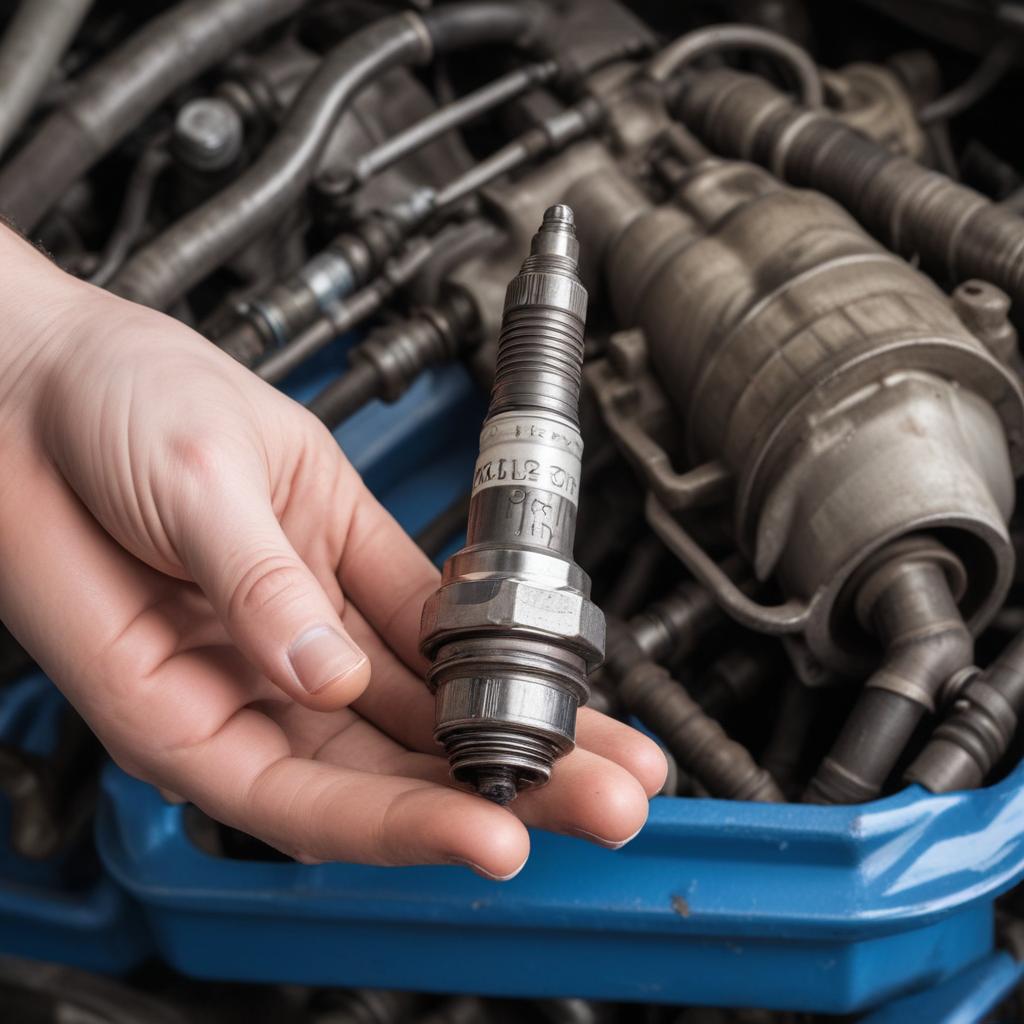
Spark plugs fire thousands of times per minute. The gap between the electrodes widens over time. The spark gets weaker. Eventually, the cylinder misfires.
When to change Ford spark plugs:
- 5.4L V8: every 60,000 miles
- 3.5L EcoBoost: every 60,000 miles
- 5.0L V8: every 60,000 miles
- 2.0L/2.3L EcoBoost: every 60,000 miles
- 4.6L V8 (older): every 60,000-80,000 miles
Symptoms of bad spark plugs:
- Misfire under acceleration (most common)
- Rough idle
- Poor fuel economy
- Hard starting
- Flashing check engine light under load
The fix: Replace all spark plugs. Cost: $40-60 for a set of Motorcraft plugs. Time: 1-2 hours on most Ford engines.
Important: Use Motorcraft spark plugs only. Ford engines are picky about plugs. Cheap aftermarket plugs (Champion, Bosch, Autolite) can cause misfires even when new.
Special note for Ford 5.4L V8 (2004-2008): These engines have a known problem – spark plugs break off in the cylinder head when you try to remove them. Special tools exist to extract broken plugs. If you’re not experienced, have a shop do this job. The 2008+ 5.4L engines have redesigned plugs that don’t break as easily.
| Ford Model & Engine | Most Common Misfire Cause | DIY Fix Cost | Shop Cost |
|---|---|---|---|
| F-150 5.4L (2004-2010) | Spark plugs (break in heads) and boots | $60-100 (plugs + extractor kit if needed) | $400-800 |
| F-150 3.5L EcoBoost (2011-2020) | Ignition coils + spark plugs | $40-60 (plugs) + $50-80 (coil each) | $300-600 |
| F-150 5.0L (2011-2020) | Spark plugs or fuel injectors | $40-60 (plugs) / $100-150 (injector) | $300-800 |
| Mustang 4.6L (2005-2010) | Spark plugs and ignition coils | $40-60 (plugs) + $50-80 (coil each) | $250-500 |
| Mustang 5.0L (2011-2020) | Spark plugs or fuel injectors | $40-60 (plugs) | $300-500 |
| Mustang EcoBoost (2015-2024) | Carbon buildup on valves | $400-600 (decarbonization shop) | $400-600 |
| Explorer 3.5L (2011-2019) | Ignition coils (rear ones hard to reach) | $50-80 per coil | $400-700 |
| Focus 2.0L (2012-2018) | Carbon buildup or purge valve | $40-60 (purge valve) / $400 (decarbon) | $300-600 |
| Escape 2.0L/1.5L (2013-2019) | Spark plugs (short interval – 60k miles) | $40-60 (plugs) | $250-400 |
The 5.4L V8 is famous for breaking spark plugs. If you have one of these engines, watch YouTube videos before attempting the job. The special extractor tool is $60-100 – cheaper than a shop charging $400+.
Cause #2: Bad Ignition Coils (EcoBoost & V8)
Ignition coils (also called coil packs or coil on plug) sit on top of each spark plug. They convert the 12-volt battery power into 20,000+ volts needed to fire the plug. When a coil fails, the cylinder gets no spark at all.
Symptoms of a bad ignition coil:
- Misfire that gets worse under load (accelerating, going uphill)
- Misfire that feels like a “dead” cylinder – constant stumble
- Flashing check engine light under hard acceleration
- Code for a specific cylinder (P0301, P0302, etc.)
The quick test – swap coils:
Step 1: Turn off the engine. Let it cool.
Step 2: Remove the coil from the misfiring cylinder (the code tells you which one).
Step 3: Swap it with a coil from a cylinder that is NOT misfiring (like from the other side of the engine).
Step 4: Clear the codes (disconnect battery for 10 minutes or use a scanner).
Step 5: Drive the Ford. Check the codes again.
What the swap tells you:
- If the misfire moves to the cylinder you swapped the coil to → the coil is bad.
- If the misfire stays on the same cylinder → the problem is the spark plug, fuel injector, or compression.
The fix: Replace the bad coil. Cost: $50-80 for a single coil (Motorcraft or Denso). Replace only the bad one – not all of them.
On Ford 3.5L EcoBoost, the rear coils are hard to reach. You may need to remove the intake manifold or cowl to access them. Watch a YouTube video for your specific model.
Cause #3: Leaking or Clogged Fuel Injectors
Fuel injectors spray fuel into the cylinder. When they get clogged, not enough fuel gets in – lean misfire. When they leak, too much fuel gets in – rich misfire and flooding.
Symptoms of a bad fuel injector:
- Misfire only when cold (leaking injector floods the cylinder overnight)
- Misfire only when hot (clogged injector can’t deliver enough fuel under load)
- Rough idle that clears when driving
- Code for a specific cylinder that doesn’t move when you swap coils
- Fuel smell from the exhaust or under the hood
The fix – try fuel system cleaner first:
Step 1: Buy a bottle of Techron or Chevron fuel system cleaner ($10-15).
Step 2: Pour it into a nearly empty gas tank.
Step 3: Fill the tank with premium gas (91+ octane).
Step 4: Drive the Ford normally for a full tank.
Step 5: If the code goes away, the injector was clogged and the cleaner fixed it.
If cleaner doesn’t work: Replace the injector. Cost: $100-150 for a Motorcraft injector. Time: 1-3 hours depending on engine.
On Ford 5.0L V8, the fuel injectors are under the intake manifold. Big job. On 3.5L and 2.0L EcoBoost, injectors are more accessible – but direct injection means they’re expensive ($150-250 each).
Cause #4: Vacuum Leak (Multiple Cylinder Misfire)
A vacuum leak lets extra air into the engine after the mass airflow sensor. The computer doesn’t know about this air, so it doesn’t add enough fuel. The mixture becomes too lean. This usually causes misfires on multiple cylinders (P0300) or lean codes (P0171, P0174).
Symptoms of a vacuum leak:
- Misfire at idle that smooths out when driving
- RPM hunting up and down at idle
- Hissing or whistling sound from under the hood
- Check engine light with lean codes (P0171, P0174) and random misfire codes (P0300)
- Rough idle that gets worse when you turn on the AC
How to find a vacuum leak:
Method 1 – Listen: With the engine idling, walk around the engine bay. Listen for a hissing sound. Rubber hoses crack with age.
Method 2 – Spray test: With the engine idling, spray brake cleaner or carb cleaner around hoses, gaskets, and the intake manifold. If the idle changes (smooths out or surges), the cleaner was sucked into the leak. You found it.
Common vacuum leak locations on Ford engines:
- PCV hoses (driver side of engine)
- Intake manifold gaskets (common on 5.4L V8)
- Brake booster hose (large hose near firewall)
- EVAP purge valve hose
- Throttle body gasket
The fix: Replace the cracked hose or leaking gasket. Cost: $5-30 for hoses, $20-50 for gaskets.
On Ford 5.4L V8 (2004-2008), the intake manifold gaskets shrink over time, causing vacuum leaks at the rear of the engine. The fix is new gaskets ($20-40) and 3-4 hours of labor.
Cause #5: Carbon Buildup (Direct Injection Engines)
Direct injection engines (EcoBoost, 5.0L, 2.0L, 2.3L) spray fuel directly into the cylinder, not over the intake valves. This means fuel never washes over the valves. Oil vapor from the PCV system sticks to the valves and bakes into hard carbon deposits. These deposits block airflow, causing misfires.
Symptoms of carbon buildup:
- Misfire that gets worse over time
- Rough idle that won’t go away
- Loss of power, especially at higher RPMs
- Poor fuel economy
- No codes for coils or spark plugs – just random misfires
Which Ford engines have carbon buildup problems:
- 3.5L EcoBoost (F-150, Explorer, Expedition) – common after 80k miles
- 2.7L EcoBoost (F-150, Edge) – moderate
- 2.0L/2.3L EcoBoost (Focus, Escape, Mustang, Ranger) – common after 60k-80k miles
- 5.0L V8 (2011-2017) – less common but possible
The fix: Decarbonization service. A shop sprays walnut shells or uses a chemical cleaner to blast the carbon off the valves. Cost: $400-600. Time: 3-5 hours.
Can you DIY carbon cleaning? There are chemical sprays (CRC Intake Valve Cleaner, Seafoam) that you spray into the intake. They help, but they don’t fully clean the valves. For serious carbon, you need walnut blasting.
On Ford Focus RS (2.3L EcoBoost), carbon buildup is so common that owners have made it a routine maintenance item every 30k-40k miles.
Cause #6: Bad Gas or Water in Fuel
Sometimes the problem isn’t your Ford – it’s the gas station. Water in fuel, low octane, or old gas can cause misfires.
Symptoms of bad gas:
- Misfire started right after filling up
- Multiple cylinder misfire (P0300)
- Engine runs rough, lacks power
- No other codes (no specific cylinder)
The fix – run fuel system cleaner:
Step 1: Buy a bottle of Heet (water remover) or Techron (fuel system cleaner).
Step 2: Add it to your gas tank.
Step 3: Fill up with premium gas from a different station.
Step 4: Drive. The problem should clear within half a tank.
Prevention: Buy gas from busy stations (fresh fuel). If you leave your Ford sitting for months, add fuel stabilizer.
The Coil Swap Test (Step by Step)
This is the most useful diagnostic test for Ford misfires. It takes 15 minutes and costs nothing.
What you need: Socket set (usually 8mm or 10mm for coil bolts), 15 minutes.
Step 1: Read the codes. Write down which cylinder is misfiring.
Step 2: Turn off the engine. Let it cool for 15 minutes.
Step 3: Remove the coil from the misfiring cylinder.
Step 4: Remove a coil from a cylinder that is NOT misfiring (preferably on the other side of the engine).
Step 5: Swap them. Put the suspect coil on the good cylinder. Put the good coil on the suspect cylinder.
Step 6: Clear the codes (disconnect battery for 10 minutes or use a scanner).
Step 7: Drive the Ford. Check the codes again.
Results:
- If the misfire code moves to the cylinder you moved the suspect coil to → the coil is bad. Replace it.
- If the misfire code stays on the original cylinder → the coil is fine. Problem is spark plug, fuel injector, or compression.
This test works because you’re moving the potential problem to a different location. If the misfire follows the part, that part is bad.
The Compression Test (For Stubborn Misfires)
If you’ve replaced the spark plug, swapped the coil, and cleaned the injector – and the cylinder is STILL misfiring – you need a compression test. This checks the mechanical health of the cylinder.
What you need: Compression tester kit ($30-50, or rent free from AutoZone).
Step 1: Remove all spark plugs from the engine.
Step 2: Disable the fuel pump (pull the fuse or relay).
Step 3: Screw the compression tester into the misfiring cylinder.
Step 4: Crank the engine for 5-10 seconds. Write down the pressure.
Step 5: Repeat for all cylinders.
What the readings mean:
| Reading | Meaning |
|---|---|
| 140-180 PSI (varies by engine) | Healthy cylinder |
| 100-140 PSI | Worn but usable |
| Below 100 PSI | Problem – rings, valves, or head gasket |
| 0 PSI | Major failure – broken valve, hole in piston, or bad head gasket |
Symptoms of low compression:
- Misfire that won’t go away no matter what parts you replace
- Blue smoke from exhaust (oil burning)
- Loss of power
- Engine runs rough constantly
If you find low compression, the repair is major – head gasket, valve job, piston rings, or engine replacement. Cost: $2000-6000 depending on the problem.
What NOT to Do (Ford Misfire Mistakes)
| Mistake | Why It’s Bad |
|---|---|
| Driving with a flashing check engine light | Destroys the catalytic converter in 20-50 miles. $2000+ repair. |
| Using cheap non-Motorcraft spark plugs | Ford engines misfire with aftermarket plugs. Spend the extra $10. |
| Replacing all coils when only one is bad | A $50 fix becomes $400. Swap test tells you which one failed. |
| Ignoring a misfire that only happens when cold | Leaking injector. It will get worse. Fix it soon. |
| Assuming it’s always spark plugs | Fuel injectors, vacuum leaks, and carbon buildup are also common. |
| Putting off spark plug changes | Old plugs wear out the ignition coils. A $40 set of plugs prevents $400 in coils. |
| Using starting fluid near a misfiring engine | Fire risk. Don’t. |
⚠️ Safety reminder: A flashing check engine light means raw fuel is entering the exhaust. The catalytic converter runs at 1200°F+ normally. Raw fuel makes it even hotter – hot enough to melt the converter and potentially start a fire. Don’t ignore it.
Prevention Tips for Ford Misfires
- Change spark plugs every 60,000 miles – even if they look okay. Use Motorcraft plugs.
- Replace ignition coil boots when you change plugs – boots cost $10-20 for a set. Old boots crack, causing misfires.
- Use top-tier gasoline – quality gas has detergents that keep injectors clean.
- Run fuel system cleaner every 10,000 miles – Techron or Chevron products work well.
- Check for vacuum leaks annually – rubber hoses crack with age.
- Don’t ignore small misfires – a minor stumble today is a major problem tomorrow.
- On direct injection engines (EcoBoost) – consider decarbonization service every 60k-80k miles.
Special Case: Ford 5.4L Spark Plug Breakage (2004-2008)
If you own a Ford 5.4L V8 from 2004-2008, you need to know about the spark plug problem. These engines have 3-valve heads with two-piece spark plugs. The ground electrode shield is a separate piece that seizes in the cylinder head. When you try to remove the plug, the top unscrews but the shield stays in the head – the plug breaks in half.
Signs you have this engine: Year 2004-2008 F-150, Expedition, Mustang with 5.4L V8. Check your emissions sticker under the hood – it should say “3-valve.”
Prevention: Use the Ford-recommended removal procedure. The engine must be warm, not hot. Use a special tool (Lisle 65600) to extract broken plugs.
If one breaks, you need: The Lisle extraction tool ($60-100), patience, and good instructions.
Cost: DIY with extraction tool: $100-150. Shop: $400-800 for the job plus $100 per broken plug.
2008+ 5.4L engines have redesigned spark plugs that don’t break as easily. 2010+ engines (4.6L, 5.4L) used a different design altogether.
FAQ
1. Can I drive my Ford with a misfire?
If the check engine light is solid, you can drive gently to a shop. If the light is flashing, stop driving immediately. A flashing light means raw fuel is destroying your catalytic converter.
2. How much does it cost to fix a Ford engine misfire?
DIY: $40-60 for spark plugs, $50-80 for a single ignition coil, $100-150 for a fuel injector. Shop: $200-600 depending on the cause. Catalytic converter replacement if you ignore a flashing light: $1500-2500.
3. Why does my Ford misfire only when it’s cold?
A leaking fuel injector is the most common cause. The injector drips fuel into the cylinder overnight, flooding it. The misfire clears once the engine burns off the excess fuel. Replace the leaking injector.
4. Why does my Ford misfire only under acceleration?
Bad spark plugs or ignition coils. Under load, the cylinder pressure increases. It’s harder for a weak spark to jump the plug gap. New plugs or a new coil will fix it.
5. Can bad gas cause a Ford misfire?
Yes. Water in gas or low octane can cause misfires. Add a bottle of Heet (water remover) or Techron (fuel system cleaner) and fill up with premium gas from a busy station.
6. Why does my Ford 5.4L keep misfiring after new plugs?
You probably have a bad ignition coil or a vacuum leak. If the misfire is on a specific cylinder, swap the coil with another cylinder. If the misfire moves, replace the coil. If it stays, check for vacuum leaks or fuel injector problems.
7. Will a tune-up fix my Ford misfire?
Depends what you call a tune-up. New spark plugs? Yes, that’s the most common fix. New air filter? That won’t fix a misfire. Fuel system cleaning? Sometimes, if the injectors are clogged. Start with reading the codes.
8. How do I reset my Ford check engine light after fixing a misfire?
Disconnect the negative battery terminal for 10 minutes. Reconnect. Or drive the Ford for 50-100 miles – the light will turn off by itself if the problem is fixed.
9. Can low oil cause a misfire?
Yes, especially on engines with variable valve timing (VCT). Low oil pressure can cause cam phaser problems that lead to misfires. Check your oil level. Top it off.
10. Why does my Ford misfire after washing the engine?
Water got into the spark plug wells. The ignition coil boots aren’t sealed. Dry out the wells with compressed air. Remove the coils, dry everything, apply dielectric grease to the boots, and reinstall.
The Bottom Line
Here’s your game plan based on your symptoms:
- Flashing check engine light → stop driving. Fix within 20 miles. Catalytic converter at risk.
- Code P0301-P0308 (specific cylinder) → swap coils to the other side. If misfire moves, replace coil. If not, check spark plug, then fuel injector.
- Code P0300 (random multiple cylinders) → vacuum leak or bad gas. Check for hissing hoses. Run fuel system cleaner.
- Misfire only when cold → leaking fuel injector. Replace it. Try cleaner first.
- Misfire only under acceleration → spark plugs or ignition coil. Replace plugs first (cheaper).
- Misfire on Ford 5.4L (2004-2008) → be careful with spark plug removal. Special tools required.
- Misfire on EcoBoost engine → check carbon buildup if plugs and coils are new. Decarbonization service ($400-600).
Here’s the honest truth: A Ford engine misfire is almost never a catastrophic failure. It’s a spark plug. A coil. An injector. A vacuum hose. These are parts that wear out. They’re designed to be replaced.
The mistake most owners make is ignoring the flashing light. That flashing light is your catalytic converter screaming for help. A $200 misfire repair becomes a $2000 converter replacement if you drive too long.
Get the codes read. Swap the coils. Change the plugs. Clean the injectors. Ninety percent of Ford misfires are fixed with these four steps.
And for the love of your wallet – use Motorcraft spark plugs. Ford engines hate cheap plugs.
Has your Ford ever had a misfire you couldn’t figure out? What was the cause – plugs, coils, injectors, or something else? Share your story in the comments – someone else is chasing the same problem right now.
References: